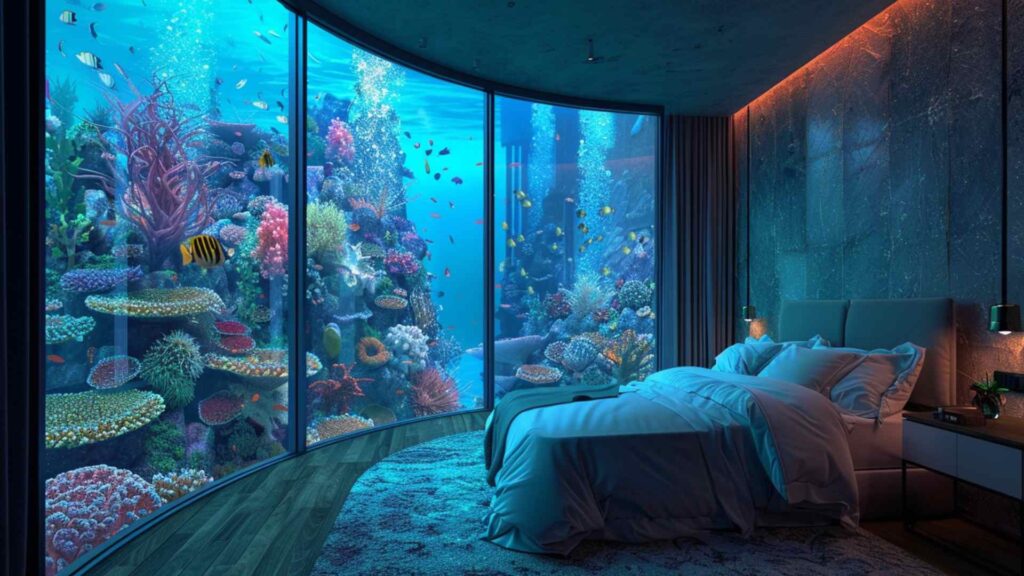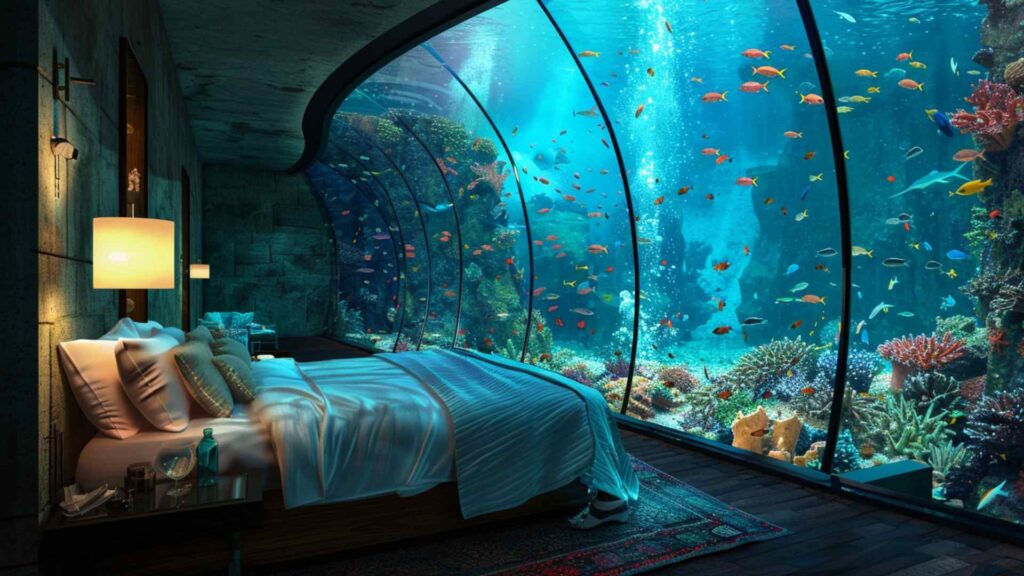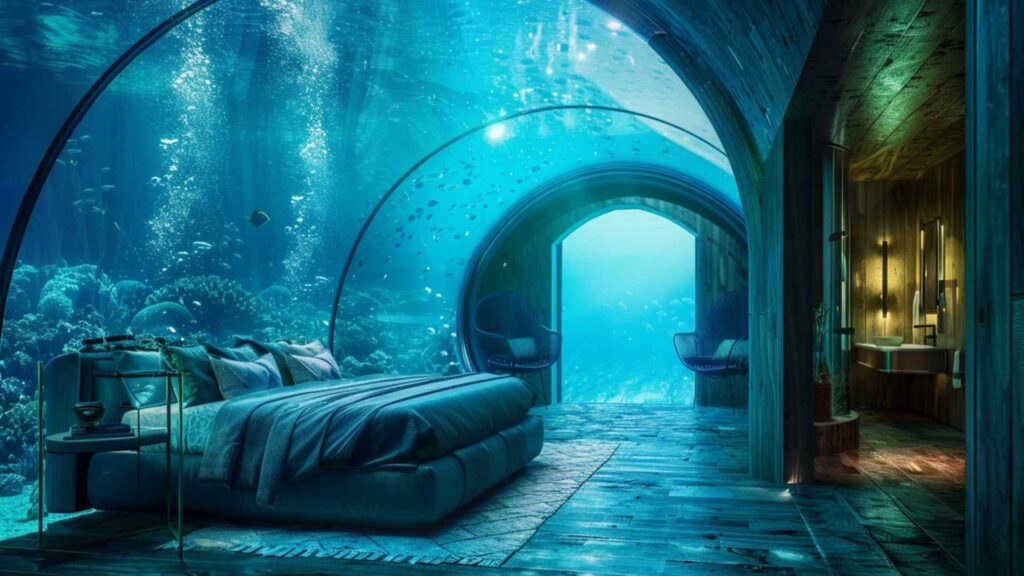
From manta-filled reefs to the legendary, still-to-open Poseidon Resort, Fiji underwater hotels fire the imagination.
While fully submersible suites remain plans on paper, this guide spotlights overwater bungalows, shark dives, coral gardens, and lagoon adventures that deliver comparable thrills for curious sunseekers, divers, and romantics around these South Pacific isles.
Poseidon Undersea Resort
If you’ve ever Googled “underwater hotel Fiji,” you’ve undoubtedly come across Poseidon Undersea Resort.
Often touted as the world’s first planned 5-star underwater hotel, Poseidon has been “coming soon” for over a decade, making it something of a legend in travel circles.
While it’s not open (as of 2026) and exists only in glossy renderings and patent designs, it remains the holy grail of underwater hotel dreams, and it’s worth understanding what’s been imagined here on Fiji’s shores.

The Dream: A Luxury Underwater Kingdom
Poseidon Undersea Resort was conceived to be situated in a private lagoon off a Fijian island (aptly named Poseidon’s Mystery Island).
The plan?
Twenty-four underwater suites lying 12 meters (40 feet) down on the lagoon floor, accessible by elevator from a beachside pavilion.
Each suite would be a self-contained pod with clear acrylic walls offering 270-degree views of the coral lagoon outside.
Guests could press a button to feed fish outside their window, or tint the glass for privacy at night.
The rooms were designed to be plush and spacious (51 square meters each, about 550 sq ft), decked in high-end decor, think king beds, marble bathrooms with jacuzzis, and personal office space. Essentially, a private submarine turned hotel room.
But that’s not all. The resort plans included an underwater restaurant and bar, a library/lounge, a theater, and even a wedding chapel all submerged.
Imagine saying “I do” in a glass chapel with reef fish as witnesses! For those who wanted a break from being undersea, Poseidon also would feature 48 luxury beach villas (bures) on the island, a spa, tennis courts, a nine-hole golf course, and a marina.
Guests could split their time between land and sea accommodations as part of a package.
The activities on offer read like a billionaire’s playground: personal Triton submarines you could pilot in the lagoon, 16-passenger deep-sea submersible cruises into the nearby abyss (cocktails underwater, anyone?
They promised exactly that), scuba diving on pristine reefs, and an extensive coral garden project so guests could partake in conservation. Poseidon’s ethos was meant to be part luxury, part discovery, Cousteau-level immersion with Four Seasons-level comfort.

Why It’s Not Reality (Yet)
Construction on Poseidon has faced multiple delays. Initially announced in the mid-2000s with opening dates that kept getting pushed, the challenge has been raising the immense investment needed and perfecting the engineering.
Building habitats that can be safely pressurized at surface level (so guests have normal atmospheric pressure) and still offer floor-to-ceiling views is no small feat.
The visionary behind it, L. Bruce Jones of U.S. Submarines, had experience in sub design, but resort development is another beast.
As of now, Poseidon is “still courting investors” and fine-tuning design. In the interim, advancements in materials (like better acrylic) and construction techniques may help, but it’s also possible the project needs a partnership with a mega luxury brand to finally break ground.
There were rumblings about it relocating to a different country at one point, but Fiji remains the spiritual home of this project, and local authorities did grant initial permissions years back.
The bottom line: Poseidon Undersea Resort is the Fiji underwater hotel – in concept. It captures the imagination and could very well become the world’s most groundbreaking resort if it opens. Until then, it’s a gorgeous idea hovering in the realm of “stay tuned.”
Crossing fingers that in a future edition of this article, we’ll be describing our firsthand stay at Poseidon!
Poseidon by the Numbers (Planned)
- Depth: 40 feet (12m) in a calm lagoon.
- Rooms: 24 underwater suites + 48 island villas.
- Size: Each undersea suite ~ 51 m², with 70% of wall surface transparent acrylic.
- Features: Underwater restaurant, bar, spa, chapel; personal submarines; library and theater; surface-level pool, golf, etc.
- Projected Rate: Around $15,000 per person for a 7-night package was once quoted (included 4 nights underwater, 2 on land, 1 in transit) – effectively about $ 2,000+/night, all inclusive. Pricey, but many thought it a deal for the experience.
- Status: On hold, not open as of 2026.
While waiting for Poseidon to (hopefully) surface, Fiji still offers other ways to experience its underwater wonders.
They might not be Fiji underwater hotel beds under the sea, but these adventures ensure you get quality time down under (the waves).

Beyond the Bubble: Fiji’s Underwater (and Almost-Underwater) Thrills
So, no actual underwater hotel yet in Fiji.
But don’t let that dampen your ocean enthusiasm.
The islands abound with ways to sleep near, swim in, and marvel at the underwater world that has made Fiji a scuba diver’s mecca.
Here are Fiji’s best aquatic adventures and dreamy accommodations that give you a taste of that “undersea living” vibe and some that literally put you underwater, if only for a little while.
Overwater Bungalows: Fiji’s Signature Sea Immersion
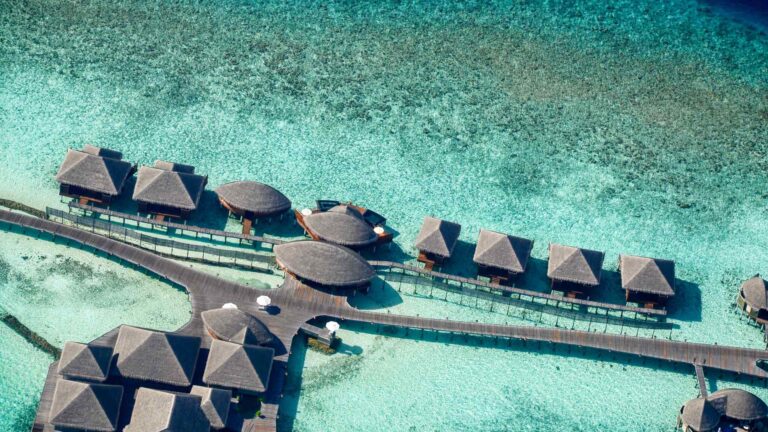
Before underwater hotels were a twinkle in an engineer’s eye, Fiji overwater bungalows were the epitome of aquatic accommodation.
And Fiji has some stunners that, while perched above the water, still let you interact with the lagoon in magical ways.
Likuliku Lagoon Resort (Malolo Island) –
Fiji’s first and most famous overwater bungalow resort. Each of Likuliku’s ten overwater bures sits on stilts above a protected lagoon reef.
Glass panels in the floor allow you to observe reef fish drifting below your living room or even beneath the bathroom vanity.
It’s not underwater sleeping, but at night you can switch on the bure’s under-floor light and watch the marine nightlife show under your fee, baby reef sharks, stingrays, and tropical fish often make appearances.
By day, you have a ladder straight from your private deck into the warm lagoon. Grab a snorkel and you’re instantly part of the reef ecosystem. It’s a pretty great compromise for the lack of underwater suites: you’re essentially half-in, half-out.
Plus, the resort itself is adults-only, super luxurious, and authentically Fijian in design. Romance factor: off the charts.
Cost: around $1,300–$2,000 per night depending on season, and it includes all meals in their wonderful restaurant (which, by the way, is beachfront with ocean views – you never leave the water at Likuliku).
Other resorts with overwater or floating bures include Koro Sun Resort in Savusavu (they have edge-of-lagoon thatched bures that float, but are tethered – more like over-water villas at the shore) and Musket Cove’s Villa on the Water.
While not as elaborate as Likuliku, they all feed that desire to be as close to the water as possible, hearing the lapping waves beneath your floorboards at night.
Underwater Adventures: Diving with Sharks & Giants
If you can’t sleep underwater in Fiji, dive under instead!
Fiji is often called the “Soft Coral Capital of the World” and offers phenomenal scuba experiences for all levels.
Here are two must-try underwater adventures that will make you feel like you’re starring in Blue Planet:
The Beqa Lagoon Shark Dive (Pacific Harbour, Viti Levu) –
Arguably one of the most thrilling shark encounters on the planet, and it’s available to recreational divers.
Off the southern coast of Fiji’s main island lies Beqa Lagoon, where trained dive masters run controlled shark feeding dives in a marine reserve.
Picture kneeling on the sandy bottom at 18m (60ft) while 20 or more bull sharks (yes, the big boys) circle in for their tuna-head snacks, alongside tawny nurse sharks, lemon sharks, and whitetip and blacktip reef sharks.
On a good day, up to 8 species of shark might show up, including graceful tiger sharks on occasion.
Talk about an adrenaline rush!
You’re safely overseen by guides with long metal prods (mostly to gently nudge curious sharks away), and no cages are involved – it’s a natural dive.
For many, this is a life-changing experience that dispels the fearsome myths about sharks. You realize they’re not interested in you at all (just the food), and you get within literal inches of these magnificent creatures.
Non-divers can even watch from above snorkeling on the boat (they’ll see shadows of big sharks below). If you’re a certified diver visiting Fiji, do not miss this. Just bring your bravery and maybe an extra set of you-know-what because it is wild (but perfectly safe with reputable operators).
Great Astrolabe Reef & Namena Marine Reserve (Kadavu & Namena) –
For a gentler but equally awe-inspiring underwater time, head to the outer reefs.
The Great Astrolabe Reef off Kadavu Island and the Namena Reserve off Savusavu/Vanua Levu offer pristine coral gardens and a chance to see bigger pelagic fish and even manta rays.
In certain seasons (usually May–October), mantas glide through channels in these areas to feed. Some resorts like Kokomo Private Island (Kadavu) and Barefoot Manta (Yasawas) offer snorkeling with mantas as well.
Drifting alongside a 4m-wide manta ray as it somersaults in open water is a humbling, almost spiritual experience. These reefs are also flush with colorful soft corals, giant clams, sea turtles, and clouds of reef fish.
You won’t be sleeping underwater here, but a two-tank dive can feel like you entered an alien world of beauty for a couple of hours. For non-divers, snorkeling is excellent in shallow parts of these reefs (but do go with a guide or group, currents can be tricky).
And hey, if you are keen to simulate an overnight underwater experience, consider a liveaboard dive boat.
Operators like Nai’a Cruises run week-long trips where you literally live at sea and dive 3–4 times a day on remote reefs.
You’ll be sleeping above water (in a cabin) but spending so much time under it that it might scratch that itch. Not to mention, stargazing from a boat deck in Fiji with zero light pollution is its own kind of magic.

Unique Underwater Encounters (No Scuba Needed)
Maybe you’re not a certified diver, or you prefer your undersea adventures with a helmet or vehicle.
Fiji has a few options for you too:
Snorkel with Reef Sharks at Kuata –
The Yasawa Islands offer a soft adventure where you snorkel with (small) reef sharks.
At Kuata Island, guides will take you to an area known for resident white-tip and black-tip reef sharks. You’ll float at the surface with mask and snorkel as these curious but timid sharks (typically 3-4 feet long) swim below and around you.
No cage, but also no chum or feeding, this is about seeing them in their natural state. It’s a great family-friendly way to meet sharks, especially if the Beqa bull sharks sound too hardcore.
Plus, the coral and fish life in Yasawas are gorgeous to see while you’re out there.
Underwater Helmet Dive (a.k.a. Aqua Trek) –
While not as widespread as in some destinations, there are a couple of places in Fiji where you might find a helmet dive offering.
This involves wearing a weighted diving helmet that keeps your head dry (with air pumped in) and walking along the seafloor a few meters down.
It’s basically an underwater stroll without needing to know how to dive or even swim. One known operator is on Treasure Island in the Mamanucas, where they’ve done underwater scooter/helmet dives for guests.
Clad in your spacey-looking helmet, you’ll walk amidst corals and hand-feed reef fish. It’s shallow (maybe 3-4m deep, ~12 feet), supervised, and suitable for most ages (often 8+).
If you’re apprehensive about deep water, this can be a nice intro to the undersea world – a stepping stone to bigger adventures.
Submarine Joyride at Laucala Island –
For the ultra-luxury travelers: Laucala Island (a private resort owned by Red Bull’s billionaire founder) used to boast a 2-person submersible called the DeepFlight Super Falcon that guests could ride in.
It’s basically a mini-submarine that looks like a winged white shark, capable of swooping around reefs and drop-offs. If it’s operational (check ahead, such toys sometimes go in for maintenance), this is one way to “dive” without getting wet.
Of course, a stay at Laucala runs tens of thousands per night, so this is for those who might also be considering Lover’s Deep one day.
But hey, it exists, proving Fiji has a little something for everyone, including a personal submarine experience.
Dry Land, Wet Views: Aquariums & Viewing Points
Fiji doesn’t have large public aquariums like big cities do, likely because the real thing (the ocean) is so accessible.
However, one unique offering:
Denarau Coral Farm & Viewing Room –
On Denarau (the resort hub near Nadi), there’s a marine conservation initiative that has a coral nursery lagoon.
Some resorts occasionally offer guests a chance to visit and even help out with coral planting.
While not exactly an underwater hotel lounge, these nurseries often have small underwater observatory bubbles or large viewing panels so you can see the baby corals and fish underwater without snorkeling.
It’s minor, but if you’re staying at a Denarau resort and craving some undersea sight without a big excursion, ask about this.
Glass-Bottom Boats & Kayaks –
Many resorts have glass-bottom boat tours or even transparent kayaks.
For example, on Castaway Island or around the Mamanucas, you can take a short glass-bottom boat ride to see reefs and maybe even spot turtles from above.
Some eco-tours around Taveuni and Savusavu use glass-bottom kayaks that let you paddle over rainbow coral gardens while peeking below. It’s a leisurely way to enjoy underwater scenery, especially good for young kids or non-swimmers.
And we’d be remiss not to mention one more quasi-underwater claim to fame in the region (though it’s a neighbor, not Fiji itself): Vanuatu’s Underwater Post Office.
A short hop from Fiji, Vanuatu offers the novelty of posting a waterproof postcard from an undersea post box just off Hideaway Island.
It’s only 3 meters deep, so snorkel down, drop your postcard, and voila! You’ve mailed something underwater. If your Fiji travels extend onward in the South Pacific, it’s a fun one to add to the list!
Quick-Hit Tips for Fiji’s Aquatic Experiences
- Bring Reef-Safe Sunscreen: Fiji’s waters are as clear as they are because of healthy corals. Regular sunscreens can harm reefs. Opt for mineral-based, reef-safe sunscreens (zinc or titanium dioxide) and apply well before entering the water to reduce any damage.
- Timing for Wildlife: Want to see mantas? They’re common in Yasawa waters from May to October. Whale season (yes, whales!) in Fiji is typically July–September; occasionally divers or snorkelers hear or even see pilot whales or humpbacks in some areas. Ask local guides about what’s seasonal where you are.
- Respect Local Customs: Some marine areas are “tabu” (sacred/off-limits) periodically due to village customs. If a local guide says an area is off-limits for fishing or diving due to a death in the village or a traditional observance, respect that – it’s part of Fiji’s community-managed marine protection. They often reopen after some time, but it’s key to honor the practice.
- Diving Logistics: If you plan to dive in multiple spots (say, do the shark dive and then dive in Taveuni), bring your certification card. Also, consider travel insurance that covers diving. And remember the 24-hour no-fly rule after diving – factor that in before your flight home or between islands.
- Health & Safety: Underwater adventures can be tiring. Stay hydrated (tropical sun + saltwater can sneakily dehydrate you). If you’re doing a shark dive, listen carefully to the briefing – they’ll tell you not to flail your arms, etc., common-sense stuff that keeps the dive calm. For helmet dives or subs, equalize your ears as needed (usually not deep enough to matter, but everyone’s different).
- Underwater Photography: Many dive shops rent GoPros or similar if you don’t have one. It’s worth capturing your snorkel with sharks or your coral garden exploration. Just secure that camera with a wrist strap – many a GoPro now rests on the seafloor after a loose grip moment.
- Plan B for Weather: Occasionally, strong winds or storms can cancel ocean excursions. If underwater activities get nixed by weather, consider visiting a cultural site or enjoying a spa day and try again another day. Fiji’s weather is generally great, but tropical patterns can be finicky, especially December–March (cyclone season).
From shark dives that spike your adrenaline to peaceful nights in an overwater bungalow gazing at fish through the floor, Fiji offers myriad ways to connect with its underwater world short of an actual submerged hotel room.
And the truth is, floating in that warm lagoon, watching a clownfish dart through coral branches, or hearing the distant song of a reef at night from your bure… it’s pure magic that rivals any high-tech aquarium suite.
Where the Rest of the World Sleeps Under the Sea
Since Fiji’s underwater hotel is still on the drawing board, you might be wondering: where can I sleep underwater right now?
As luck would have it, other parts of the world have made the dream a reality.
Here’s a quick world tour of operational underwater accommodations (some we mentioned in the Dubai article, but worth reiterating in case you skipped to Fiji first):
- Conrad Maldives Rangali Island – The Muraka (Maldives): A two-level villa with an undersea master bedroom, set in an open ocean lagoon. Comes with a butler, private chef, and hefty price tag (~$40k/night). The epitome of Maldives’ “WOW” factor.
- Resorts World Sentosa Ocean Suites (Singapore): Duplex suites attached to a huge aquarium. Watch manta rays and sharks in the comfort of your bedcntraveler.com. City vibe meets underwater tranquility.
- Atlantis, The Palm – Underwater Suites (Dubai): As detailed earlier, a lavish aquarium-based suite experience. Service and opulence in the City of Gold.
- Reefsuites (Great Barrier Reef, Australia): Sleep under the sea on the outer reef after tourists go home. It’s intimate (just two suites) and eco-minded.
- Manta Resort Underwater Room (Zanzibar, Tanzania): Your private floating islet with a submerged bedroom. Rustic luxury and incredible Indian Ocean marine life.
- Jules’ Undersea Lodge (Florida, USA): The nostalgic scuba-access lodge in Key Largo. Great for bragging rights and a taste of classic underwater habitat life.
- Utter Inn (Sweden): An artist’s joke turned reality – quirky, tiny, and endearing. More glamping than hotel, but you are underwater.
- InterContinental Shanghai Wonderland (China): A couple of underwater suites in a submerged quarry hotel. Proof that “underwater” can also mean “underground” in a flooded pit!
- Lover’s Deep Submarine (Caribbean): If you want the underwater hotel to come to you, charter this uber-luxe submarine. Did we mention $175k a night?
The point is, while Fiji’s underwater resort is a work-in-progress, you have options across the globe to fulfill that fantasy.
And many travelers are now planning entire trips around these stays – a new bucket list category dubbed “subaquatic travel.”
Perhaps one day soon, Fiji will join this elite club with Poseidon or another venture. Given the country’s natural beauty, we certainly hope so.
Future Fantasies & Blue-Sky Concepts
Fiji’s Poseidon might be in limbo, but worldwide, creative minds keep dreaming up new ways to live underwater:
- Floating Undersea Suites: Some design firms propose detachable floating suites that could be moved to different reefs – like upscale houseboats that sink partway. No firm projects yet, but possibly the future of eco-tourism in places like Fiji or French Polynesia.
- Underwater Cities: It’s mostly sci-fi for now, but concepts exist for entire underwater habitat communities for tourism and research (inspired by Space habitats). If technology and demand align, who knows – your grandkids might vacation in an underwater condo!
- Hybrid Overwater/Underwater: A more near-term idea is resorts that combine overwater bungalows with optional underwater bedrooms. Imagine checking into a villa where the living room is overwater but a staircase leads to a submerged bedroom pod. This could be a more feasible model for places like Fiji with existing overwater resorts. Keep an eye out – it could be the next trend.
For now, we travelers straddle the line between reality and imagination.
Fiji offers reality in its superb marine experiences and dreamy overwater stays, and imagination in its tantalizing Poseidon plans. Both have their charm.
Quick-Glance Cheat Sheet: Underwater Hotel Highlights
In case you’re comparing notes, here’s a mini table for some key underwater stays and how Fiji’s concept (Poseidon) stacks up, if/when it arrives:
| Underwater Hotel (Location) | Depth & Environment | Unique Perk | Status |
|---|---|---|---|
| Poseidon Undersea (Fiji) planned | 40 ft in private lagoon | Full 5-star resort underwater (24 suites, subs, etc.) | Not open |
| Muraka, Conrad (Maldives) | 16 ft open ocean reef | Private 2-level villa + underwater bedroom | Open (2018) |
| Atlantis Underwater Suites (Dubai) | ~13 ft aquarium | Huge aquarium views, city luxury | Open (2008) |
| Manta Resort Underwater (Zanzibar) | 13 ft ocean lagoon | Floating private island room | Open (2013) |
| Reefsuites (Australia GBR) | 13 ft coral sea | Only 2 suites, pure reef experience | Open (2019) |
| Jules’ Lodge (Florida, USA) | 21 ft lagoon | Must scuba dive to enter – adventure! | Open (1986 as lodge) |
| Utter Inn (Sweden) | 10 ft lake | Art project cabin, budget-friendly | Open (summer seasons) |
| Hydropolis (Dubai) canceled | 60 ft Persian Gulf (planned) | Would’ve been largest underwater hotel | Canceled |
| Planet Ocean (Florida) planned | 30 ft ocean module pods | Focus on reef restoration + tourism | In development |
Booking & Preparation Tips for Fiji’s Aqua-Adventures
While we can’t book an underwater hotel in Fiji (yet), here are some practical tips for planning your Fijian undersea adventures and related stays:
- Plan Around Seasons: Fiji’s dry season (May–October) generally has better visibility underwater, and it’s prime time for mantas and calmer seas. Wet season (Nov–Apr) can still be great (warmer water, rain brings nutrients) but also can mean occasional cyclones or reduced visibility. Pick your timing based on what you want to see (sharks are year-round in Beqa; mantas mostly winter; coral spawning happens around November full moons – a wild dive if you time it right).
- Split Your Stay: To maximize experiences, consider splitting your trip between a couple of locations. For instance, Pacific Harbour for the shark dive and culture, and an outer island (Mamanucas/Yasawas or Taveuni/Kadavu) for reefs and that overwater bungalow feel. Fiji has hundreds of islands – two or three in one trip can give a rich sampler.
- Dive Certification: If you’re interested in the shark dive or other scuba but aren’t certified, you can actually do a resort course or get PADI Open Water certified at many Fiji resorts (likely cheaper than in some Western countries, plus prettier “classrooms”). Just allocate 3-4 days for training. Some sites (like the full bull shark feed at depth) require Advanced Open Water, but most have alternate shallower feed sites for Open Water certs.
- Health & Insurance: Tropical environments mean be mindful of small cuts/coral scrapes – they can get infected in heat. Pack a small first aid with antibiotic ointment. Also, travel insurance that covers diving and evacuation is strongly recommended if doing remote diving – Fiji’s chambers and medical facilities are limited outside main areas.
- Gear Up or Rent: Bringing snorkel gear? Many resorts lend fins, masks for free or small fee. If you have your own well-fitting mask, bring it – nothing worse than a leaky mask on a once-in-a-lifetime snorkel. Same with dive gear: resorts/dive shops have quality rental gear, so it’s optional to lug yours. Perhaps just bring your own dive computer and regulator if you’re picky.
- Photography & Drones: Underwater cameras we discussed, but note: drones are popular for those overwater bungalow shots. Fiji allows them recreationally, but some resorts have no-fly zones (privacy of other guests). Always ask your resort manager first. And obviously, don’t attempt to drone the shark dive or something crazy – keep those separate!
- Local Marine Etiquette: Fijians have a deep respect for the ocean, embodied in the concept of “qoliqoli” (traditional fishing grounds). When snorkeling or diving, don’t touch coral (it can die from human bacteria or break – plus fire coral can sting badly), don’t chase or harass sea life, and never take shells or creatures out of the water (aside from the fact that many shells house living critters, it can be illegal). Sustainable tourism ensures these wonders remain for the future.
- Enjoy the Above-Water Too: It’s easy to get caught up in undersea excitement, but remember Fiji’s surface world is equally stunning – from lush jungles to cultural villages. Balance your itinerary: maybe a waterfall hike or village visit on days between ocean adventures. Sometimes the best way to appreciate the ocean is to take a day on land to rest, recharge, and reflect (sunburn recovery day, anyone?).
Final Splash
Fiji may not yet let you sleep in a submerged suite surrounded by corals, but in every other way it invites you to revel in its underwater glory.
This is a nation where the sea is entwined with daily life, where you’ll hear myths of ocean gods, songs of pearl divers, and laughter from children playing in lagoons at sunset.
Whether you’re diving with sharks in Beqa, snorkeling through soft coral gardens off Taveuni, or simply sipping a cocktail in an overwater bungalow as reef fish dart below, you’ll feel that profound connection to the blue world that covers 70% of our planet.
In a sense, the entire Fiji experience is an underwater hotel – the ocean is your ever-present neighbor, and sometimes your floor or ceiling.
You don’t need a high-tech capsule to feel the magic of sleeping by the sea here; the gentle lap of waves and the faint glow of plankton in the moonlight can cradle you into one of the best slumbers of your life.
So come to Fiji, immerse yourself (sometimes literally) in these crystalline waters, and dream of the day you might return to stay under them.
Until Poseidon opens its doors, you’ll find plenty of adventures to tide you over.
As they say in Fiji, “Moce mada” (goodbye for now). Or perhaps more fitting: “Suluka yani” – dive safely. The ocean awaits you here with open arms, and when it comes to fulfilling your underwater fantasies, Fiji’s got your back.
After all, in the islands of smiles, even if the underwater hotel is a future vision, the underwater happiness is ready for you right now.


Lola Martinez, CTA, is the founder and editor-in-chief of DreamBungalows.com; she’s personally inspected 70+ over-water resorts across eight countries (200+ nights) and is a Society of American Travel Writers member quoted by Condé Nast Traveler, Travel + Leisure, and Forbes’ Verified. Her fieldwork and credentials power honest, reader-first reviews.