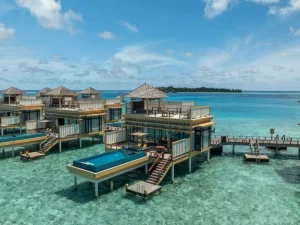
Little Peter Oasis: One Overwater Villa, One Entire Private Island
The dream is frankly outrageous: an entire three-acre Belizean island for your group, one thatched overwater villa, a private chef, and nobody competing for the best hammock because the other guests do not exist.
The catch is that exclusive use comes with a serious nightly price, boat-dependent logistics, staff living on the island, and an open-air home that asks everyone to cooperate with weather, water, and power.
What you need to know
Little Peter Oasis is an all-inclusive private-island rental southeast of Sittee River Marina, centered on one two-bedroom, two-bathroom overwater villa with a wraparound deck and protected swimming lagoon.
The island is rented to one party at a time, while a chef, concierge, and caretaking team stay in separate quarters and communicate by two-way radio when guests want assistance.
- Qualifying inventory: one overwater villa with two queen bedrooms and two bathrooms.
- Privacy reality: your party is the only rental group, but resident staff remain on the island.
- Best for: honeymooners, milestone couples, or four-person groups who will use the exclusive island.
- Biggest caveat: emergency medical care requires a boat and then a substantial mainland journey.
The exact overwater inventory
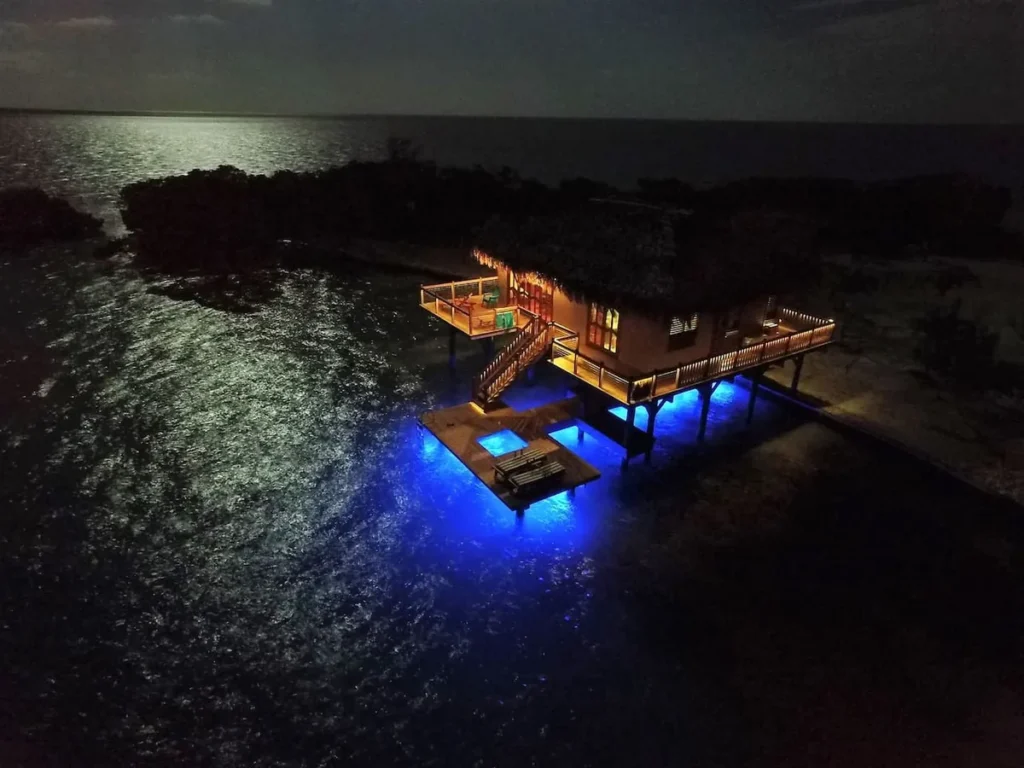
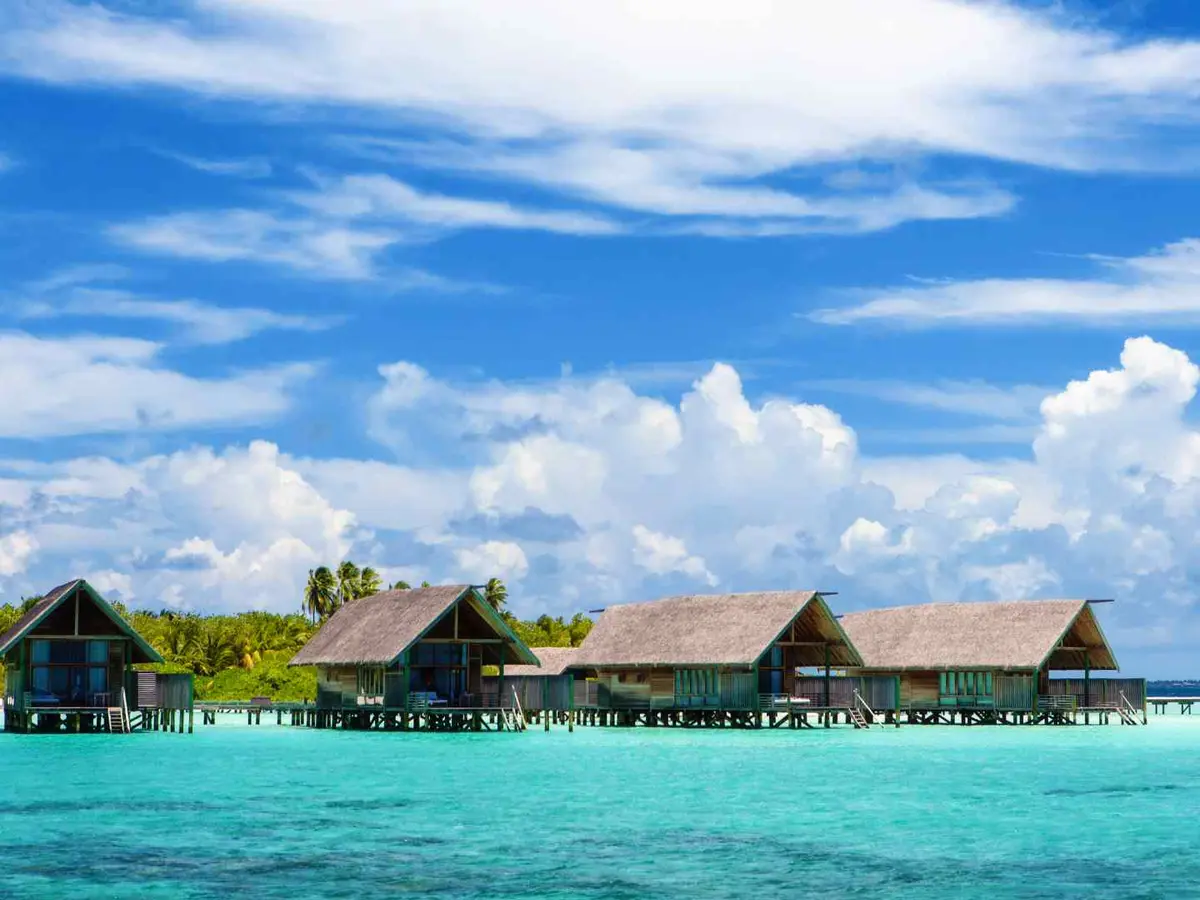
There is exactly one qualifying overwater stay: the main thatched-roof villa, built on stilts with two bedrooms, two bathrooms, a central family room, island kitchen, and water-facing deck.
Each bedroom has a queen bed and air conditioning, while the central living area uses large openings and ocean breezes rather than full-house climate control.
The standard capacity is four, though the rental agreement says a sleeper futon may accommodate a fifth guest under eighteen only with owner approval.
A newer beach casita may expand group options, but it sits on land and does not qualify as an overwater bungalow.
Because current marketing pages vary in how prominently they describe the casita, ask whether it is included, optional, closed, or used only for certain party sizes.
The best room choice is really a group choice
If your Belize shortlist is growing, compare Belize overwater stays with the smaller Lina Point resort. The level of privacy and the journey to each room are very different.
There is no category ladder, so the decision is whether one two-bedroom overwater house works for the people traveling together.
It is ideal for two couples who are comfortable sharing a central living area and the island experience, provided the bedroom views, bathroom access, and bed sizes suit everyone.
A honeymoon couple gets extravagant space and privacy, but pays for an island capable of hosting more than two.
Families should discuss the open water, decks, stairs, sleeping plan, staff proximity, and supervision expectations before confirming.
What “private island” actually means
Only one guest party rents the island, so there are no strangers at breakfast, no occupied villa next door, and no competition for kayaks.
Staff live across the island in separate quarters and remain available through a radio, which creates service and safety without having someone hover over the sun deck.
Local fishers may pass offshore, and government authorities or the fisheries department may occasionally call at the dock as part of normal operations.
The correct expectation is exclusive guest use, not an invisible force field around three acres of Belize.
Couples who value absolute staff-free solitude should discuss service rhythm, housekeeping, meal delivery, and privacy boundaries before arrival.
The lagoon and snorkeling reality
The villa’s swim dock leads into a private blue lagoon protected by surrounding reef structure, creating a calmer focal point for swimming and snorkeling.
The island markets swim-in, swim-out access, kayaks, paddleboards, and basic fishing, but weather and sea state still decide what is safe.
Coral, rays, sharks, fish, and other wildlife may appear without becoming predictable amenities.
Belize’s national tourism board describes the Belize Barrier Reef system as a 185-mile marine landscape with protected areas, atolls, patch reefs, and internationally important ecosystems.
Guests should avoid touching coral, chasing animals, feeding wildlife, or entering water after drinking heavily.
Our house-reef guide explains why entry points, wind, current, depth, and a reliable surface watch matter even in protected-looking water.
Getting to Dangriga
Most international guests land near Belize City and connect to Dangriga on a short domestic flight or travel south by road.
The island’s own itinerary strongly favors the domestic connection, followed by a concierge pickup and road transfer to the marina.
A road shuttle from the international airport is possible but takes much longer and carries a separate quoted cost in the current frequently asked questions.
Ask the island team to review the exact international arrival before buying a nonrefundable domestic segment, particularly when customs or checked bags could compress the connection.
On departure, preserve the recommended buffer because a boat, road transfer, domestic flight, and international flight form a relay race with several opportunities to drop the baton.
The final boat ride
Little Peter sits roughly nine nautical miles southeast of Sittee River Marina, with the sea transfer commonly described as about twenty-five to forty minutes depending on conditions and route.
The final boat is part of the experience and part of the risk, so confirm weather limits, luggage protection, life jackets, departure window, and the late-arrival plan.
Use a waterproof pouch for passports, medication, and electronics, and wear clothing that can tolerate spray.
Rough seas can delay or cancel movement, which is why trip-interruption coverage matters more here than it does at a hotel beside an airport.
The official Little Peter FAQ is unusually candid about medical travel times, water conservation, staff presence, and weather procedures, making it essential pre-booking reading.
Dining with a private chef
The all-inclusive base centers on three chef-prepared meals each day, customized around the party’s tastes and available ingredients.
Fresh fish and Belizean flavors are recurring themes, with meals served privately rather than through a resort restaurant schedule.
Guests should complete preferences early and distinguish between dislikes, allergies, religious restrictions, and medically necessary avoidance.
Remote-island provisioning requires advance planning, and even a talented chef cannot summon an obscure ingredient from the sea.
Ask which alcoholic and nonalcoholic drinks are included, whether premium bottles cost extra, and how special celebrations or beach dinners are priced.
The private-chef format is a major part of the value, particularly for groups who enjoy lingering over dinner without signing a bill after every course.
What all-inclusive should cover
Standard marketing bundles the island, villa, chef service, meals, concierge support, local boat transfer, and non-motorized island activities, but the contract controls the real inclusions.
Excursions, massages, diving, premium alcohol, exceptional provisioning, mainland transport, and certain special arrangements can add cost.
Request an itemized package sheet naming every transfer segment, meal, beverage, activity, tax, service charge, and gratuity expectation.
A private island is no place for the phrase “we thought that was included” to make its dramatic entrance.
What the trip really costs
The current itinerary advertises a base near two thousand United States dollars per night for up to four guests, with three-night and longer totals built from the same rate.
Treat that figure as a dated starting point because holidays, party size, new accommodation, special menus, transport, and excursions can change the proposal.
Add flights to Belize, the domestic or road connection, travel insurance, optional tours, spa treatments, alcohol outside the package, and gratuities.
A couple pays the highest per-person amount because the island is still staffed and operated exclusively, while four guests spread the core cost more efficiently.
Our true overwater vacation cost guide helps compare this exclusive-use model with booking two luxury villas at a shared resort.
The right comparison includes privacy, chef service, water toys, local boat transfer, and the value of never hearing another guest claim the last dinner reservation.
Water, power, and open-air living
Freshwater comes from rain catchment and filtration, so guests are asked to conserve while showering, rinsing, and flushing.
Tap water is not for drinking, and bottled drinking water is supplied.
Hot shower water requires generator heating and staff coordination, with the island advising that preparation takes time rather than appearing instantly at the faucet.
The open family room has broad openings designed for breeze, which must be secured when sideways rain or a thunderstorm approaches.
Bedrooms are air-conditioned, while the main living space remains connected to tropical temperature, humidity, wind, and sound.
That design feels magnificent in kind weather and less cinematic during a squall, so guests should want the real island rather than only the drone footage.
Who will love it
Honeymooners and anniversary couples get rare privacy, personalized food, a memorable setting, and enough staff support to avoid playing accidental castaway.
Two couples can turn the island into a surprisingly rational splurge when everyone values water time and shared meals.
Families with capable swimmers may love the private playground, subject to close supervision and a clear understanding of open-water hazards.
Travelers exhausted by restaurant bookings, pool-chair politics, and strangers on speakerphone may consider the exclusive-use premium money beautifully spent.
Who should skip it
Skip Little Peter if the budget requires a conventional hotel rate, if boat dependence creates anxiety, or if fast medical access is essential.
Guests who need air conditioning in every shared space, instant hot water, bustling nightlife, independent restaurant choice, or total separation from staff should look elsewhere.
The two queen bedrooms may not suit friends who do not want to share beds, and the futon should never be assumed without written approval.
Heavy drinkers or anyone unwilling to follow water-safety and conduct rules are a poor match for an island where reckless behavior has unusually immediate consequences.
Ideal stay length
Four to six nights balances the effort of reaching the island with enough time for weather, swimming, kayaking, and several chef menus.
Three nights is the practical minimum for a concentrated celebration, though the arrival and departure days still contain meaningful logistics.
A full week suits guests who genuinely enjoy quiet repetition and can let weather redraw an afternoon without feeling cheated.
Safety and emergency caveats
The resort states that non-life-threatening care in Dangriga can require a boat to the mainland plus a substantial road journey, while life-threatening cases may need Belize City.
That reality makes disclosure of relevant conditions, adequate medication, emergency insurance, and a serious evacuation plan essential.
Use life jackets when directed, avoid swimming alone, respect staff calls on sea conditions, and keep the radio accessible.
Atlantic storm season can disrupt every transport layer, so read cancellation and rescheduling terms before buying flights.
Secure large open doors when instructed, conserve water, and understand that generator systems are part of daily operation rather than invisible infrastructure.
Frequently asked questions
How many overwater villas are there?
There is one main two-bedroom, two-bathroom overwater villa, rented as part of the whole private island.
Will we be the only people on the island?
Your party will be the only rental group, but the chef, concierge, and caretakers live in separate staff quarters on the island.
How many guests can stay?
The core villa sleeps four in two queen bedrooms.
A fifth guest under eighteen may use the sleeper futon only with owner approval, and any beach-casita capacity should be confirmed separately.
Is the island all-inclusive?
The base package is marketed as all-inclusive, but the signed quote and rental agreement determine drinks, mainland transfers, excursions, spa services, and other extras.
Can you snorkel from the villa?
Yes; the villa has a swim dock and the island promotes snorkeling in its protected lagoon.
Daily conditions and staff safety guidance still control access.
How far is the hospital?
The island’s own guidance says urgent mainland care can require a boat plus a long road transfer, with major emergencies potentially requiring Belize City.
Travelers with important medical needs should discuss the plan before booking.
The Dream Bungalows verdict
Little Peter Oasis turns the overwater fantasy up until the resort disappears and the entire island becomes the room category.
The one villa is spacious enough for four, the chef and caretakers make privacy comfortable, and the lagoon puts water at the center of every day.
The price and emergency logistics are serious, while open-air systems require guests to participate in island life rather than consume it at a distance.
Book it for an occasion big enough to deserve the whole horizon, then read the FAQ and contract as carefully as you admire the deck.