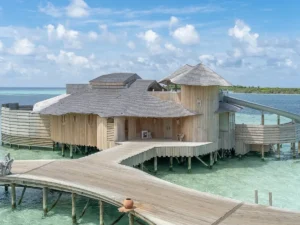
Anantara The Palm Overwater Villas: Dubai’s Lagoon Shortcut
Anantara The Palm offers something delightfully unusual: an overwater-villa morning without a seaplane, passport stamp between islands, or week-long commitment. It is Dubai’s easy version of the fantasy, which is both its greatest strength and the reason expectations need a small reset.
Anantara The Palm in 30 seconds
- Standout: The UAE’s distinctive overwater rooms, glass viewing panels, and a Palm Jumeirah location close to Dubai attractions.
- Best for: Couples who want overwater novelty paired with restaurants, taxis, and a city itinerary.
- Biggest catch: The villas sit above a managed resort lagoon, not an open tropical reef with direct swimming from every deck.
- My pick: An Over Water Villa for one or two nights, followed by a room change only if the city portion needs a different setup.
The resort occupies the eastern crescent of Palm Jumeirah. Its architecture borrows from Southeast Asia, but the skyline, climate, and calm constructed lagoon make the experience unmistakably Dubai.

What the overwater villa really delivers
The official villa page is the authority on current size, bed setup, glass panel, and bathroom. The signature pleasure is waking above blue water with a clear viewing section beneath your feet.
That panel is for watching, not snorkeling, and marine activity can be modest. Think of it as a playful architectural feature rather than a private aquarium with a performance schedule.
The villa deck faces the lagoon, but standard Over Water Villas do not promise a private pool. Guests who consider a pool essential should match the exact category and photographs before paying.
I would book the overwater room for atmosphere and privacy, not as a substitute for a Maldives house-reef villa. The appeal is how easily it fits beside a Dubai stopover, desert day, or long weekend.
The lagoon is the most important expectation check
Anantara’s overwater buildings sit above a controlled resort lagoon. Water access rules, depth, maintenance, and permitted activities differ from a remote island where guests descend a private ladder into the sea.
A direct resort answer should explain swimming access from the exact villa and the lagoon areas guests may use. A photograph of water beneath the deck does not prove that jumping in is allowed or sensible.
The managed setting has advantages: calmer visuals, nearby lifeguarded pools, and fewer worries about tides or strong current. The tradeoff is less wild-ocean feeling and no promise of meaningful reef snorkeling at the room.
Our Middle East overwater bungalow guide helps compare this style with regional resorts that sit above mangroves, beaches, or larger lagoons.
Glass floors are fun, not a reason to overspend
A viewing panel creates a little spark each time you notice water under the room. It does not guarantee fish, perfect clarity, or enough natural light to watch anything at every hour.
I would treat the panel as a bonus in a room I already like. If glass floors are the main dream, compare designs in our glass-floor bungalow guide before assuming all windows provide the same view.
Travelers with a fear of open water may actually appreciate that the panel is contained inside a conventional luxury room. Anyone uncomfortable with visible water below should ask whether it can be covered.
Children tend to love the novelty, but supervision around balconies and water remains essential. The exact occupancy, extra bed, and connecting-room options belong in the written booking.
Privacy is good until the curtains open
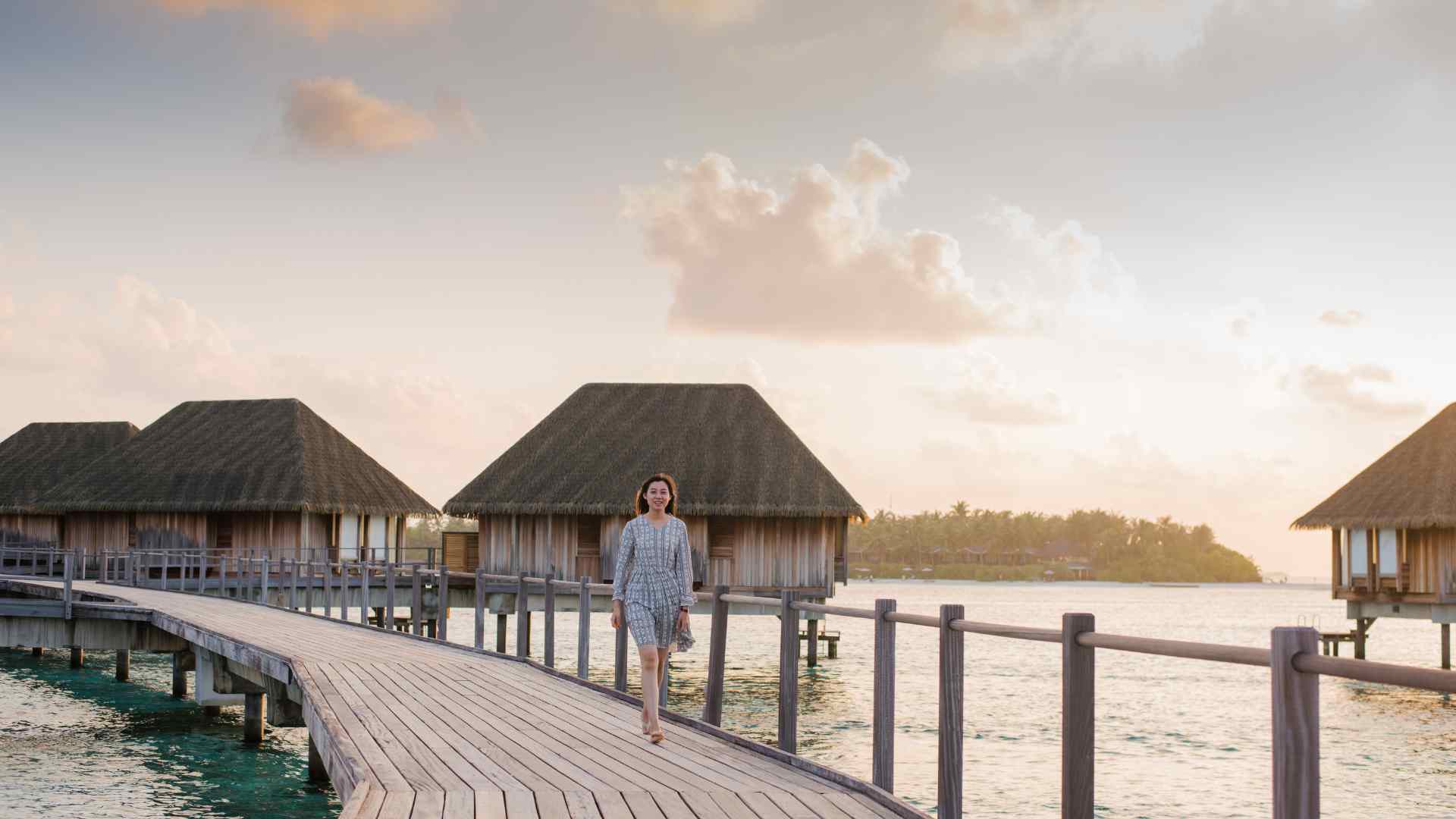
Overwater placement separates the villas from the main room blocks, which can feel more private. Neighboring villas, boats, walkways, and the Dubai skyline still remain part of the scene.
I would request reduced walkway traffic and a deck that is less exposed to nearby rooms. “Most private” is less useful than describing the sightline you want to avoid.
The bathroom view is a selling point, so check window coverings and deck sightlines if modesty matters. Light sleepers should also ask about boats, evening events, and service movement near the jetty.
Heat changes outdoor privacy because closed curtains and indoor air conditioning may become more appealing during the hottest hours. Shade can be more valuable than a theoretically open view.
Dubai heat decides how much deck you use
The UAE’s warm season can make an exposed deck uncomfortable through much of the day. Before paying for outdoor space, consider when you will actually sit outside and whether the room provides reliable shade.
The official Dubai weather guide offers seasonal context. A pleasant winter afternoon and a very hot summer afternoon are different vacations even in the same villa.
I would plan city touring early, pool or spa time later, and deck time around softer light. Sunscreen, water, sandals, and a cover-up matter on a short walk more than optimistic packing suggests.
Summer rates can look attractive because the climate changes how outdoor features are used. The bargain only works if indoor dining, pools, and air-conditioned plans still sound enjoyable.
Dining variety is a real advantage
Anantara The Palm has multiple restaurants and bars, with Southeast Asian, international, beach, and specialty options under current schedules. The official dining pages should settle meal periods, dress codes, and reservations.
This is where Dubai beats a tiny island: guests can also leave the resort for dinner elsewhere. The drawback is traffic and taxi time, especially when a reservation sits across the city.
Half board may be convenient if the resort is the main destination. A breakfast-only rate can suit travelers who expect several city meals, so compare habits rather than package labels.
I would reserve one special resort dinner and keep another evening open. Dubai has too many good options to turn every meal into a prepaid obligation.
Getting there is refreshingly ordinary
The resort is reached by road from Dubai’s airports, with travel time varying dramatically by traffic. That removes the daylight and baggage complications of a seaplane while introducing the city’s own favorite hobby: congestion.
The official airport site covers terminal details, while the hotel can provide a realistic pickup window. Ride-hailing, taxi, and private-car options should be compared for luggage and child-seat needs.
Guests combining the stay with central Dubai should group sightseeing by area. Crossing the Palm repeatedly can nibble away at the easy resort feeling.
I would arrive early enough to enjoy the first afternoon but avoid guaranteeing a room before official check-in. A pool bag in hand luggage makes any wait more pleasant.
Who should book this villa
The overwater villa suits couples who want novelty, easy city access, polished facilities, and a stay that works for two or three nights. It is also useful for travelers unsure whether they want an entire remote-island holiday.
I would skip it if direct ocean swimming, a house reef, open-horizon seclusion, or a private pool is nonnegotiable. Those goals are better matched by a destination built around the sea rather than beside a city.
Families can enjoy the resort, but the overwater layout deserves a safety conversation. Confirm railings, locks, sleeping arrangements, pool access, and the route to family facilities.
Our complete overwater bungalow guide helps decide whether Dubai’s convenience beats a more immersive island trip.
How I would plan two nights
- Arrive with swimwear accessible and use the resort on day one.
- Keep the full middle day mostly on the Palm.
- Reserve one resort dinner and one flexible meal.
- Enjoy the glass panel in daylight rather than expecting nighttime wildlife.
- Continue to a city hotel only if sightseeing logistics improve.
Two nights is enough to enjoy the room without making the limited lagoon experience carry an entire week. Three works when the pools, spa, and restaurants are also central to the trip.
The total bill needs a Dubai reality check
The room premium sits on top of food, drinks, taxis, spa time, and any city attraction that requires crossing the Palm. A low promotional rate can still produce an expensive short stay once breakfast and two evenings are added.
I would compare the refundable room-only total with breakfast and half-board versions, then price the meals I am realistically likely to order. A plan is valuable when it matches appetite, not when it merely makes the booking page look settled.
Resort fees, taxes, deposits, and cancellation deadlines deserve their own line in the budget. The same is true for early check-in or late checkout when an international flight arrives at an inconvenient hour.
A one-night overwater splurge can work inside a longer Dubai visit, but a room move costs usable time. Two nights is usually the better minimum because the glass floor, deck, pool, and restaurants get one full day without luggage hovering nearby.
The maintenance questions worth asking
Water, humidity, and intense heat are hard on deck boards, seals, air conditioning, and exterior doors. Recent repeated reports matter more than the date a room first opened or the perfection of a wide-angle photograph.
The useful pre-arrival questions concern any active refurbishment, closed lagoon areas, event noise, and the current condition of the exact villa category. A clear location and work schedule are more reassuring than a promise that disruption will be minimal.
Quick questions about Anantara The Palm
Can you swim directly from the overwater villa?
Private deck access should not be assumed. The resort’s current lagoon rules and the exact room description determine where guests may swim.
Does the villa have a private pool?
The standard Over Water Villa should not be assumed to include one. Match the booked category to its current amenity list.
Is this like a Maldives bungalow?
It shares the above-water room idea but not the remote reef-island setting. Its advantage is convenient Dubai access, dining choice, and a shorter commitment.
How many nights are enough?
Two or three nights suits most travelers using the villa as a special Dubai stay. A longer visit makes more sense when the whole resort, not only the room, appeals.
My final call
Anantara The Palm’s overwater villa is a clever Dubai treat, not a tropical-island substitute. I would book it for a short, celebratory stay, enjoy the glass floor and lagoon view, and keep expectations firmly attached to the Palm.