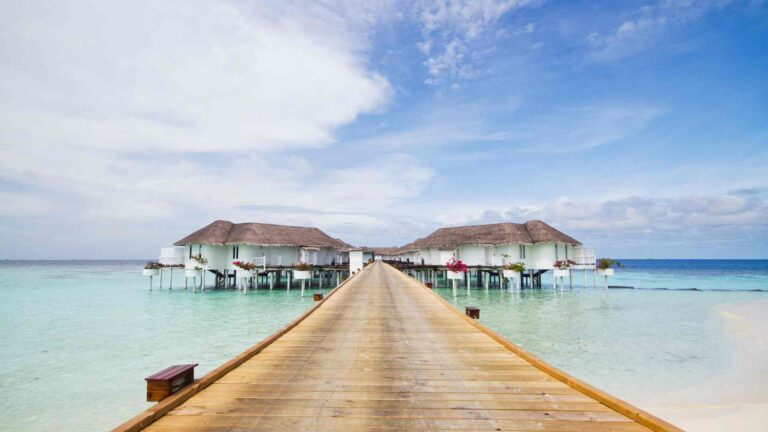
Big Resort or Small Island? Choosing Your Overwater Scale
Big resort or small island is the overwater question people skip. They pick a villa, a rate, and a month, and never ask how many other guests will be standing between them and breakfast.
Big resort or small island: the answer in 30 seconds
- Big resort if you have kids under six, a group of friends, a full week to fill, a tight budget, or a strong preference for being nobody in particular.
- Small island if you are on a short honeymoon, you came for the reef, or you want staff who know your coffee order by Tuesday.
- Mid-size if you cannot decide. It is the right answer more often than either extreme and almost nobody shortlists it.
Everything below is the reasoning, scenario by scenario, with a verdict on each one. Skip to the one that sounds like your trip.
First, what the two ends actually look like
A big overwater resort is a small town. Several restaurants, a dive center, a spa, a kids club, a gym, entertainment, and staff you will never see twice.
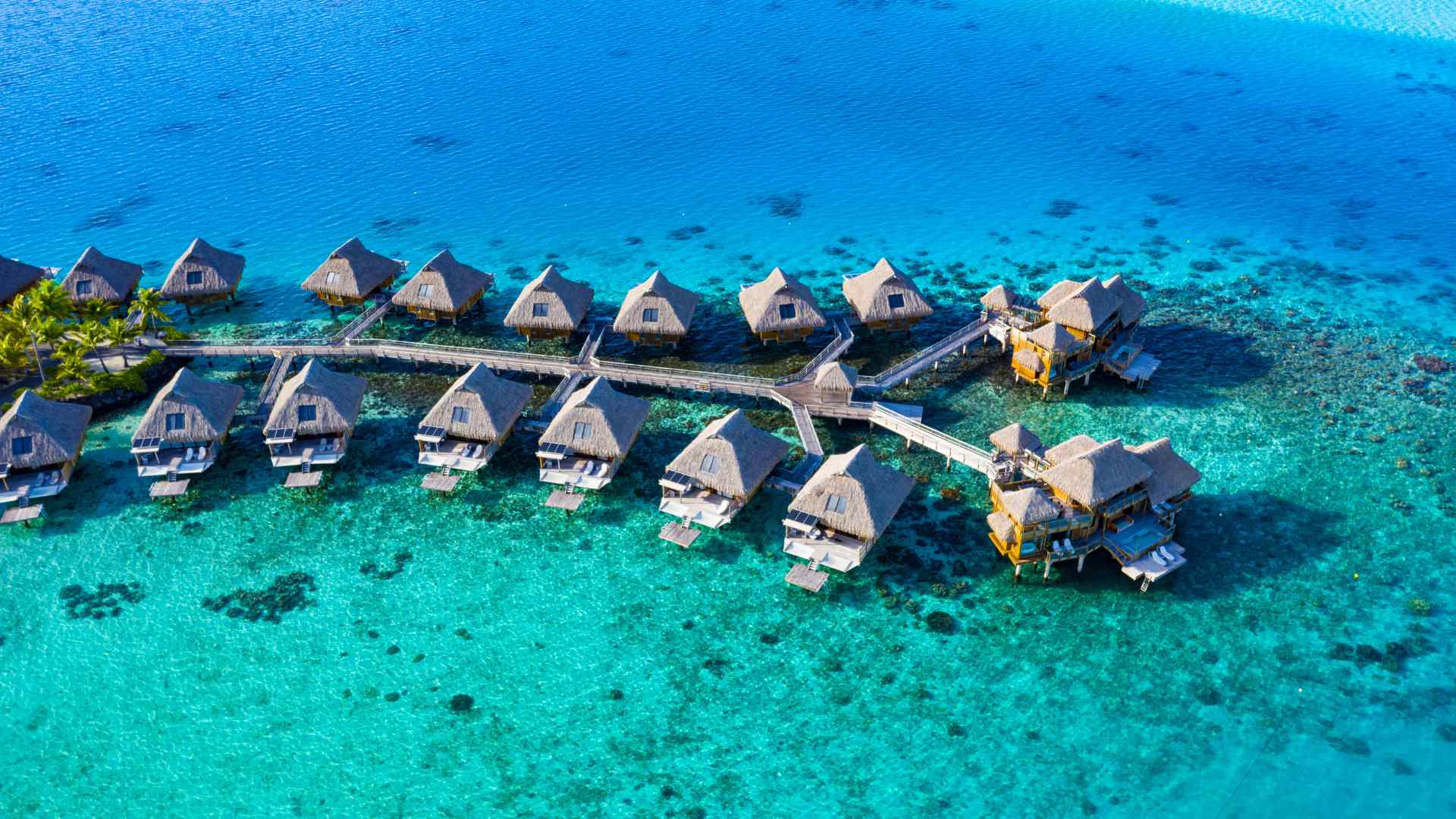
Compare the room layouts and facilities at tiny Kudadoo, Bawah Reserve, and large Waldorf Astoria Ithaafushi. The right scale should suit how you spend a normal afternoon, not just how the aerial photo looks.
A tiny island resort is closer to a very expensive house share. One restaurant, one bar, one dive shop, and a manager who knows your name by dinner on day one.
Both are lovely. They are lovely for completely different people, and that is the entire point of this post.
If you have not picked a region yet, the overwater bungalow hub is the wider view. This post is only about size.
You are on your honeymoon and you want to be left alone
Small island, without much hesitation. The whole product at a tiny resort is quiet, and quiet is what you are buying.
At a big resort you will share the sunset deck with a hundred people who also wanted a photo of it. That is not a tragedy, but it is not what you pictured.
The catch is that small islands have one dinner menu and it repeats. Seven nights of the same kitchen is fine for four days and noticeable by six.
Verdict: small island for stays of five nights or fewer, big resort if you are staying a full week and you like variety at dinner.
You are bringing kids under six
Big resort. This one is not close and I will not pretend it is.
Small islands often have no kids club, no pediatric-friendly menu, no babysitting, and sometimes an age minimum that rules you out entirely. They are also frequently adults-only by policy.
Big resorts have redundancy, which is what parents actually need. If one restaurant is a disaster with a toddler, there is another one.
Villa safety is a separate question from resort size, and it deserves its own look. Read the guide on overwater villas with toddlers before you book anything at any scale.
Verdict: big resort, and confirm the age policy in writing before you pay a deposit.
You are going for the reef and nothing else
Small island, most of the time. Smaller islands tend to sit on smaller footprints with less construction pressure on the surrounding reef.
They also tend to attract guests who came for the same reason, which means the dive operation is serious rather than decorative. That matters more than the number of tanks on the rack.
The tell is the morning boat schedule. A serious dive center runs a dawn dive whether or not anyone signed up the night before, and a decorative one runs whatever fills.
But size is not a guarantee of reef quality, and I do not want you to treat it as one. Some large resorts sit on outstanding house reefs and some tiny ones sit on sand.
Judge the reef directly instead of inferring it from the resort’s size. My checklist for that is in how to judge a resort house reef.
Verdict: small island as a starting bias, overruled instantly by evidence about the specific reef.
You get restless and you need something to do
Big resort, and be honest with yourself about this. Some people are genuinely happy doing nothing for a week and some people are lying.
A tiny island gives you the lagoon, the deck, a book, and a bar. By day four, if you are not built for that, you will start inventing errands.
A big resort gives you tennis, a gym, cooking classes, four bars with different moods, and enough people-watching to fill an afternoon. That is a real amenity for a certain temperament.
Verdict: big resort, and do not let anyone shame you for it.

You hate small talk and you dread being recognized
Here is the counterintuitive one. Small islands are worse for introverts, not better.
When there are twenty villas, staff will learn your name, your drink, and your schedule by the second morning. Other guests will do the same, because there is nobody else to talk to.
A big resort lets you be anonymous. You can eat three meals a day without a single conversation beyond ordering, and that is a form of luxury too.
Verdict: big resort if you want to disappear, small island if you want to be looked after.
You care a lot about food
Split decision, and it depends on what you mean by caring about food.
If you want variety across a week, big resort. Multiple kitchens beat one kitchen when you are eating fourteen meals in a row from the same building.
If you want a chef who can actually cook around your allergy, your preferences, or your mood, small island. A small kitchen with twenty guests can improvise in a way a banquet operation cannot.
I would take the small island for a short trip and the big resort for a long one. That is the practical version of this tradeoff.
Verdict: small island for four nights or fewer, big resort for a week or more.
You are traveling with a group of friends
Big resort, unless you can buy out the small one. Groups need space to split up and small islands do not give you any.
Six friends at a twenty-villa resort become the dominant social fact of the island. Everyone else notices, and the staff start planning around you.
At a big resort your group can go three different directions after lunch and reconvene for dinner. That is how group trips survive.
Verdict: big resort. A small island with a group works only when the group is the whole island.
You are watching every dollar
Big resort, generally. Scale buys efficiency, and efficiency shows up in the rate.
Large resorts have more room categories, more shoulder-season promotions, and more reason to discount an unsold villa. Tiny resorts have twenty rooms and no incentive to cut a price.
There is a real exception, which is the smaller property that is not trying to be luxurious at all. Those exist and they are wonderful, and I collect them in the boutique overwater guide.
Verdict: big resort for the best chance at a deal, small and unpolished if you want charm over polish.
You are nervous about something going wrong
Big resort. Redundancy is the underrated feature of scale.
A large property has a doctor or a clinic, a backup generator that has been tested, more boats, and more staff on any given shift. If your villa’s air conditioning fails, there is another villa.
On a twenty-villa island, a full house means a broken air conditioner is a negotiation, not a room move. That is a small risk, but it is a real one.
Verdict: big resort for anyone who wants a safety net under the vacation.
What scale actually changes once you are there
A small island runs on a supply boat. The kitchen builds its menu cycle around when that boat lands, which is why the same fish reappears on a rhythm you can predict by day four.
A big resort runs buggies and internal boats, and both stop at a set hour. Nobody mentions the last run until you are walking back from the far end of the jetty with your phone flashlight out.
Service charge and government tax land on your bill at both sizes. The difference is that at a one-restaurant island there is nowhere to spend less, so half board is not a saving, it is the only plan that makes sense.
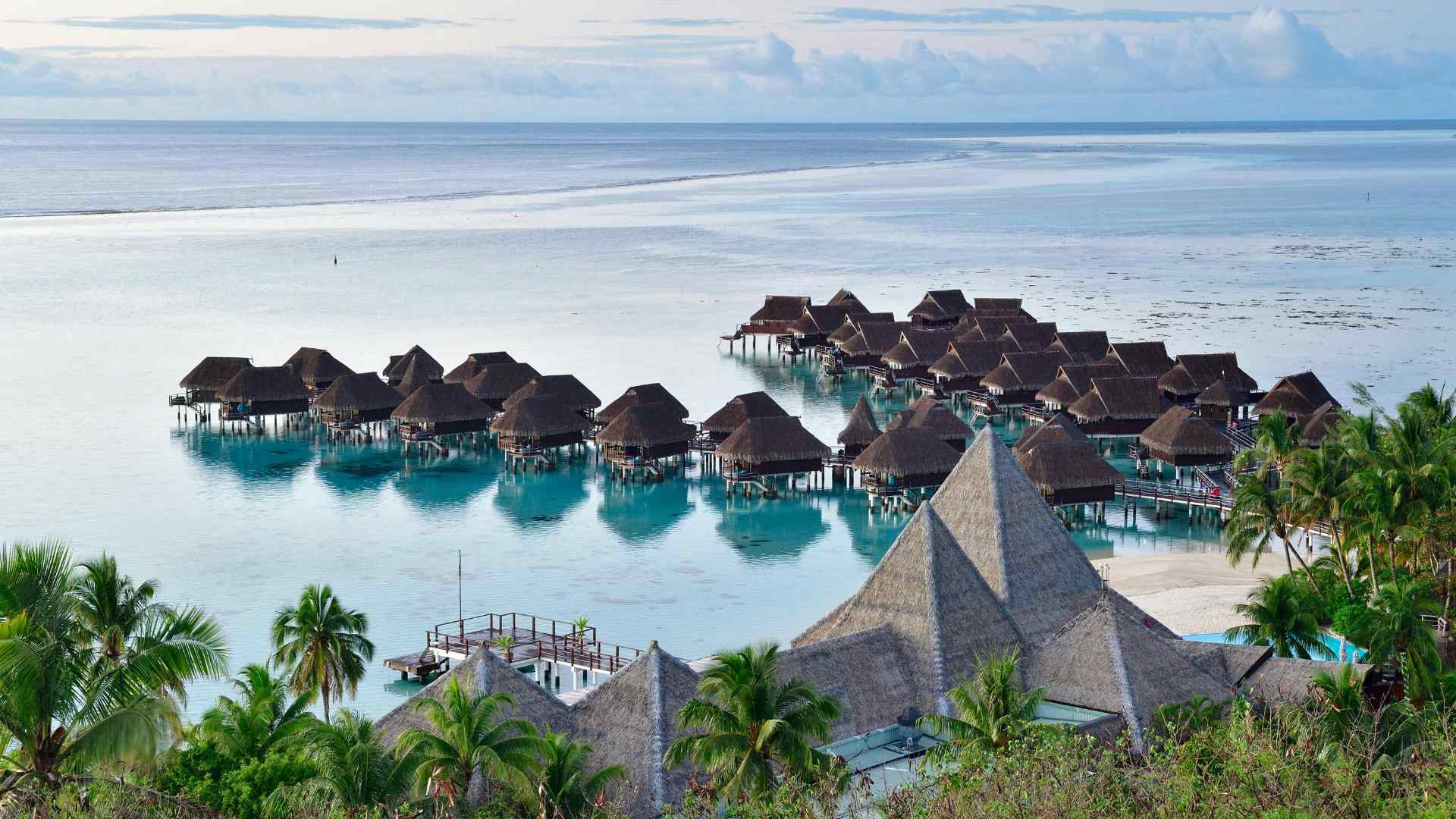
Then there is the walk. At a large property the last water villa can sit a serious distance from breakfast, and that walk at midday in full sun is the part people underestimate.
Villa counts, restaurant closures, age minimums, and buggy hours all move season to season. Confirm each of them with the resort directly rather than trusting a review from two years ago.
The middle option nobody talks about
Most resorts are not tiny and not enormous. The middle is where a lot of the best trips happen and it gets almost no attention.
A medium property usually has two or three restaurants, a proper dive center, a spa, and still feels calm at breakfast. That is a genuinely good combination.
When people describe their favorite overwater trip to me, they are usually describing a mid-size resort. They just do not know that is what they are describing.
Ask how many villas and how many restaurants. Two numbers tell you almost everything about the daily rhythm of a place.
The five questions that settle it
- How many villas total? Not water villas. Total, because that is how many people are at breakfast.
- How many places to eat, and are they all open every night? Off season closures are common and rarely advertised.
- What is the age policy? Adults-only and family-friendly are both fine. Booking the wrong one is not.
- How far is the last villa from the main building? If nobody can tell you, ask for the walking time.
- Is there a buggy or a boat to get around, and does it run at night? This decides how often you leave your deck.
If the answers to those five make you flinch, you have your answer. My longer take on the age question sits in the guide to adults-only versus family-friendly resorts.
The questions that come up every time
Are small island resorts always more expensive?
No, though they usually are, because a twenty-villa property has no volume to spread its costs across. Small and deliberately simple is a real category, and it can undercut a big polished resort easily.
Will a big resort feel crowded from my villa?
Almost never, because overwater villas are spread along a jetty by design and your neighbors sit behind a wall rather than beside you. The crowding you notice at a big resort is at breakfast and at the sunset bar.
Do small resorts have worse wifi?
Sometimes, because a small island typically runs one link with no backup, and the answer changes as properties upgrade. Ask specifically whether video calls work from the villa rather than whether there is wifi.
Is an all-inclusive plan better at one size or the other?
All-inclusive is more common and usually better value at larger resorts, because more outlets sit inside the same flat rate. The all-inclusive overwater guide gets into where the plan stops paying for itself.
Can I visit a neighboring island from either?
That depends on the region and the boat schedule far more than on resort size. Ask what excursions run, how often, and what the minimum passenger count is before you assume you can leave.
Who should skip the tiny island entirely?
Anyone traveling with young children, anyone who needs a gym and a schedule to feel human, and anyone who gets bored quietly and then resentfully. A small island amplifies whatever mood you bring to it.
What I would book
For a four or five night trip, I take the smallest island I can afford. Short stays reward intimacy and punish nothing, because you leave before the menu repeats.
For anything a week or longer, I take a mid-size resort every time. Enough variety to stay interested, enough calm to actually rest.
I would only book a truly enormous resort if I had kids in tow or a very specific reason. Scale solves real problems, and if you do not have those problems, it is just more people between you and the water.
Resorts open restaurants, close them, change age rules, and add villas without announcing any of it. I revisit this guide regularly, but check the current numbers with the property before you commit.