Six Senses and COMO: Two Very Different Overwater Philosophies
People lump Six Senses and COMO together as the thinking traveler’s Maldives brands. They are not remotely the same, and picking the wrong one is an expensive mistake.
Here is what each actually does above water.
The short version on Six Senses and COMO overwater villas
Six Senses builds big, barefoot, sustainability-driven resorts, and its water villas are in the Maldives at Laamu and Kanuhura. COMO builds small, quiet, wellness-first properties, and its overwater rooms are at Cocoa Island and Maalifushi.
If you want the resort to entertain you, that is Six Senses. If you want the resort to leave you alone, that is COMO.
Myth: they are two versions of the same luxury
They share a price bracket and almost nothing else. Six Senses runs sizable islands with dive centers, kids programs, observatories, ice cream parlors, and a full weekly activity board.
COMO runs small properties where the daily schedule is your problem, not theirs. There is a spa, there is a boat, and there is a lot of silence in between.
There is also an ownership difference that shapes everything. Six Senses sits inside a very large hotel group, while COMO remains privately held and much smaller.
You feel that at check in. One brand has corporate systems and program tiers, the other has a manager who knows how many nights you have booked.
Myth: the Six Senses water villa always includes a pool
Six Senses Laamu’s room list separates lagoon, ocean, and pool villas. Check the full category name rather than assuming every water villa has its own pool.
Not true, and this is where the money decision sits. Laamu sells water villas with and without private pools, and the gap between them is substantial across a week.
Kanuhura, by contrast, puts a pool in its water villas as standard. Two resorts, same brand, completely different decision to make.
My rule is simple. If the lagoon under your villa is swimmable at most tides, the pool is redundant, and if it is not, the pool is the room.
Laamu is the one where I would ask hard questions about the water under the deck. It is a southern atoll with real current, and the answer changes by villa position.
Our full argument on private pools against direct lagoon access covers what you actually use each day. Most people use the ladder more and the pool less than they predicted.
Myth: Cocoa Island is simple because it is small
COMO Cocoa Island’s water villas are shaped like dhonis, the traditional Maldivian boat, and they are the most distinctive overwater rooms in the country. That shape is not decorative, it drives the layout.
A dhoni layout means stairs, a narrow footprint, and a bedroom arrangement that some people love and some find awkward. Get the floor plan before you commit, particularly if anyone has knees that object to stairs.
The location is the underrated part. It is a short speedboat from the airport, so you skip the seaplane entirely and can land after dark.
That combination is rare: a genuinely characterful overwater room without a daylight arrival deadline. For a shorter trip, it is one of the smartest bookings in the Maldives.
It appears in our boutique overwater roundup for good reason. Small here means intimate, not underbuilt.
Myth: Maalifushi is just Cocoa Island, further out
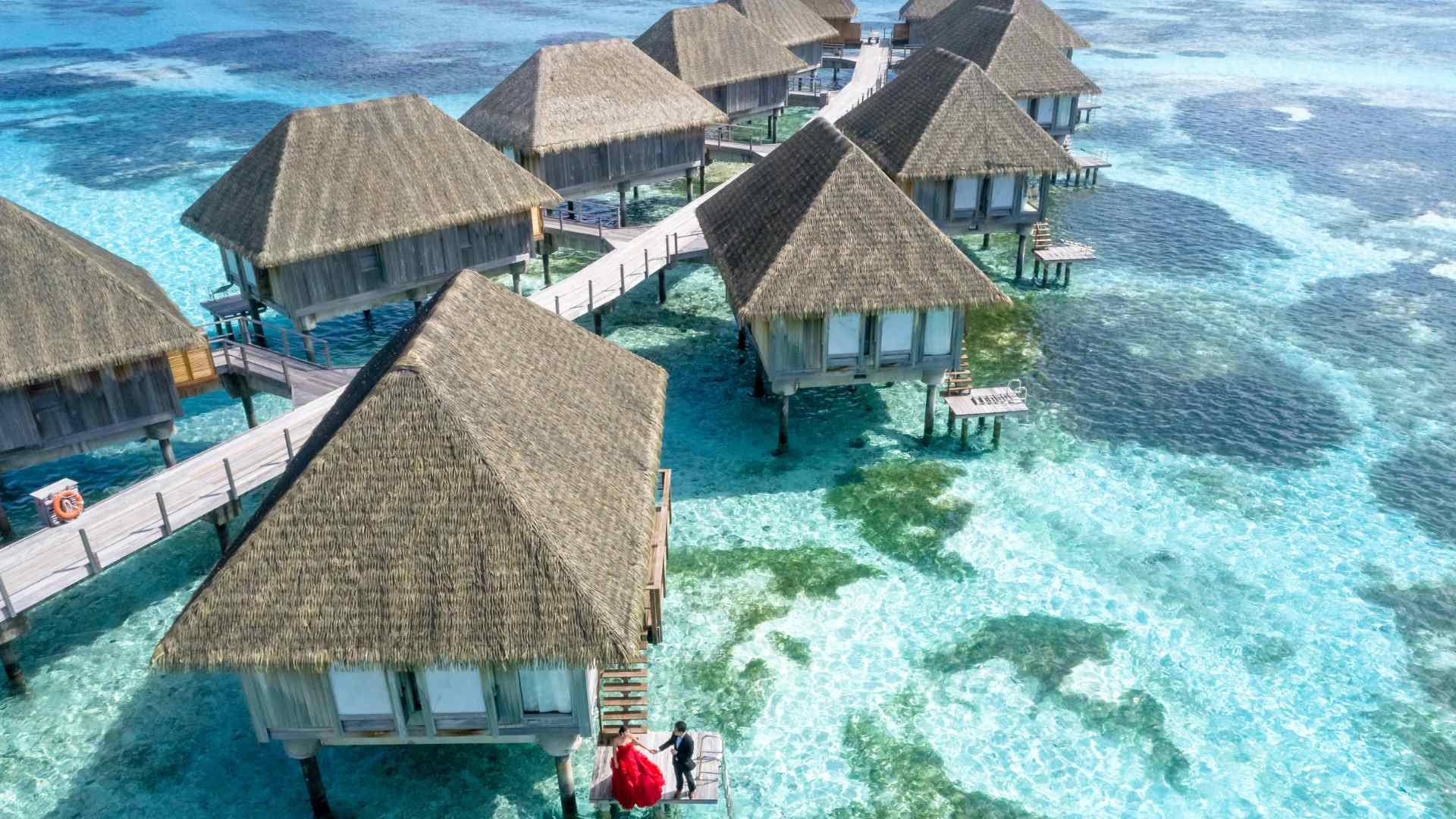
Maalifushi by COMO sits in Thaa Atoll, well south, with four different water categories on one jetty. The arrival is longer and the atmosphere is more remote.
It also sits near serious surf, which quietly makes it a completely different resort for part of the year. A surf trip and a wellness retreat are not the same booking.
The honest tradeoff is nights. Maalifushi does not repay a four-night stay, because you spend too much of it in transit and too little of it settled.
Cocoa Island works for four nights, Maalifushi wants six or seven. That single sentence resolves most of the choosing people do between them.
Myth: the sustainability talk is marketing at both
At Six Senses, especially at Laamu, it is not just talk. There is a working marine and coral program, an on-island water bottling operation, and a genuine effort to keep single use plastics off the island.
You can also tell because the resort will explain the limits when you ask. A property that admits what it cannot fix is usually doing more than one that publishes a glossy pledge.
COMO frames its ethos through wellness rather than environmental programs. Its Shambhala approach shows up in the food, the treatments, and the pace, and the brand licenses that wellness identity to other resorts too.
You will find a COMO Shambhala spa at Kandooma in South Male Atoll, which is a completely different price bracket. The spa brand travels further than the hotel brand does.
Myth: you can put these on points
IHG says Six Senses participation varies by property, so check the exact resort and available award dates before assigning a cash value to your points. COMO is a separate hotel group with a different booking program.
Half true, and the half that is false costs people money. Six Senses belongs to a large group, so participation in that group’s loyalty program is at least possible, though it has been rolling out over time and varies by property.
Even where redemption exists, award pricing at these resorts follows the cash rate rather than a fixed chart. Peak weeks cost brutal numbers of points and the top villa categories are usually not released at all.
COMO has no equivalent points currency to redeem. What it has instead is a preferred-partner structure, where booking through a properly connected travel advisor can add breakfast, a credit, or an upgrade at no extra cost.
That is the actual play at COMO, and it is worth more than most people’s points balance. Ask what amenities come attached before you book direct out of habit.
Our guide to booking overwater villas with points explains why dynamic award pricing rarely favors a resort like these. The short answer is that the cash rate is the ceiling and the floor.
Myth: you can swim off the deck whenever you like
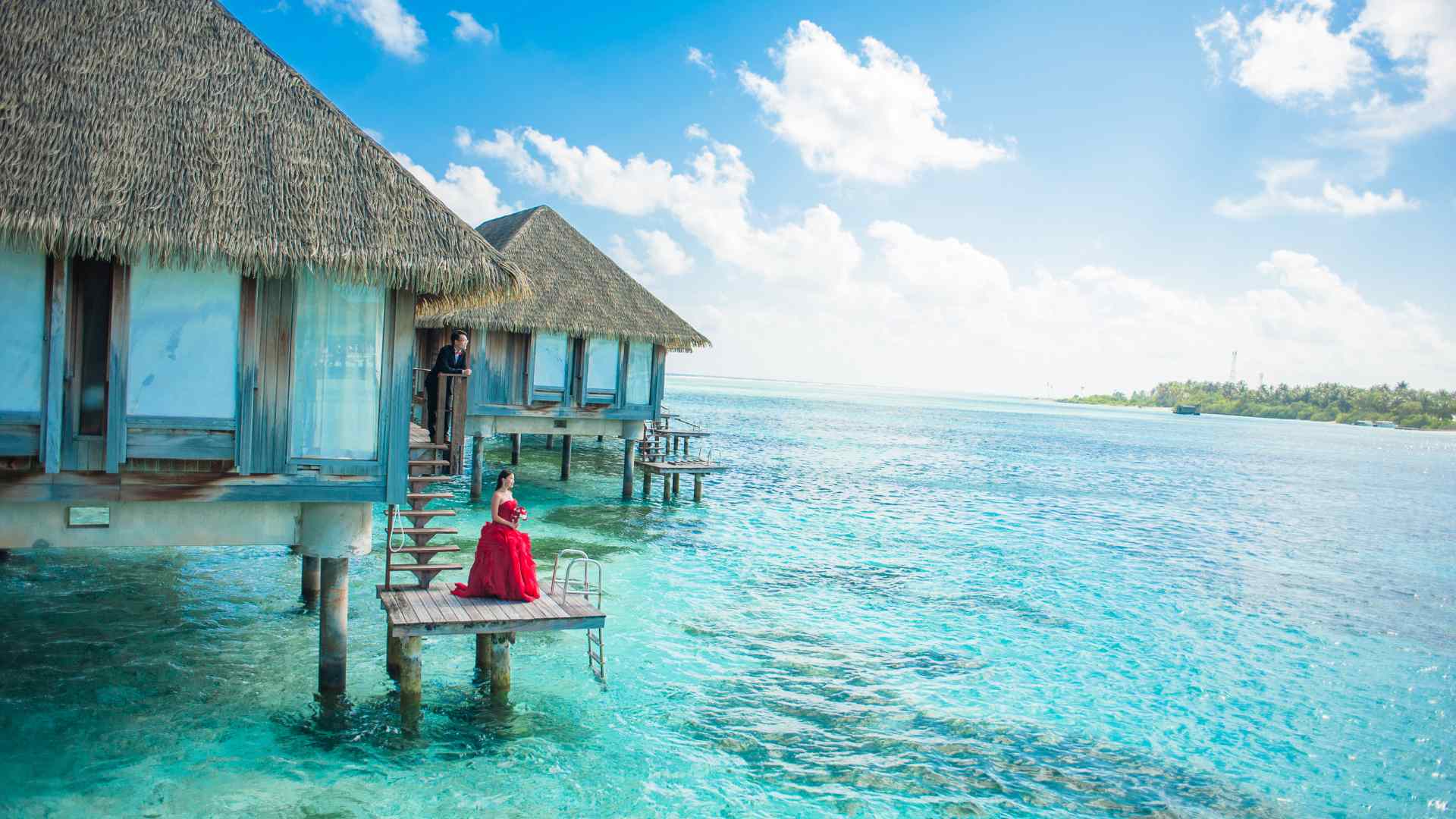
A ladder is not a permission slip, and this applies at both brands. Whether the water under your villa is usable depends on tide, current, depth, and where your villa sits on the jetty.
At low tide, a deck that looked like a swimming pool at noon can leave you standing in knee-deep sand. That is a normal Maldives morning, not a defect, and nobody warns you.
The villas nearest the end of a jetty usually have deeper water and stronger current. The ones nearest shore have easier access and more foot traffic past your deck.
Ask the marine team on arrival where they want you entering the water that week. They know which channel pulls and which entry stays calm, and their answer changes with the tide chart.
Ask for the villa number rather than the category, then ask what sits directly below it. A category name tells you the price, and a villa number tells you the vacation.
The real downsides, and who should book neither
Six Senses charges a premium for its philosophy, and you will pay for the earth lab and the organic garden whether or not you visit them. If you want a beautiful room and a good buffet at the lowest possible number, this is the wrong brand.
Laamu’s remoteness is also a real cost. The southern transfer eats a chunk of two days, and it is not the resort for a short trip.
COMO’s weakness is the opposite one. Small properties mean fewer restaurants, less activity infrastructure, and nowhere to hide if you do not click with the place.
Skip both if you are traveling with young children who need a big kids club and three pools. Skip both if you want an all-inclusive with unlimited drinks, because neither brand plays that game.
And skip both if the dinner bill is going to worry you every night. Food and drink at either brand runs high, and a stressful check is the fastest way to ruin an expensive week.
Questions I get about these two brands
Which is better, Six Senses or COMO?
Six Senses if you want a full resort with activities, diving, and structure, and COMO if you want quiet and space to do nothing. The room quality is comparable, so choose on temperament rather than luxury tier.
Where are the COMO overwater villas?
At COMO Cocoa Island in South Male Atoll and Maalifushi by COMO in Thaa Atoll, both in the Maldives. Cocoa Island’s dhoni-shaped water villas are the more distinctive of the two.
Do all Six Senses water villas have private pools?
No. Laamu offers water villas both with and without a private pool, while Kanuhura’s water villas come with one, so the answer depends entirely on which resort you pick.
Which one is better for a honeymoon?
COMO Cocoa Island, if the honeymoon is about privacy and a short, easy arrival rather than a packed activity list. Six Senses Laamu wins if you both dive and want a week with a rhythm to it.
Is Six Senses part of a bigger chain?
Yes, it sits inside a major international hotel group, which is why loyalty participation is worth checking before you book. COMO remains privately owned and runs no comparable points program.
Where I would spend the money instead
Here is the honest version. At both brands, the upgrade ladder is where the value drains away, and the entry water villa is almost always the smart buy.
At Laamu I would take the water villa without the pool and put the savings into two extra nights and a dive package. At Cocoa Island I would book the base dhoni and spend the difference on the spa.
The pattern holds everywhere I look. Nobody comes home talking about the plunge pool they used twice, and everybody comes home talking about the extra two days.
Compare all four islands against the wider field in our Maldives overwater comparison before you decide. The brand is the last thing I would choose on.
Resorts change villa categories, inclusions, and loyalty arrangements without much warning. I revise this page when I learn something new, though the property itself is always the right place to confirm before you pay.