Overwater Villa Accessibility: The Questions That Matter Before You Book
A villa is not accessible because a booking agent typed ‘yes’ beside the word wheelchair. The real test begins at the airport curb, continues across boats and jetties, and ends only when the traveler can use the bed, bathroom, restaurants, deck, and emergency route with dignity.
Overwater villa accessibility in 30 seconds
- Standout: Useful properties answer with measurements, photos, equipment, and named procedures.
- Best for: Travelers who map the entire journey around their own access needs before paying.
- Biggest catch: An accessible land room does not make the transfer boat or overwater jetty accessible.
- My pick: The category with the fewest fragile handoffs, even when it is not the most dramatic villa.
Start with the traveler’s actual mobility, equipment, and assistance needs. Ask each shortlisted resort to confirm the complete route from airport to villa, including the boat, jetty, bathroom, and emergency exit.
Write the traveler profile in practical language
Describe what the traveler can do independently, what needs one trained helper, and what needs equipment. Include walking distance, standing time, stair tolerance, transfer method, chair dimensions, balance, pain, fatigue, vision, hearing, cognition, and communication preferences.
Ordinary actions communicate more than broad labels. ‘Can walk six level steps with a rail but cannot step across a moving gap’ gives an operator something useful to assess.
Add the weight and folded dimensions of mobility equipment, battery type, charging requirements, and whether any piece can be separated. Photographs can prevent an expensive game of equipment charades across several time zones.
Our guide for non-swimmers is a helpful companion when water confidence affects the plan separately from mobility. The two concerns may overlap, but neither should be used as shorthand for the other.
Map the journey door to door
List every change of vehicle and surface from home to room: car, terminal, security, aircraft, connection, baggage claim, van, dock, boat, jetty, buggy, and villa entrance. Access plans most often wobble at the joins rather than in the polished hotel lobby.
For flights to, from, or within the United States, the Airline Passengers with Disabilities Bill of Rights explains assistance and information travelers can request. Those protections do not automatically govern a foreign resort’s boat, dock, or island facilities.
Assistance needs to be confirmed with every operating airline, especially on separate tickets or regional legs. Aircraft substitutions can change boarding, lavatory, seat, and mobility-device arrangements, so the essentials for a disruption belong within reach.
I would allow generous connection time without turning the itinerary into an endurance event. The best buffer includes food, medication, restroom use, equipment checks, and a delay in assistance without requiring a sprint nobody agreed to.
A boat transfer needs exact choreography
I would request the vessel type, dock height, gap, boarding surface, step count, railings, seating, weather cover, ride length, and crew assistance. ‘Staff will help’ is warm but does not explain how a body or mobility device moves safely.
Find out whether the traveler remains in their wheelchair, transfers to a fixed seat, uses a ramp or lift, or must negotiate steps. If lifting is proposed, the traveler should decide whether the method is safe, dignified, and acceptable.
Tides and weather can change the angle between dock and boat. I would request the alternative procedure, the delay policy, and the room plan if conditions prevent safe boarding on arrival or departure day.
Our speedboat versus seaplane guide explains the basic tradeoffs, but individual operators must confirm equipment, boarding, and assistance for the booked route.
Measure the jetty, not just the room
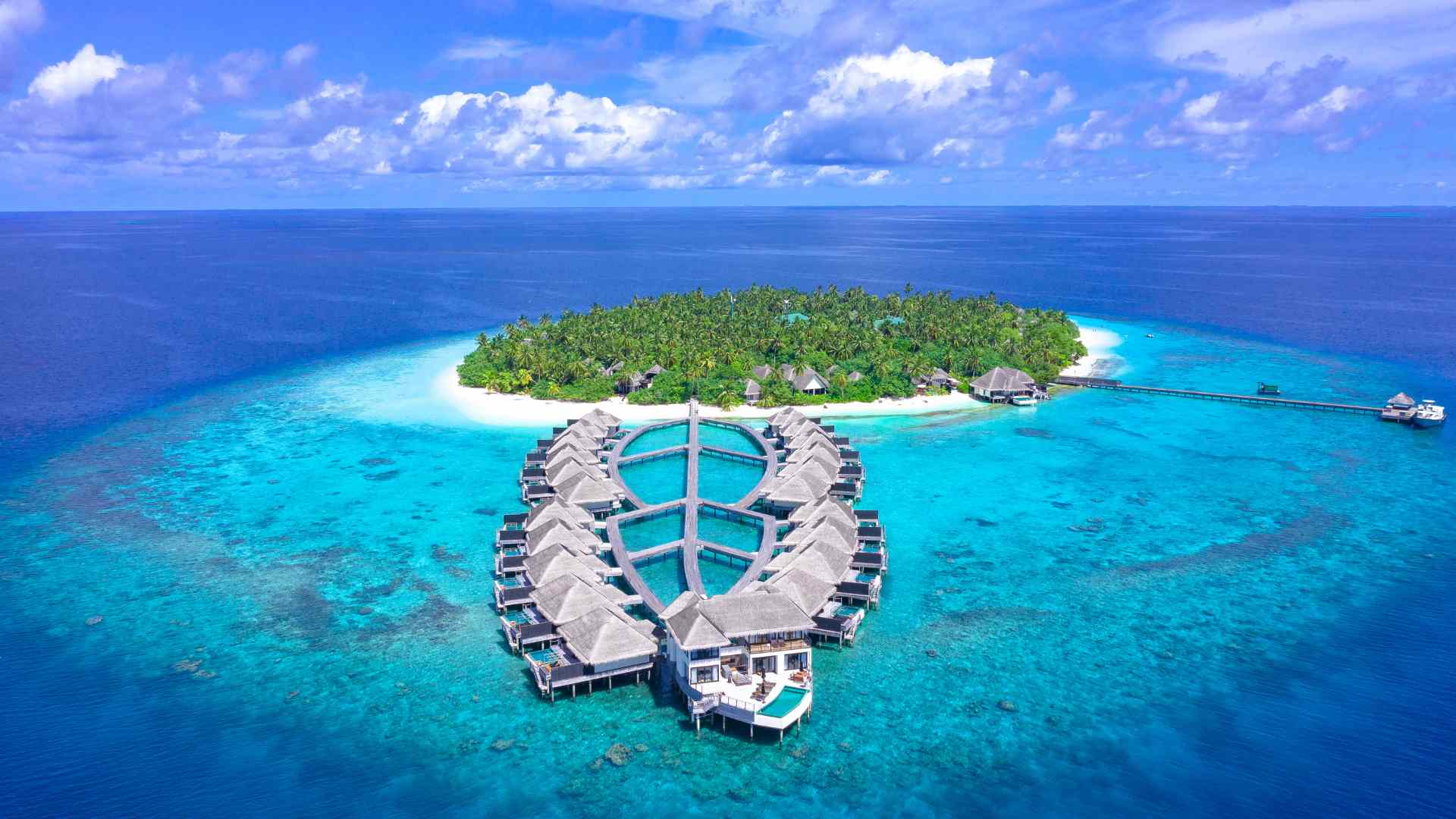
The distances from villa to reception, restaurants, pool, medical support, and evacuation pickup belong in writing. Surface material, width, slope, edge protection, passing spaces, rest points, shade, and lighting complete the picture.
Buggy service can solve distance only if the traveler can board it, the device can be carried safely, and rides are reliably available. Ask for the step height, seat support, transfer help, storage, operating hours, and backup when a buggy is charging or busy.
A near-shore room can reduce daily fatigue and make emergencies simpler, while a far-end room may offer privacy and more difficult logistics. I would choose energy left for dinner over a slightly emptier horizon.
Service carts, housekeeping trolleys, and other guests also use the jetty. Photos taken at the narrowest point are more informative than an aerial view in which every route looks as wide as a boulevard.
The entrance tells you whether the floor plan is real
Get measurements for the clear door opening, threshold height, approach space, handle, lock, and any step. A door listed by its frame width may provide less usable space once hinges and hardware join the conversation.
Inside, map the turning areas and routes to bed, bathroom, wardrobe, desk, terrace, and telephone. Decorative rugs, footstools, sliding-door tracks, and a romantic bathtub in the middle of everything can narrow an otherwise generous room.
I would ask whether furniture can be moved before arrival and who will put it back if needed. I prefer a photograph with a tape measure visible to a beautifully formatted accessibility promise with no dimensions.
For travelers using powered equipment, confirm outlet type, voltage, extension policy, protected charging location, and power reliability. Essential chargers and adapters belong in the cabin bag, never on a separate scenic journey with checked luggage.
Bathrooms are where vague answers go to hide
Useful bathroom details include clear widths, toilet height, transfer space, grab-bar position, sink clearance, mirror height, shower entry, seat dimensions, controls, handheld spray, drainage, and floor surface. ‘Walk-in shower’ only means there is no bathtub to climb over.
A freestanding stool is not equivalent to a fixed or suitable shower seat. The traveler should decide whether the equipment, placement, and helper space support their own transfer method.
Outdoor showers can introduce heat, privacy, thresholds, insects, and wet routes back inside. Confirm that an indoor bathing option works rather than assuming tropical scenery will make inaccessible design charming.
Medication timing and personal-care assistance may shape the whole day. Staff can often move furniture or deliver supplies, but they should not be assumed to provide personal care or clinical support.

Deck access is a separate feature
The terrace may have a raised sliding-door track, narrow opening, step, soft rug, or tight turn even when the bedroom works beautifully. Ask for the clear route to shaded seating and the amount of level space around it.
A private pool or lagoon ladder is not automatically usable because it belongs to an accessible room. Request the entry method, railings, steps, lift availability, water depth, deck edge, and assistance boundaries.
Our pool versus lagoon-access guide can help identify which feature matters, but an accessible dry deck may be the better luxury than either water entry.
For low-vision travelers, ask about edge contrast, lighting, glare, glass doors, route markings, and changes in level. For deaf or hard-of-hearing guests, confirm visual alarms, communication methods, and how urgent instructions are delivered.
Dining and resort life count too
Map routes and entrances for every included restaurant, not only the easiest one. Stairs to a signature venue, sand under an outdoor table, high bar seating, a buffet without reach access, or a boat-only dinner can shrink the usable meal plan.
Pool, spa, gym, beach, restroom, excursion dock, and activity access deserve the same precision as the room. A technically usable bed does not make a satisfying vacation if the traveler spends the week watching everyone else leave.
Dietary and access needs can interact. Ask how menus are provided, whether staff can describe a buffet, how allergies are communicated, and whether room service reaches the villa reliably during rain.
I would build a realistic sample day and trace every movement. Breakfast, pool, lunch, rest, sunset, and dinner reveal gaps that a list of amenities politely avoids.
Plan for equipment, screening, and batteries
The TSA Cares program provides additional screening assistance for eligible travelers at participating U.S. checkpoints. It does not replace airline assistance, and travelers should use the program’s current instructions for timing and contact.
Battery-powered mobility devices require careful coordination with each airline. Share the battery chemistry, rating, installation method, device manual, and handling instructions rather than assuming staff can identify everything at the gate.
The FAA guidance for wheelchairs and mobility devices explains air-transport considerations, but the operating carrier should confirm the exact flight and device. Photograph the equipment before handoff and label safe lifting points clearly.
Essential medication, repair tools allowed in the cabin, chargers, spare parts, pressure-relief items, and one day of personal supplies should stay close where possible. Our complete packing guide helps divide critical items between cabin and checked bags.
Emergency access must be specific
An emergency plan should explain how an alarm is communicated, which route is used, whether the jetty remains passable, who assists, and where a traveler who cannot use stairs waits safely. Nighttime, heavy rain, power loss, and an unavailable buggy all belong in the scenario.
Identify the nearest clinic, its hours and capabilities, the transport used to reach it, and the process for a higher level of care. Remote beauty can add boat, aircraft, weather, and paperwork between a guest and treatment.
Travel insurance should be reviewed for the traveler’s conditions, equipment, destination, activities, and evacuation needs. Policy language and assistance procedures matter more than a cheerful marketing phrase about comprehensive cover.
Access confirmations, medical information, insurance contacts, equipment details, and emergency numbers should be available offline. The person who needs them most should not require a perfect signal or a buried email thread.
The written confirmation I would want
- Transport: Every aircraft, vehicle, dock, and vessel can accommodate the person and equipment.
- Routes: Distances, surfaces, slopes, lighting, buggy access, and backup procedures are clear.
- Room: Door, bed, bathroom, turning, controls, and deck measurements fit the traveler.
- Resort life: Dining and chosen activities are reachable, not merely present.
- Emergency: Communication, evacuation, medical transport, and equipment contingencies are documented.
I would send one summary back to every provider and ask them to confirm that it accurately describes the arrangement. That creates a usable record and often exposes contradictions before money becomes difficult to recover.
Frequently asked questions
Are overwater villas wheelchair accessible?
Some may work for some wheelchair users, but the answer depends on transfers, jetty routes, door and bathroom dimensions, deck thresholds, equipment, and emergency procedures. An accessible room label alone is not enough.
Can an airline carry a powered wheelchair to an island resort?
Airlines can transport many powered mobility devices, subject to aircraft, battery, size, and handling requirements. Each operating carrier needs the exact device information, and the resort transfer must be assessed separately.
Does buggy service make a long jetty accessible?
Only when the traveler can board safely, the mobility device can be carried, service is dependable, and a backup exists. A buggy solves distance but not automatically steps, posture, transfer, or emergency access.
Is a beach villa usually easier than an overwater villa?
Often, because it can avoid a long jetty and moving boat transfer, but sand, steps, outdoor bathrooms, and resort routes can still create barriers. The better category is the one proven against the traveler’s complete access profile.
My verdict
The best accessible overwater stay is not the property with the most enthusiastic yes. It is the one willing to show exactly how the traveler moves, rests, bathes, eats, enjoys the resort, and leaves safely when the weather stops cooperating.