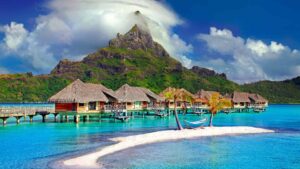
Eco Minded Overwater Resorts Worth Believing
Eco is not a regulated word. Any resort can print it on a menu card and hang a sign about reusing towels.
So I stopped reading mission statements and started asking what a property actually funds, builds, and refuses to do.
The short answer on eco overwater resorts
Most are marketing. The three I believe are Misool in Raja Ampat, Six Senses Laamu in the Maldives, and the Soneva islands, because each funds something measurable that would still exist if the resort closed tomorrow.
That is my whole test. Not bamboo straws, not a linen reuse card, not a carbon badge on a confirmation email.
- Misool: a patrolled no take marine reserve in Raja Ampat, on the site of a former shark finning camp.
- Six Senses Laamu: a resident marine team, drinking water bottled on the island, and a public position in favor of leaving lagoon seagrass alone.
- Soneva: a mandatory environmental levy, waste processed on site, and no imported bottled water anywhere on the property.
Everything below is how I got there, and where even those three fall short.
Questions to ask about the structure itself
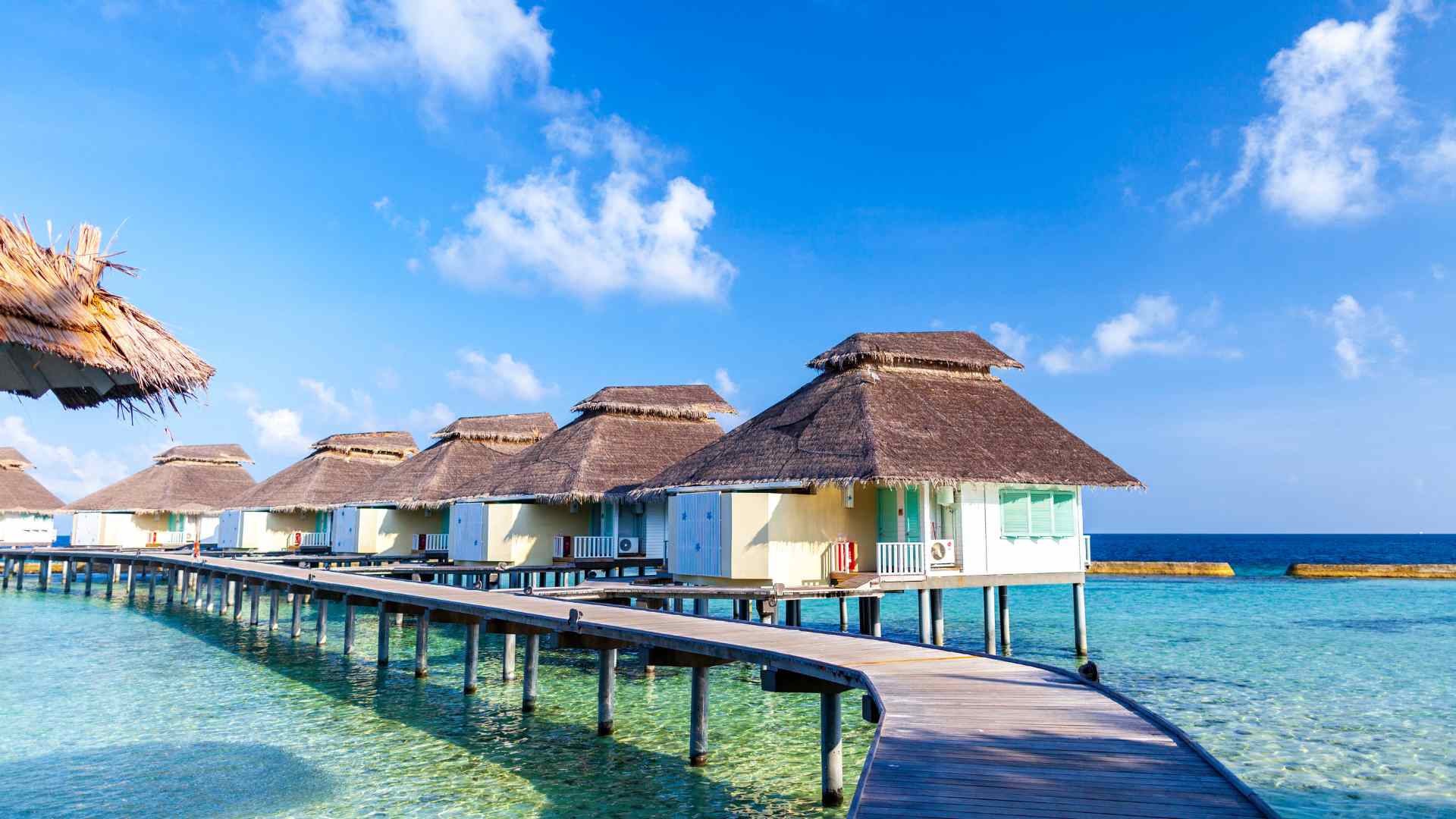
Start here, because an overwater villa is the least green room type ever invented. It is a building on piles driven into a living lagoon.
Ask when the villas were built and whether the jetty has been extended in the last five years. New pile driving is the largest single reef impact a resort actually controls.
Then ask what is under the villa right now. Sand, dead rubble, seagrass, and live coral are four very different answers, and only one of them is a real problem.
Shading is the mechanism most people miss. A wide deck blocks light to whatever grows below it, which is why a plain bungalow over bare sand is genuinely lower impact than a prettier one over a reef flat.
You can check a lot of this yourself before you pay. My notes on reading a resort house reef from satellite view cover what the water color tells you about what is underneath those decks.
Questions to ask about water, waste, and power
Ask whether the resort bottles its drinking water on the island. That is one of the few claims you can verify at dinner by picking up the bottle and reading it.
Ask what happens to food waste and glass. A composting yard and a glass crusher are physical objects, and staff will happily walk you to both if they exist.
Then ask the awkward one. How much of the nighttime load runs on solar rather than diesel?
Plenty of properties say solar powered when they mean a daytime array with generators carrying the evening. That is still better than nothing, and it is not what the brochure implies.
Desalination is the quiet cost nobody advertises. Every gallon of fresh water on a small island is manufactured with energy, which is why an unlimited private pool and a green ethos sit awkwardly together.
Questions to ask about the reef and what the resort funds
This is where the three I named separate themselves from everybody else.
Misool grew out of a former shark finning camp in Raja Ampat, and the no take zone around it is patrolled rather than merely declared. The patrols are funded through the resort’s own foundation, not a donation box by the reception desk.
You can see the result in the water, which is the only proof I trust. My longer write-up of the Misool water cottages and the reef they sit above explains the five hour boat from Sorong and why that crossing quietly filters out the wrong guests.
Six Senses Laamu keeps marine staff on the island year round rather than flying in a consultant for a week. It has also argued against the Maldivian habit of raking seagrass out of lagoons because guests find it ugly.
That is a resort choosing ecology over a photograph, which is rarer than it sounds. The rest of what it does well, and the pool question, are in my Six Senses Laamu villa guide.
Ask any property who employs their marine biologist and how many days a year that person is on site. If the answer is a contractor for one week a quarter, adjust your expectations accordingly.
Questions to ask about food and what gets flown in
Ask what is grown on site and what arrives by air. A garden that supplies the salad course is real, and a garden that supplies the garnish is decoration.
Ask about the seafood specifically. A kitchen that can name the boat, the island, and the species is doing something, and one that says sustainably sourced and stops talking is not.
Soneva is the most convincing I have seen here, largely because it built physical infrastructure instead of a policy document. Waste processing, glass made from used bottles, and the absence of imported water are all things you can look at with your own eyes.
It also applies a mandatory environmental levy rather than an optional guilt box at checkout, which I prefer. Confirm the current rate with the resort, because charges like that get revised without announcement, and my Soneva Jani booking notes cover the rest of the fine print.
Questions to ask about the people who work there
Ask what share of staff comes from the surrounding islands, and what the most senior locally held role is.
A property with local dive guides and an entirely imported management team is telling you where the money settles. That is not a scandal, but it is information.
Ask whether the resort pays for the school boat, the clinic generator, or waste collection on the nearest inhabited island. Those are unglamorous line items, and they are the ones that survive a change of ownership.
Where the green claims fall apart
Your flight is the footprint. A round trip to the Maldives or Raja Ampat dwarfs every towel policy in the building, and no resort levy meaningfully cancels it.
I am not telling you to stay home. I am telling you to stop pretending the villa is the part that matters.
Certification logos are the next soft spot. No single authority stands behind the word eco, several schemes are effectively paid memberships, and a property can hold a badge while dredging its boat channel every year.
Reef safe sunscreen in the gift shop is the tell I watch for. It is a genuinely good product and also the cheapest available way to look serious.
And a private pool suspended over a lagoon is a heated, chlorinated, desalinated contradiction. I have booked one anyway, and I still would; I just do not call it eco.
If you are weighing that choice honestly, my comparison of a private pool against direct lagoon steps is the version without the halo.
Who should skip these resorts entirely
If what you want is a glass floor, a butler, and a slide into the lagoon, book the resort you actually want and skip the moral framing. Pretending otherwise just makes the trip tense.
Misool in particular will disappoint anyone hoping for a short transfer and a long spa menu. It is a long open water crossing, fixed stay lengths, and a diving culture that assumes you came for the reef.
Families with young children should look hard at that boat before committing. Five hours on open water is an enormous amount of trip for a five year old, and there is no shortcut once you are booked.
Anyone who needs guaranteed air conditioning at full blast around the clock should also think twice. Several of the properties with the best conservation records run deliberately lean power systems.
The questions that come up every time
Are eco overwater resorts actually better for the reef?
Only when the property funds ongoing protection such as a patrolled no take zone or a resident marine team. A villa on piles always has an impact, so the honest comparison is between a resort that repairs more than it costs and one that simply advertises well.
Is an overwater villa ever an environmentally sound choice?
Not on its own, because building over water shades and disturbs whatever lives underneath it. The best case is a villa over bare sand at a property funding real reef work, which is a defensible tradeoff rather than a genuinely green one.
What single question separates real programs from marketing?
Ask who employs the marine biologist and how many days a year they live on the island. A full time resident team means the resort pays for science whether guests notice or not, while a visiting contractor is usually there for the photographs.
Do carbon offsets added to a booking do anything?
Very little compared with the flights that got you there, and offset quality varies enormously with no practical way for a guest to check it. I treat them as a small good rather than a permission slip.
Which one would you send a first timer to?
Six Senses Laamu, because it pairs genuine marine work with the comfort level most people expect from an overwater trip. Misool is the stronger conservation story, but its crossing and fixed stay lengths suit committed divers far better than first timers.
Is reef safe sunscreen worth packing?
Yes, because it is cheap, easy, and does no harm, so there is no reason not to. Just do not let it stand in for choosing a property that funds actual protection, which matters vastly more than what is on your shoulders.
Where I would spend the money instead
Put a fixed budget into fewer nights at a property that funds protection, rather than more nights at one that sells the idea of it. The rate difference buys real patrol hours somewhere.
And spend the rest on a longer stay instead of a larger villa. The flight is the expensive part of the planet’s ledger, so use it properly once rather than twice.
If none of the three fit your dates, start from the global shortlist sorted by trip style and apply the questions above yourself. They work on any property.
Levies, power systems, and conservation programs get quietly revised, and staffing changes fastest of all. Ask the property directly what is running during your dates before you let any of this decide your booking.