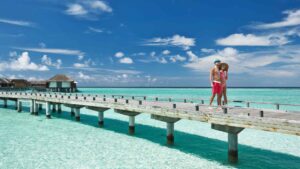
Freshwater Overwater Stays: Lakes, Lagoons, and Rivers
Not every room built over water sits above a reef. Some of the best ones float on a lake, a river, or a freshwater lagoon.
The rules are different, the price is usually lower, and the disappointments are entirely different too.
What counts as a freshwater overwater stay?
Freshwater overwater stays are rooms built on stilts or pontoons above water with no salt in it. That covers lake pavilions, river lodges, floating cabins, and bungalows over inland lagoons.
The distinction matters because almost every expectation you carry from a Maldives water villa fails here. No reef, no tide, no salt, no snorkeling off the ladder.
- Stilted: fixed piles driven into the bed. Stable, quiet, and the water level moves under you instead of with you.
- Floating: the room sits on pontoons and rises and falls with the lake. Gentle movement, and a gangway that changes angle through the season.
- Over a channel: river lodges built on decks above a moving current, which is a different sound entirely.
Is the water actually nicer than saltwater?
No, and I would not book one expecting it to be. Freshwater is usually darker, greener, and far less interesting to look into.
There is a mechanism behind that. Lakes stratify in warm months and mix again when the surface cools, and that seasonal turnover stirs sediment and feeds algae.
So the same lake can be glass in June and pea soup in September. A tropical lagoon does not do that, which is why saltwater photos look reliable and lake photos do not.
Freshwater is also less buoyant than seawater, so swimming feels like more work. If you are used to floating effortlessly in a salty lagoon, a lake swim comes as a small shock.
What you gain is stillness. No swell, no surge under the floorboards, no salt crusting your camera and your sunglasses by day three.
Which freshwater overwater stays are real and bookable?
This is a small category with a lot of imposters, so I have stuck to ones I can stand behind. Availability and operating status change, so confirm before you plan around any of them.
Disney’s Polynesian bungalows, Florida
The bungalows at Disney’s Polynesian sit over the Seven Seas Lagoon, which is a man made freshwater lake. The view of the fireworks is the product, and it delivers exactly what it promises.
The part that surprises people is that you cannot swim in the lagoon. Disney does not allow lake swimming, so the plunge pool on the deck is not a bonus, it is the only water you are getting into.
I have written up what the Disney Polynesian bungalows are really like, lake water and all, including the booking mechanics, which are their own strange world.
Hotel Palafitte, Lake Neuchatel, Switzerland
This is the one that changes people’s minds about the whole category. Modern pavilions on piles over a Swiss lake, some of them with a ladder straight down into the water.
It is not tropical and it does not pretend to be. Cold, clear alpine lake water, mountains on the far shore, and a very short season when swimming off your own deck is actually pleasant.
My full write up of the lake pavilions at Hotel Palafitte in Switzerland covers which side of the building to ask for.
Chobe Water Villas, Namibia
Stilted villas above the Chobe River, looking across at floodplain where elephants come down to drink. This is the strongest argument in the category, because the water is not the attraction, it is the front row seat.
Nobody is snorkeling here and nobody wants to. The river carries crocodiles and hippos, which is exactly why the deck is the right place to sit.
See my guide to Chobe Water Villas and how the river safari actually runs for the seasonal side of it.
Maitai Lapita Village, Huahine
Here is the trap. People book this expecting a South Pacific lagoon and get bungalows over a small freshwater lake instead.
It is a genuinely nice property at a fraction of Bora Bora money, and Huahine is the quietest of the main islands. But the water under you is lake water, and you should know that going in.
My honest take on the lake bungalows at Maitai Lapita Village in Huahine spells out who that suits.
Floating lodges on European fishing lakes
The least glamorous corner of the category and the one most likely to actually fit your budget. Timber lodges on pontoons, moored a few feet off the bank, with a rod holder and a hot tub.
The English version of this is well established, and the floating lodges at Clawford Lakes in Devon are a fair example of how it works. It is quiet, it is cheap by overwater standards, and it rains.
The categories I would not book sight unseen
Amazon floating lodges, Kerala houseboats, Inle Lake stilt hotels, and lake reservoir cabins in the American South are all real and all genuinely over freshwater. They also vary wildly property to property in a way the big resort brands do not.
For those, book with recent photographs in hand and a direct conversation with the operator. Regional stability, water levels, and seasonal closures matter far more than the room itself.
Why does the water level change so much?
Because lakes and rivers are fed by rain and drained by people, and neither is on a schedule you can look up. A reservoir gets drawn down for power generation or irrigation, and a September dock can end up sitting over mud.
Rivers do the opposite and rise fast. On a floodplain like the Chobe, high water and low water produce two completely different trips, and the game viewing shifts with it.
Ask one question when you book. What is the water like in the month I am coming, and can you send me a photograph taken this year?
If nobody can produce a current photo, that tells you something. It usually means the flattering one is old.
Are the bugs as bad as people say?
Sometimes yes, and this is the honest downside of the whole category. Standing freshwater breeds mosquitoes and midges in a way that a salt lagoon flushed twice a day by tide simply does not.
Dusk is the problem hour, which is also the hour you booked the deck for. Screens, a fan running on the deck, and repellent are not optional extras here.
A moving airflow is the cheapest fix I know. Mosquitoes are weak fliers, and a fan aimed across the table clears a deck better than any candle.
What does it cost next to a saltwater water villa?
Less, and usually much less, for a structural reason. Salt destroys everything it touches, so a Maldives villa is on a permanent maintenance cycle that a lake lodge is not.
Add the transfer. A freshwater stay is often reachable by car, which removes the seaplane or speedboat charge that quietly doubles the cost of an island trip.
That combination is the real case for booking one. You are not buying a cheaper version of the Maldives, you are buying a different trip that happens to cost less.
If you want the saltwater comparison properly, my worldwide overwater bungalow roundup sorted by trip style is the place to start.
Who should skip a lake or river villa?
Skip it if the picture in your head is a glass floor and a stingray. There is nothing to see under a lake villa, and the glass panel, if there is one, will show you silt.
Skip it if this is your honeymoon and you have been saving for the classic version. A lake bungalow is a smart trip, not a substitute for the one you have been picturing for years.
Skip it if you swim daily. Between algae seasons, swimming bans, and colder water, the odds of getting a good swim off your own steps are much worse than on a reef.
The questions that come up every time
Can you swim off a freshwater overwater bungalow?
Sometimes, and you must check per property rather than assume. Some lake hotels have ladders into clean deep water, and others sit on lakes where swimming is banned outright for safety or wildlife reasons.
Are freshwater overwater stays cheaper than the Maldives?
Almost always, largely because there is no salt corrosion to maintain and often no boat or seaplane transfer to buy. The gap widens once you count the transfer, which is frequently the single largest line item on an island trip.
Is the water clear enough for a glass floor to be worth it?
Rarely, and I would not pay extra for one on a lake. Freshwater carries more suspended sediment and seasonal algae than a reef lagoon, so a glass panel usually shows you a green haze rather than fish.
Do floating cabins move enough to cause motion sickness?
Very rarely on a lake, because there is no swell and the motion is slow and small. Passing motorboats produce the only real movement, and it fades within seconds of the wake reaching you.
What is the best season for a river villa?
It depends on whether you want scenery or wildlife, and the two peak at opposite times. On floodplain rivers the dry season concentrates animals at the water and the wet season makes everything green and harder to see.
The short version
Book a freshwater overwater stay for the setting, never as a discount reef trip. Chobe for the wildlife, Palafitte for the design, Huahine for the price, Disney for the fireworks.
Go in knowing you are trading clarity for calm and cost. If that trade sounds wrong to you, spend the extra and go salt water instead.
Water levels, swimming rules, and operating seasons shift from year to year at these properties. Check the current situation with the lodge or hotel directly before you book anything around it.