Jules’ Undersea Lodge: You Really Do Scuba Dive to Bed
The dream is not an underwater view from a dry hotel corridor.
It is pulling on scuba gear, descending through a Key Largo lagoon, and surfacing inside your room through a moon pool like a very well-fed aquanaut.
What you need to know
The catch is that this is a mission, not a gimmicky suite with an aquarium outside. Jules’ Undersea Lodge, now presented as Jules’ Undersea Lab, requires real diving competence and a cheerful tolerance for compact shared habitat life.
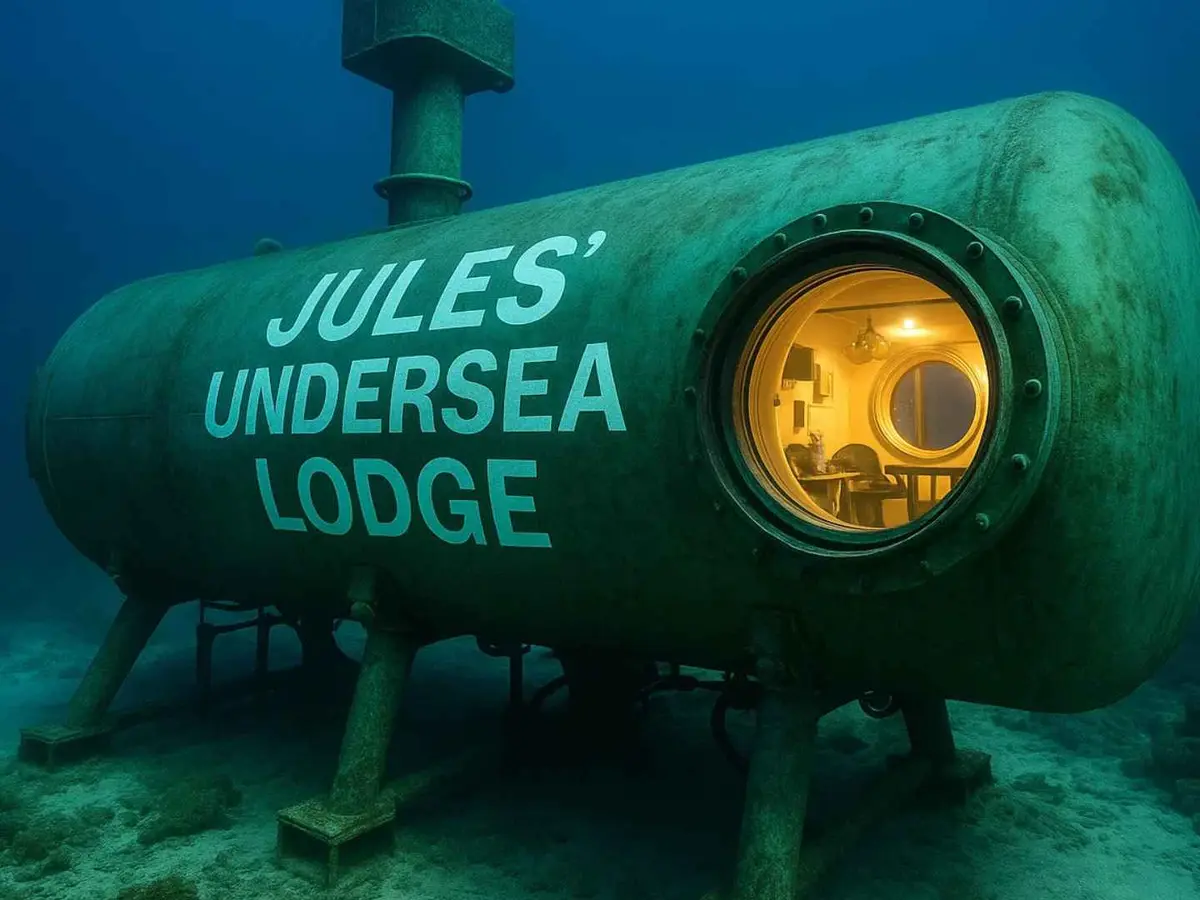
Jules sits underwater at MarineLab Undersea Park in Key Largo, Florida. The former research habitat has two sleeping rooms, a common area, life-support connections to the surface, and an entrance reached from below.
- True underwater inventory: one habitat with two bedrooms, currently booked for up to four people.
- Entry requirement: open-water scuba certification, with a narrow student exception involving an instructor.
- Current price: $1,800 per couple, plus $500 for each additional guest.
- Main compromise: this is intimate science-camp adventure, not spacious underwater luxury.
What exactly are you booking?
The current operator is Marine Resources Development Foundation, a nonprofit that runs MarineLab Undersea Park. Its official Jules page sells an overnight aquanaut adventure rather than a conventional hotel room.
The habitat contains two underwater bedrooms and shared living facilities, with round windows looking into the lagoon. The whole structure is underwater, so this qualifies far more honestly than a hotel room that merely faces a giant aquarium.
You enter through a wet opening at the bottom and rise into the habitat’s pressurized air space. Your bed stays dry, but every arrival and departure involves scuba equipment and controlled underwater movement.
Official material currently prices the experience for a couple and permits additional people up to four total. Older articles describe six guests, but the current booking page is the authority for today’s capacity.
That distinction matters because old Jules facts swim around the internet for decades. Treat old prices, six-person overnight rates, Discover Scuba rules and package names as history; MarineLab’s current Aquanaut itinerary does describe a delivered pizza dinner.
The best room choice is really a group choice
There is no tower, garden wing, or sunset-villa puzzle. You are choosing who shares the habitat, how four people divide two sleeping rooms, and whether everyone is equally comfortable with the dive and the confined environment.
A couple gets the simplest version and pays the current $1,800 base. Two couples can lower the per-person cost by adding two guests at $500 each, bringing the official activity total to $2,800 before optional certification or unlisted extras.
Ask whether another party can ever share the habitat during your mission, how bedroom doors and shared bathroom arrangements work, and what privacy is realistic. A memorable anniversary can survive compact quarters, but it benefits from accurate expectations.
There is no meaningful upgrade to a bigger underwater suite. The valuable upgrade is preparation: a recent refresher dive, comfortable buoyancy, and a group that does not discover claustrophobia while looking at the moon pool.
The underwater reality
Jules is in a controlled lagoon rather than an open coral reef. The water may be green, visibility varies, and the view is closer to watching a living lagoon ecosystem than staring into a luminous luxury aquarium.
That does not make it less authentic. Fish pass the windows, bubbles move outside, and the ordinary mechanics of sleeping become wonderfully strange when the surface is overhead.
The habitat’s pressure matches the surrounding water, which is why diving procedures and mission supervision matter. Guests should follow the operator’s briefing exactly and raise every medical or comfort concern before entering.
The wider Florida Keys waters form part of the Florida Keys National Marine Sanctuary, which NOAA says protects 4,539 square miles around the island chain. The Jules lagoon is a specific managed facility, not permission to treat nearby wild habitats casually.
Expect marine life rather than a guaranteed cast. Manatee, fish, and seahorse stories appear in past coverage, but wildlife follows its own schedule and should never be promised as a room amenity.
Certification is not optional
MarineLab currently requires every participant to hold at least an open-water scuba certification. Open Water or Discover Diving students may join only when a scuba instructor is in the party and explicitly accepts responsibility under the operator’s policy.
That is not the same as showing up untrained and buying a quick swim to the room. Contact MarineLab before payment if anyone lacks certification, has not dived recently, or needs adaptive support.
Divers need buddies, and the official FAQ says solo missions are not offered in the ordinary way. A would-be solo guest is encouraged to find a buddy through a local dive shop, refresher course, or specialty class.
Medical fitness matters even in a lagoon. Answer screening forms honestly, consult an appropriate clinician when required, and never let a nonrefundable date pressure someone into a dive they should not make.
Review Divers Alert Network guidance for flying after diving and discuss the mission profile with staff. Key Largo’s easy drive to airports does not erase decompression planning.
What happens during the stay?
MarineLab currently describes the overnight as noon to noon. The price includes three meals, tanks and weights, and an Honorary Aquanaut Certificate.
The exact sequence includes surface orientation, gearing up, underwater transit, habitat time, meals, lagoon diving, sleeping, and a controlled return. Ask for the current mission schedule because staffing, training, and conditions can reshape the order.
An optional PADI Aquanaut Specialty Certification costs $100 per participant. Not everyone in a group must add it, according to the current Jules page.
The certificate is a delightful souvenir, but the real appeal is spending enough time below to notice the habitat’s rhythm. A day visitor gets novelty, while an overnight guest experiences dinner, darkness, sleep, and morning without returning to the surface.
Rooms and creature comforts
Past descriptions mention beds, a common room, a small kitchen, a hot shower, entertainment, and communications with the surface. Confirm the current setup because habitat equipment changes and historic articles are unusually sticky.
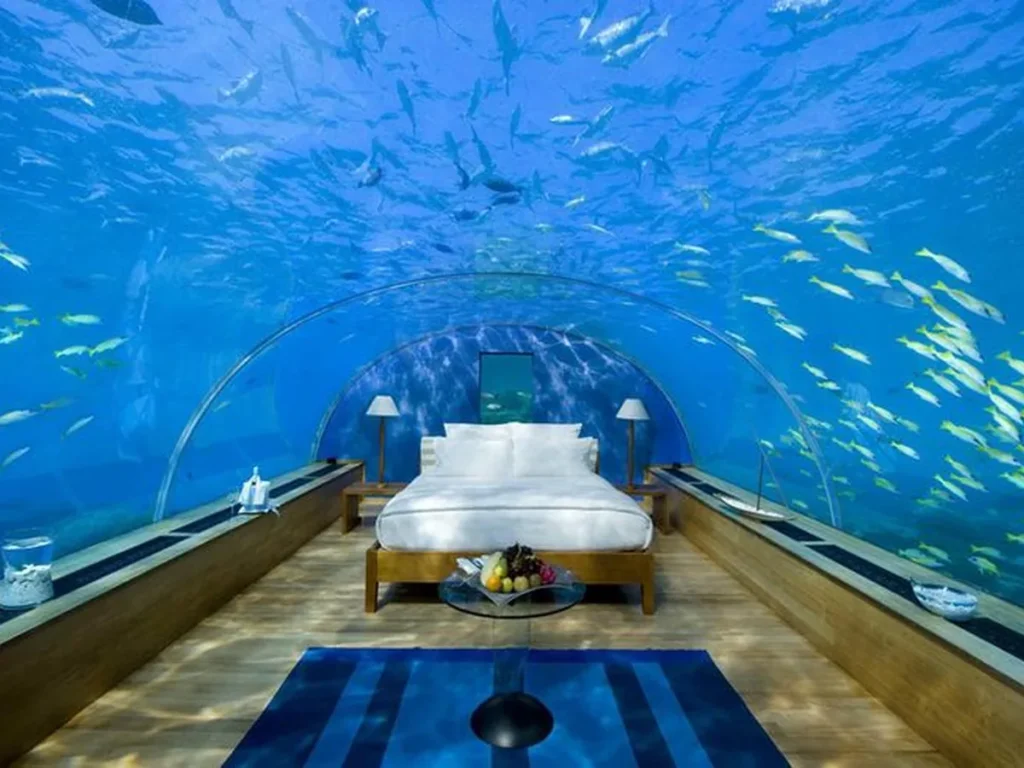
Do not picture a broad suite with floor-to-ceiling acrylic walls. Round porthole-style windows provide the view, spaces are compact, and equipment is closer to functional laboratory living than contemporary resort design.
Personal belongings must be transferred dry into the habitat, so packing is different from walking into a hotel. Ask what bag is provided, which electronics can travel, what is prohibited, and whether transfer charges apply to larger devices.
Bring very little. Dry clothes, basic toiletries approved by the operator, required medicine, and one small celebratory object will feel more luxurious than wrestling an overpacked bag through a dive mission.
Meals below the surface
Three meals are included, and MarineLab’s current Aquanaut itinerary describes pizza delivered for dinner. Confirm your menu and dietary needs when you reserve.
Request the current meal plan and arrival-day timing. Tell MarineLab about allergies, dietary restrictions, cross-contact concerns, and alcohol questions well in advance because an underwater kitchen cannot improvise like a city restaurant.
The novelty of eating underwater carries much of the culinary magic. This is not a tasting-menu destination, and book for the habitat experience and confirm the current dinner plan rather than relying on an old review.
Filtered water, caffeine, snacks, and breakfast details should all be confirmed. A guest who becomes grumpy without morning coffee deserves to know whether the aquanaut life supports their essential research.
What it costs now
The official August 2026 price is $1,800 per couple at double occupancy. Each additional guest costs $500, with four people the currently stated maximum.
At two guests, that is $900 per person. Three pay $2,300 total, or about $767 each, while four pay $2,800 total, or $700 each.
The base includes three meals, tanks, weights, and the honorary certificate. The optional PADI specialty adds $100 per participant, and guests should ask whether rental buoyancy devices, regulators, wetsuits, masks, fins, taxes, or service charges are separate.
This is expensive for one night and unusually accessible compared with underwater suites costing several thousand dollars in luxury resorts. The value lies in authentic habitat living and diving into your bedroom, not in square footage or a thread count arms race.
Ask about deposit, cancellation, weather, medical disqualification, and rescheduling terms before paying. Insurance should explicitly cover scuba and the prepaid experience rather than merely covering flights.
Getting to Key Largo
MarineLab Undersea Park is at 51 Shoreland Drive in Key Largo. Most travelers drive from Miami or another South Florida gateway, then report to the surface facility rather than a conventional hotel reception.
Allow a generous road buffer because South Florida and the Overseas Highway can be slow. Arriving late for a noon mission can disrupt training, staff, buddies, and underwater logistics.
Plan dry-land lodging before or after the mission because the underwater stay does not solve every night of a Keys itinerary. A conventional Key Largo room is also useful for luggage that has no business becoming aquanaut cargo.
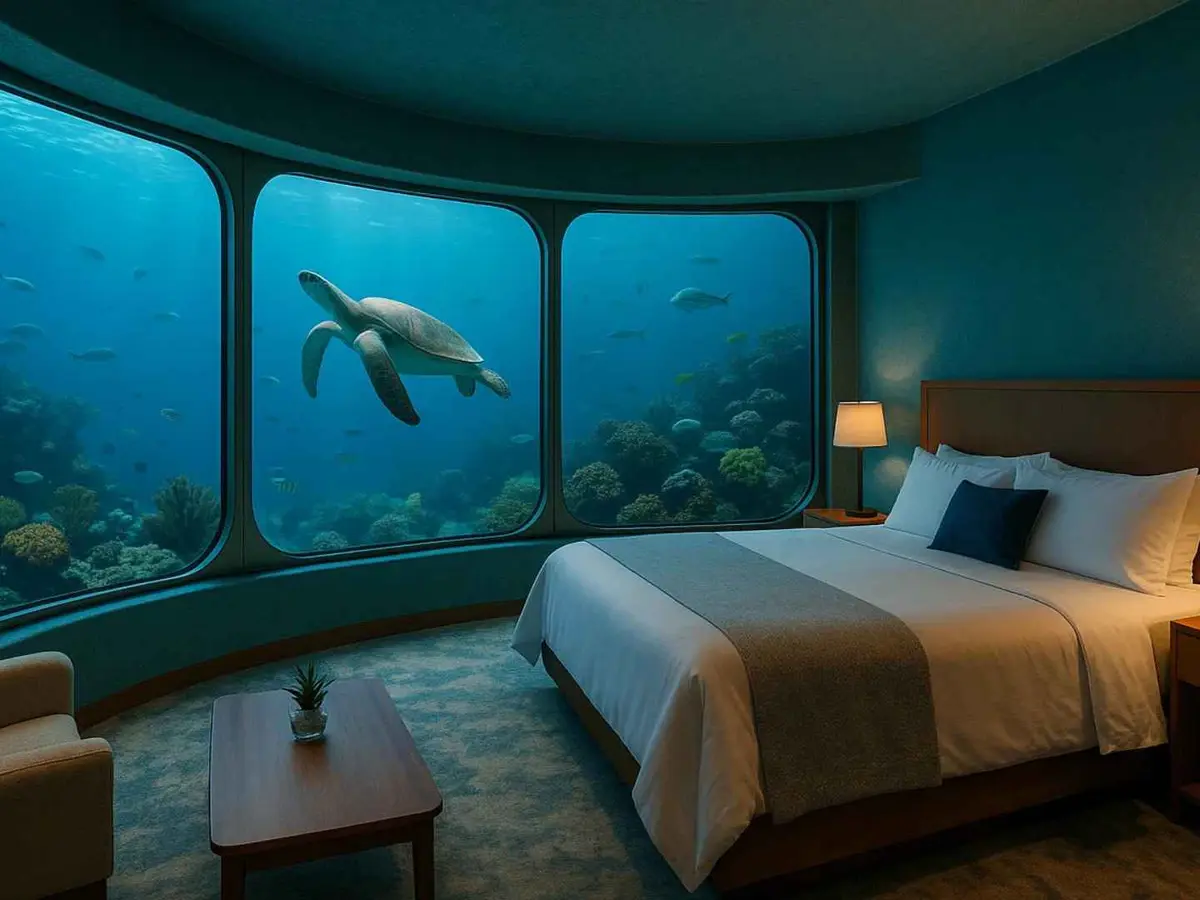
How it compares with other underwater stays
Our guide to the world’s underwater hotels includes grand aquarium suites and remote ocean rooms. Jules is different because the guest must be a participant, not merely a spectator behind glass.
The Fiji underwater hotel guide separates operating stays from ambitious concepts, a useful habit here because Jules has decades of real history. It is less luxurious than Dubai’s aquarium suites and more operationally demanding than Reefsuites in Australia.
Travelers who decide that scuba-to-bed is a step too far can browse Caribbean overwater bungalows. Those keep the mattress above the surface and the swimming optional.
For package-minded travelers, our all-inclusive overwater guide explains a more conventional version of bundled water travel. Jules bundles a mission, which is a very different animal.
Who will love it?
Confident divers, marine-science fans, curious couples, and families with qualified older children are the obvious match. It also works beautifully for a milestone birthday where the story matters more than spa robes.
The ideal guest enjoys equipment, procedure, and novelty. They understand that the briefing is part of the adventure and that a porthole full of modest lagoon fish can be more memorable than a giant television.
Who should skip it?
Skip Jules if you cannot or should not scuba, dislike confined spaces, need lots of privacy, or expect a five-star bedroom. Anyone nervous about a moon-pool entrance should discuss that honestly rather than hoping bravery will arrive underwater.
It is not an easy fit for large groups because current capacity stops at four. Families must read the minor policy carefully, and every minor needs a parent or legal guardian.
Guests with disabilities should contact MarineLab directly about current adaptive access, transfer methods, and dive support. The park says improved access for divers and snorkelers with limited mobility is coming, which is not the same as confirming it is ready for a particular date.
Ideal stay length
One overnight is the experience, since the package runs roughly noon to noon. Add at least one dry-land night before it to protect against travel delays and to organize gear calmly.
Afterward, another Keys night lets divers preserve a safe interval before flying and recover without rushing. It also gives the group time to talk about the gloriously odd fact that they slept inside a former underwater laboratory.
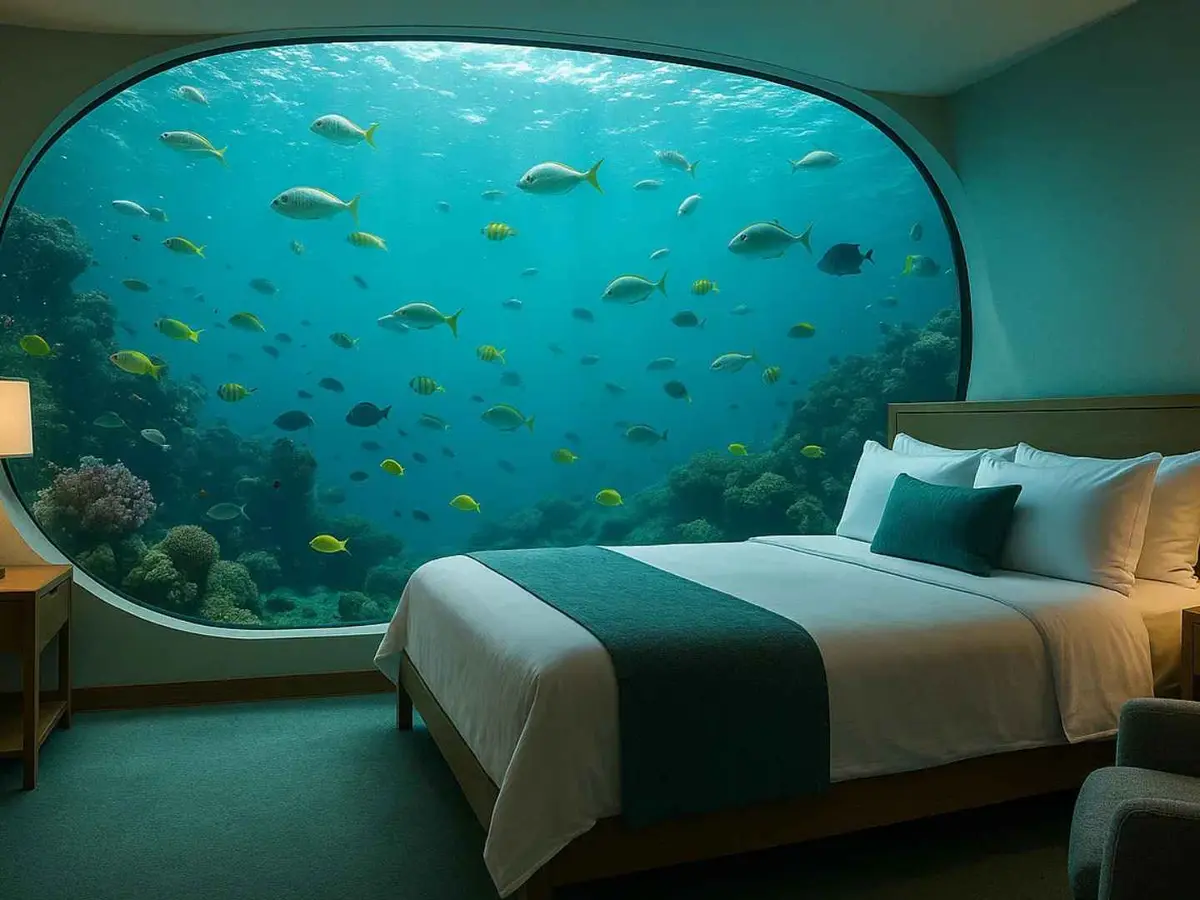
Safety and operating caveats
Follow every certification, buddy, medical, and equipment rule issued by MarineLab. The controlled lagoon reduces some environmental uncertainty but does not remove scuba risk.
Surface support and life-support systems are central to habitat operations. Guests should ask how communications work, what emergency procedures apply, and how staff respond if someone wants to exit early.
Weather can still affect travel and surface activity. Keep medicine accessible, arrive rested, avoid alcohol before diving, and do not conceal anxiety or illness.
Frequently asked questions
Is Jules a real underwater hotel?
Yes, though “underwater habitat adventure” is more accurate than luxury hotel. Guests dive to a submerged structure and sleep in dry rooms below the surface.
How many people can stay?
The current official maximum is four. Older sources describing six guests are not the present booking standard.
Do I need scuba certification?
Yes. Open-water certification is required, except for students accompanied by an instructor who accepts responsibility under MarineLab policy.
How much does it cost?
The current base is $1,800 per couple. Additional people cost $500 each, up to four total.
Are meals included?
Yes, three meals are included. Confirm the current menu and all dietary arrangements directly.
Can I book alone?
Not as a normal solo mission because divers need buddies. MarineLab suggests finding a buddy through a dive shop, refresher, or specialty course.
Is the aquanaut certification included?
An honorary certificate is included. The optional PADI Aquanaut Specialty costs $100 per participant.
The verdict
Jules is not the underwater suite for travelers who want champagne beside an aquarium wall. It is the one for people who want to earn the view, surface through the floor, and briefly live like the ocean laboratory is home.
The habitat is compact, the lagoon is real rather than cinematic, and the rules are serious. For a confident diver with the right buddy, those are not flaws but the ingredients of a deliciously strange Florida night.