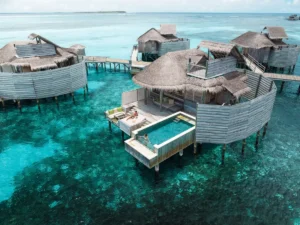
Le Tikehau Overwater Bungalows: The Ladder Detail That Changes Everything
Le Tikehau has a wonderfully sneaky booking trap: the least expensive bungalow is definitely over the water, yet you cannot climb into the lagoon from its deck. That single detail matters more than the flower arrangement, the glass table, and at least twelve photographs of breakfast combined.
Le Tikehau in 30 seconds
- Standout: A tiny private-motu resort in a wildlife-rich Tuamotu atoll.
- Best for: Quiet travelers who are happy with a book, a kayak, and days arranged around the water.
- Biggest catch: The standard Overwater Bungalow has no direct lagoon access.
- My pick: Premium Overwater for a couple, or an Overwater Suite when a family needs the extra living space.
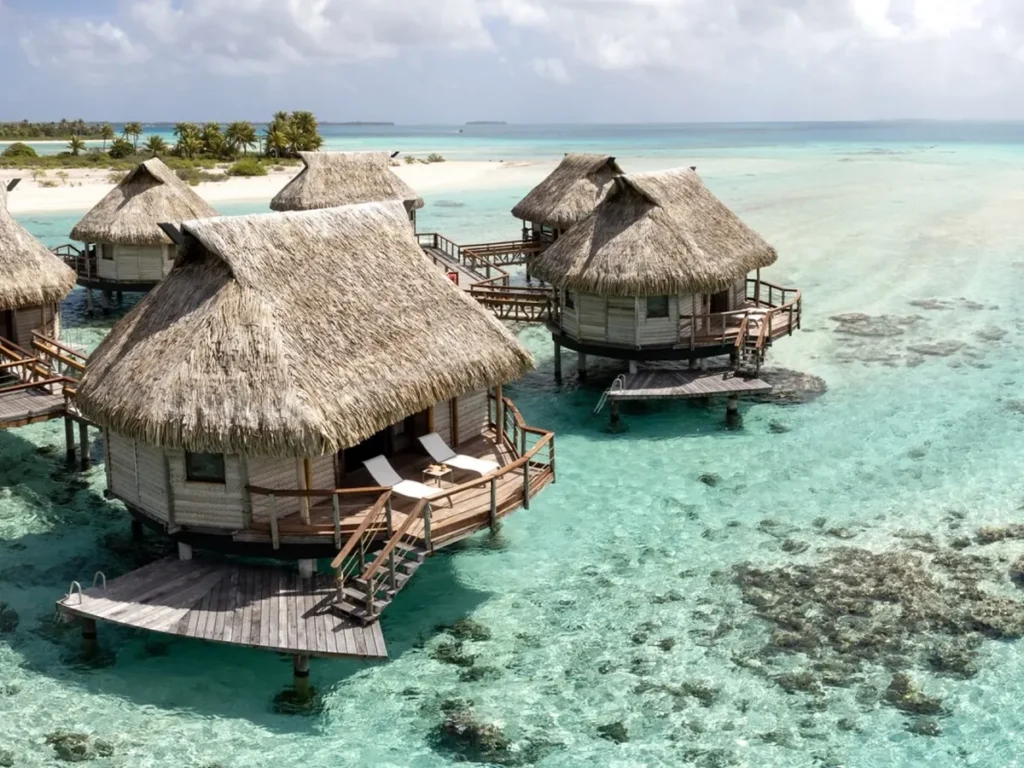
The cheapest bungalow is a viewing room, not a swim platform
The official room list says the 592-square-foot Overwater Bungalow sits above a hoa, a shallow channel where ocean water feeds the lagoon. It includes a glass viewing table but explicitly has no direct water access because of coral and current.
That is not a tiny footnote. Anyone picturing coffee followed by three steps into the lagoon will need to walk to an approved shared entry instead, which changes how the room feels every morning.
The standard bungalow still works for travelers who want the visual romance, fish below the glass, and a lower overwater rate. I would choose it only after happily imagining the entire stay without a private swim.
Premium Overwater Bungalow
Premium keeps the same listed 592-square-foot footprint while adding direct lagoon access and a more private position. For a honeymooner who will use the ladder, this is where the overwater promise and the room description finally shake hands.
A far position can also mean a longer walk, more breeze, and different water depth. The current map, deck direction, and daily access conditions still deserve attention before the word Premium does all the decision-making.
Overwater Suite and Horizon Overwater Suite
The Overwater Suite grows to 1,001 square feet and adds a living room, large bathtub, direct access, and space for two adults plus two children under the current rules. That separate living area is genuinely useful during rain or an early child bedtime.
The Horizon version sits at the end of the pontoon with a broad outlook and extra quiet. I would pay for it when seclusion is the goal, but not for a guest who dislikes long walks or wants the most sheltered ladder.
Beach Bungalow
The Beach Bungalow is not the consolation prize. It keeps the lagoon view, welcomes a family configuration, and makes sand, restaurant trips, and nighttime movement much simpler.
Parents and uncertain swimmers may enjoy Tikehau more from land than from a room edged by open water. A split stay can add a short overwater finale, although I would not pack twice during a three-night visit.
Tikehau is quiet on purpose
The resort occupies a private motu in the Tuamotu Archipelago, far from Moorea’s rental-car loops and Bora Bora’s larger resort circuit. This is the place for people who feel relieved when the evening plan is dinner, stars, and absolutely nowhere else to be.
A limited nightlife scene is not a service failure here. Guests who need a new bar, restaurant, and shopping district each day are better matched with a more developed island in our French Polynesia overwater guide.
Tikehau also has a resident community beyond the resort. Village visits are most worthwhile when locally guided, respectful, and structured so that spending benefits the people whose atoll this is.
How the journey works
Air Tahiti connects Tahiti and Tikehau on a schedule that varies by operating day. The official airline page should lead the planning, with the confirmed flight number sent to the resort for the final vehicle and boat transfer.
The private-motu arrival usually combines a short land movement with a boat crossing. Exact fees, meeting point, baggage handling, last departure, and late-flight procedure belong in writing because an old itinerary cannot meet a newly timed plane.
I would keep a Tahiti buffer before the international flight home. An atoll journey with a domestic flight and boat has more moving pieces than its short distance suggests.
The official Tikehau destination guide adds useful context before arrival. Download confirmations and contact numbers so weak Wi-Fi never becomes the reason a transfer feels mysterious.
The water changes across the pontoons
A hoa can be fascinating to watch because water and marine life move through it. It is not a universal swimming lane, which is why the standard bungalow’s missing ladder is a safety feature rather than a stingy design choice.
Premium bungalows and suites have their own entries, but stairs do not control tide, wind, current, or visibility. Staff can point out the sensible route each day and identify any boat movement to avoid.
Tikehau’s marine reputation deserves a guided snorkel or dive beyond the room. A local operator understands the pass, habitats, weather, and animal behavior in ways a confident visitor cannot learn from one look over the railing.
Coral is never a place to stand, and reef sharks do not need to be approached for a better photograph. Loose phones, hats, and bottles also need securing unless the plan includes donating them to the lagoon.
Dining is small-resort dining, with a useful second option
Poreho provides the main lagoon-view restaurant, while Te Reka Ika adds another dinner setting focused on fish and the surrounding atoll. That is more choice than older one-restaurant descriptions suggest, but operating nights can still shift.
Current menus, hours, meal-plan inclusions, child terms, and supplements make the food budget honest. At a private motu, an unavailable restaurant cannot be replaced by wandering down a lively street.
Room service is offered in defined meal windows rather than as an endless overnight pantry. Families and privacy-seeking couples should verify those hours if eating in the room is central to the plan.
Canoe breakfast is delightful once and not a reason to ignore ordinary food quality. I care more about whether breakfast is varied, dietary needs are handled, and dinner pacing suits a small property.
A five-night rhythm that leaves room for weather
Arrival day only needs orientation, a transfer check, and a conversation about water safety. The first calm morning can take the most important lagoon outing while conditions are favorable.
Another day should include the atoll or village beyond the motu, with a locally responsible guide. The following morning then belongs to the room, especially if you paid for a Premium ladder.
Divers need early contact about certification, health forms, equipment, insurance, and experience requirements. Snorkelers owe the water the same honesty about ability even when the paperwork is lighter.
One mostly empty day is not wasted. It is the space where a weather-cancelled outing can move, or where the resort’s quiet finally begins to feel luxurious instead of unproductive.
The drawbacks that come with the beauty
- Fixed logistics: Flights and boats decide more of the arrival than they would on Moorea.
- Finite dining: Even two venues feel limited during a long stay if variety is a priority.
- Atoll weather: Wind can rearrange snorkeling, diving, and deck time.
- Remote maintenance: A physical problem may take longer to solve than it would at a city hotel.
Recent room condition matters more than the resort’s age. Any cooling, hot-water, or maintenance issue should be reported immediately, with a clear chance for staff to fix it before checkout.
When a different overwater resort makes more sense
Le Tikehau is not the natural choice for travelers who want dozens of restaurants, easy road excursions, or a fresh entertainment schedule every evening. Moorea offers much more independence, while Bora Bora offers a larger range of full-service resorts and a more immediately recognizable view.
Budget travelers should also compare the Premium rate with the options in our affordable overwater bungalow guide. Tikehau’s small scale can justify the price emotionally, but remoteness also adds flights, transfers, and a food plan that belong in the total.
For a romantic trip, the best comparison is not simply another thatched roof. Our honeymoon bungalow guide helps sort privacy, private pools, dining breadth, transfer fatigue, and snorkeling, which may point a couple somewhere completely different.
I would choose Le Tikehau when quiet and marine life are the destination, not when they are pleasant extras around a busy resort holiday. That distinction keeps its limited scale feeling intimate rather than restrictive.
Frequently asked questions
Does every Le Tikehau overwater bungalow have lagoon access?
The standard Overwater Bungalow has no direct lagoon access, while Premium Overwater Bungalows and Overwater Suites advertise private access. Daily conditions and staff guidance still govern safe use.
Which room would I choose for a honeymoon?
Premium is my value choice because it adds the ladder without the Suite’s much larger footprint. Horizon is appealing when privacy and an end position matter more than walk length or shelter.
Is Le Tikehau good for families?
It can be, particularly in an Overwater Suite or Beach Bungalow whose current occupancy fits two adults and two children. Parents should verify ages, locks, rails, flotation devices, and water supervision for the exact room.
How many nights should you stay?
Five nights gives the atoll enough weather flexibility and prevents the multi-stage journey from overwhelming the visit. Four can work, while a week suits divers and travelers who genuinely enjoy a slow pace.
Is there enough to eat at the resort?
The current resort information identifies two restaurants, but schedules and meal plans vary. Guests who need extensive nightly variety should inspect current menus before booking rather than expecting a large-resort dining circuit.
My room choice
I would book Premium for a couple who considers private swimming essential, an Overwater Suite for a family that needs separation, and standard only for someone delighted to watch the hoa instead of entering it from the deck. Le Tikehau is easy to love once the room’s actual relationship with the lagoon is clear.