
Overwater Bungalows You Can Reach Without a Seaplane
Some people are scared of small planes. Some just do not want to pay for one.
Either way, plenty of overwater bungalows never involve a seaplane at all. Here is where they are and what the tradeoff costs you.
Overwater bungalows without a seaplane, in 30 seconds
- The Caribbean and Mexico are the easiest wins. Most overwater resorts there are reached by road, sometimes with a short boat ride.
- Bora Bora never uses a seaplane. The airport sits on its own islet and every arrival is by boat.
- The Maldives has a whole tier of speedboat resorts close enough to the main airport that no plane is needed.
- Fiji has road transfer options on the main island, which is unusual and underrated.
- Belize, Panama, and parts of Southeast Asia use boats rather than seaplanes almost everywhere.
- No seaplane rarely means no boat. If water transfers are the actual problem, that is a different question.
- You usually trade remoteness for convenience. Closer to an airport means closer to traffic, noise, and other people.
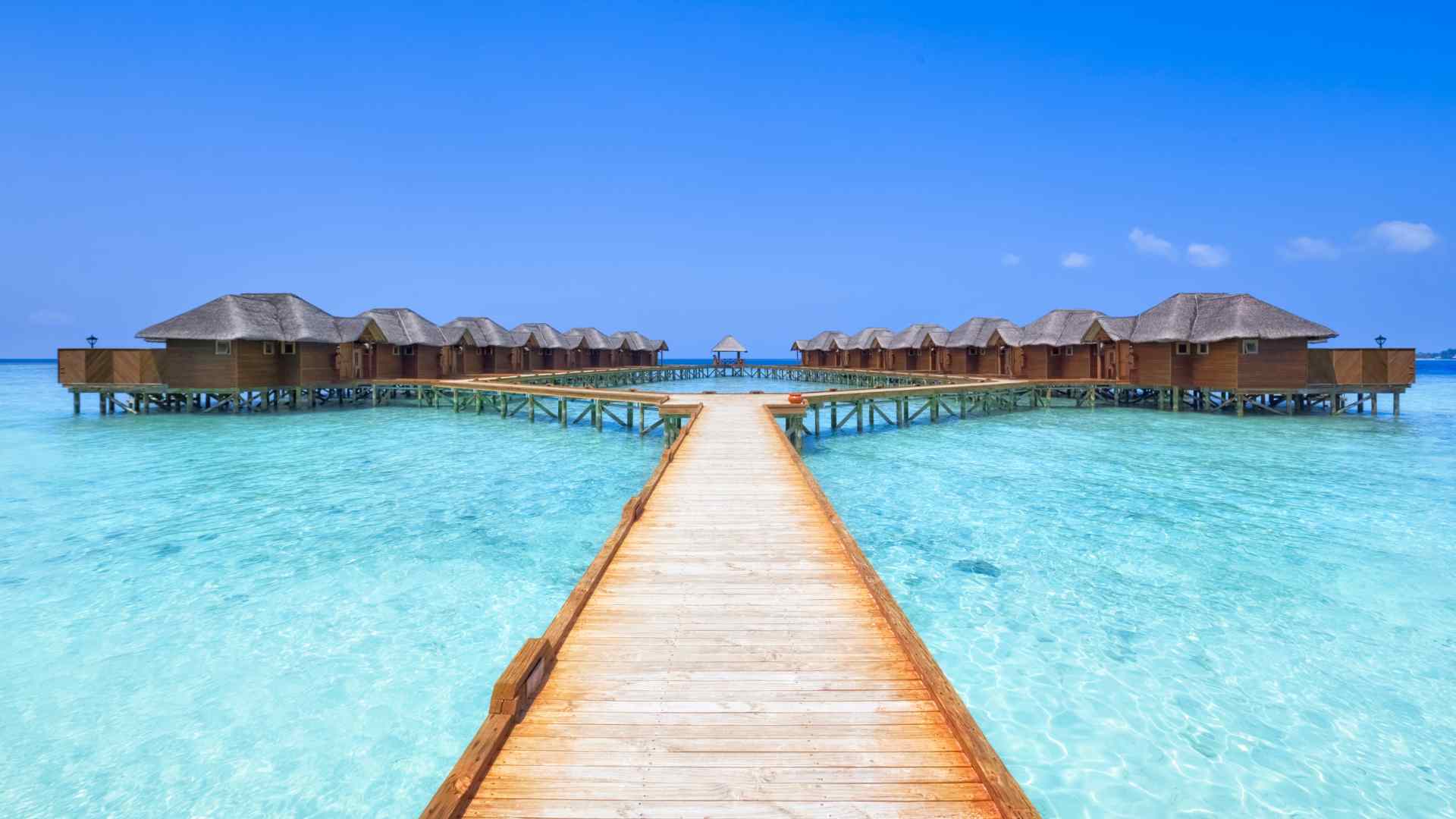
What the seaplane actually involves
It helps to know what you are opting out of, because most people picture the wrong part. The flight is the short bit.
In the Maldives you clear immigration, then take a shuttle to a separate seaplane terminal away from the international arrivals hall. You wait there for a departure slot that is shared with guests going to other resorts.
You board barefoot off a floating pontoon. The cabin is not air conditioned while it sits on the water, and it gets warm before the props spin up.
Seaplanes fly in daylight only. That is the single rule that reshapes more itineraries than anything else on this page.
Baggage allowance on the floatplane is lower than on your international flight, and excess is charged by weight. Allowances change, so confirm the current one with your resort rather than assuming.
The Caribbean is the obvious answer
Overwater bungalows arrived late in the Caribbean and they were built for a specific customer. That customer flies from the US, does not want a second flight, and wants to be in a swimsuit by lunch.
So the villas are attached to resorts you drive to. You land, you get in a vehicle, and that is the whole transfer.
Saint Lucia, Antigua, Jamaica, and a handful of others work this way. My guide to which Caribbean islands actually have overwater villas covers the full list, because it is shorter than people assume.
The honest catch is the water. Caribbean overwater villas often sit in a bay rather than a protected lagoon, and the visibility and the reef life are not on the same level as the Indian Ocean.
That does not make them bad. It makes them a different product wearing the same hat.
Mexico, if you want the shortest possible travel day
In Mexico, Palafitos sits on the mainland coast, so you can reach the resort by road after flying to Cancún. From most US cities that means one flight and a drive.
If you have four days and you want an overwater deck at the end of them, this is the most efficient option on the planet. Nothing else comes close on travel time from North America.
What you are trading is isolation. You are on a coast with roads, other hotels, and weather that behaves like the Caribbean rather than a remote atoll.
The breakdown of Mexico’s overwater villa options has the details. Ask the resort about seaweed conditions for your specific dates, because it swings year to year and the front desk will answer honestly if you ask directly.
Bora Bora, where the seaplane was never the issue
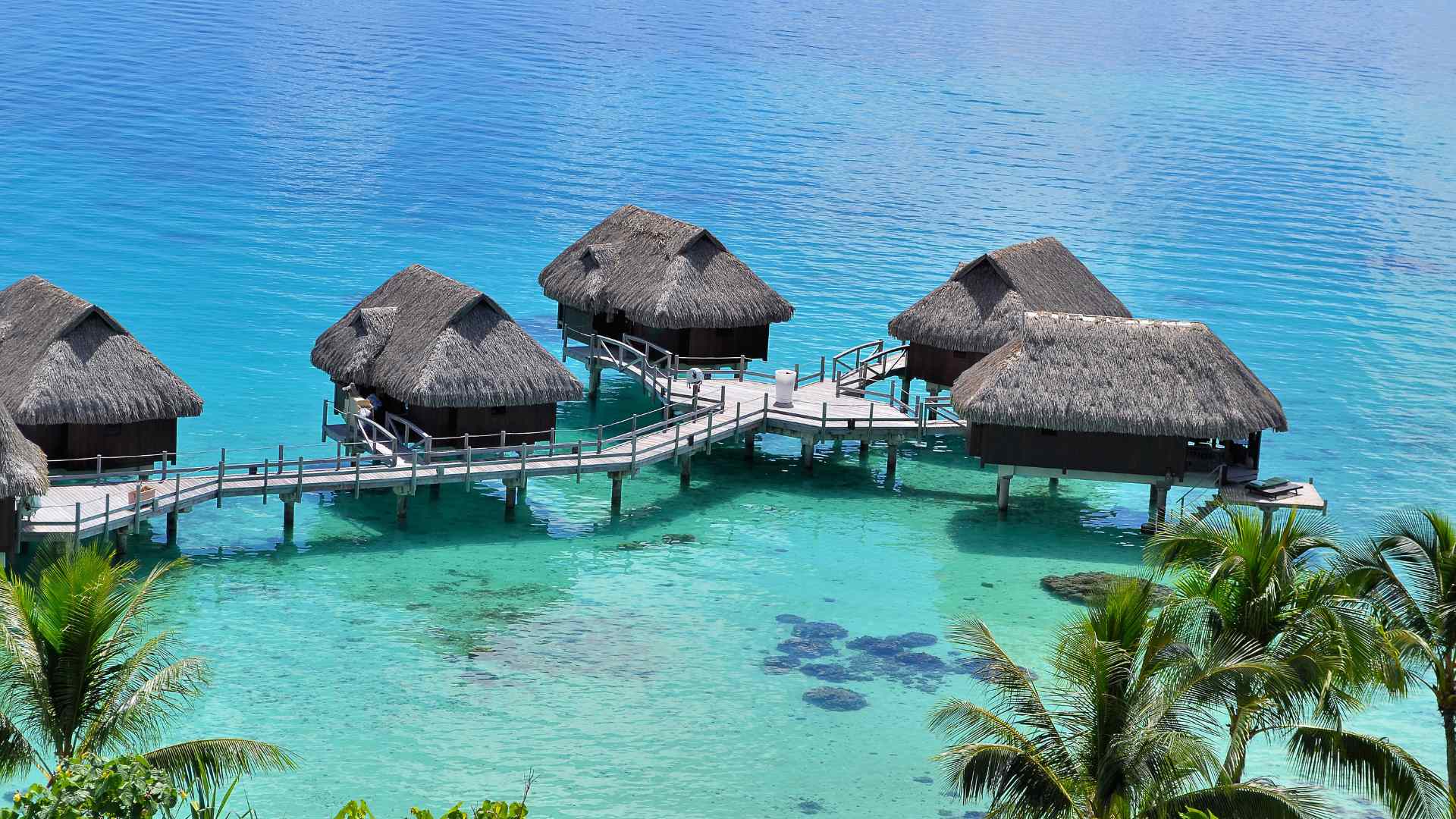
This one surprises people. Bora Bora’s airport sits on a motu, and the Air Tahiti shuttle or a resort boat takes you across the lagoon.
Your resort sends a boat, or you take the shuttle to the main village and go from there. There is no seaplane in the equation.
The flight you do need is a domestic hop from Tahiti, and that is a normal commercial aircraft. If your objection is specifically small floatplanes, French Polynesia is wide open to you.
The boat rides are short and usually calm inside the lagoon. The resort boats are covered, but you still catch spray on the way across, so keep a light layer where you can reach it.
Start with my rundown of Bora Bora’s overwater resorts if this is the direction you are leaning. The lagoon does most of the work there.
The Maldives without the floatplane
Many Maldives resorts near the main airport use speedboats. More remote resorts can offer a domestic-flight-and-boat alternative; Six Senses Laamu is one example, so ask for the exact transfer on your dates.
They are close enough to the main airport for a speedboat.
The advantages are real and they are not just about fear. Speedboats run after dark, seaplanes do not.
That single fact changes your whole itinerary. A late arrival into a speedboat resort means dinner at the resort, while a late arrival into a seaplane resort can mean a night in a hotel near the airport at your own cost.
Speedboat transfers also cost less per person, usually by a wide margin. My side by side look at speedboat and seaplane transfers lays out where each one wins.
There is a middle option too. A domestic flight on a normal turboprop followed by a short speedboat ride reaches the far atolls without a floatplane.
Ask for that routing by name when you inquire, because some resorts quote only the seaplane unless you push. Transfer pricing and schedules move around, so get the current quote in writing from the resort before you commit.
Fiji has the road transfer nobody expects
Most people assume every Fiji overwater bure requires a boat or a small plane out to an island. Not all of them do.
There are overwater villas on the main island that you reach by car from the international airport. That is a rare combination anywhere in the Pacific.
The overwater bures at Momi Bay are the example most people mean. The lagoon there is man made rather than a natural reef, which is a fair trade for the convenience and a bad trade if you came to snorkel.
Island resorts in Fiji generally use boats, helicopters, or small planes. If you want Fiji without any of those, the main island is where to look.
Central America and Southeast Asia
Belize and Panama use boats, not seaplanes. Typically that means a domestic flight on a small commercial aircraft and then a boat ride out to the cay.
Southeast Asia is similar. Overwater villas in that region are usually reached by road, ferry, or private boat.
The catch there is total travel time rather than the transfer type. Getting to a remote water villa in that part of the world can take two full days from the US even without a floatplane.
Boat departures out to the cays are also tied to the last domestic flight of the day. Miss that connection and you are sleeping on the mainland, so build in a buffer.
The helicopter option, briefly
A few destinations offer helicopters instead of floatplanes. Fiji is the most common example.
Whether that helps depends entirely on what bothers you. If it is the water landing, a helicopter solves it, and if it is small aircraft in general, it does not.
Helicopters usually cost more than the seaplane, not less. Treat them as a comfort upgrade rather than a savings play.
One genuine advantage is scheduling. Helicopter transfers are often more flexible on timing, which can rescue an awkward flight arrival.
What you give up
I am not going to pretend the trade is free. The remote resorts are remote for a reason, and the reason is usually the water.
Far atolls have better reefs, clearer water, and fewer boats crossing the view. Resorts near an airport hear air traffic and see other islands.
You also give up the arrival itself. A seaplane ride over an atoll is genuinely spectacular, and people who take it usually list it as a highlight of the week.
That is a real thing to lose. It is not, however, worth a week of dread for someone who hates small aircraft.
Here is who should skip this whole approach. If the house reef is the reason you are going, a close in resort will disappoint you, and no amount of saved transfer money fixes that.
What you gain
Time, mostly, and it is more than people expect. Seaplane travel involves a transfer to a separate terminal and a wait for a departure slot that depends on other guests.
You also gain flexibility on flight times. Without a daylight only transfer, a red eye arrival stops being a problem.
And you gain money. Transfers are one of the largest hidden line items in an overwater trip, and cutting one out reallocates a serious amount of budget.
Put that saving into an extra night. That is a better purchase than a scenic flight, every time.
The rules I use
- If you get motion sick, a boat is worse than a plane. Do not swap one problem for a bigger one.
- If you have a fear of small aircraft, go Caribbean, Mexico, Bora Bora, or a Maldives speedboat resort and stop agonizing.
- If your arriving flight lands after dark, pick a speedboat or road transfer resort and save yourself an unwanted hotel night.
- If you are traveling with a mobility need, ask about the boarding process for every leg, since docks and small aircraft are the hard parts.
- If the reef is the point of the trip, accept the transfer you were avoiding or accept a lesser lagoon.
- If you have three or four nights only, the short transfer is not a compromise, it is the correct choice.
Those six rules settle almost every version of this question I get asked. The remaining cases usually come down to budget.
Quick questions about skipping the seaplane
Are speedboat resorts cheaper overall?
Usually yes, because the transfer itself costs less per person and the resorts nearest the airport tend to sit lower on the price ladder than the far atoll properties. It is not a rule, since a few genuinely expensive resorts are also close in, so compare the room rate and the transfer together.
Can I ask a resort to swap my transfer type?
Yes, if the resort operates both a seaplane and a speedboat, and you should ask before you pay rather than after. If the property only runs floatplanes because of where it sits, that is fixed, and no amount of asking will change the routing.
Is a speedboat ride rough?
Inside an atoll or a sheltered lagoon it is usually smooth enough that people read on the way over. Open water crossings in wind are a different experience entirely, so ask the resort how much of your route is exposed before you decide it is the easy option.
Do any overwater resorts need no boat at all?
Yes, the ones where you walk out along a jetty from the beach, which means your entire transfer is a car ride and a suitcase on a boardwalk. Those exist in Mexico, at several Caribbean properties, and at the main island resorts in Fiji.
Does avoiding the seaplane hurt the photos?
Only the aerial ones, because the view down onto a ring of reef is the shot the floatplane gives you and nothing else does. From the deck, from the water, and from the jetty, a villa reached by road looks exactly like a villa reached by air.
Will I still need a boat somewhere in the trip?
Almost certainly yes, since excursions, snorkel trips, and sandbank drop offs all run by boat even at a resort you drove to. If being on the water at all is the real problem, choose a beach walkway property and plan to stay on it.
If you only remember one thing
The transfer is not a detail. It sets your flight times, your arrival day, a large chunk of your budget, and your mood for the first twelve hours.
So decide the transfer first and shortlist resorts second. Doing it the other way around is how people end up dreading the best week of their year.
If small planes make you miserable, there is a very good overwater trip waiting for you that involves a car and a short boat. And if you want the all inclusive version of that, the Sandals overwater suites in the Caribbean are where I would start looking.
Transfer types, schedules, and pricing get revised more often than resorts admit. I keep this page current, but call or email the property and get your routing confirmed before you book flights around it.