
Overwater Villa Categories Explained: Bungalow, Suite, or Residence
Resort room names are not a classification system. They are a pricing tool with nice adjectives on it.
Overwater villa categories get much easier to read once you know what each word tends to mean, and what it never means. Here are the questions I get asked most.
Is there a standard definition of any of these words?
For real room-name examples, compare InterContinental Le Moana’s bungalows, Soneva Jani’s villas, and The Ritz-Carlton Maldives’ villas. Compare floor plans and deck access rather than the noun in the category name.
No. There is no governing body for the word “villa” and no minimum square footage for the word “suite.”
A property can call a single room with a bed and a deck an “overwater suite” and nobody will stop them. Another property will call a much larger unit a “bungalow” because that is the word its guests have always used.
So treat every category name as a label on a box, not a description of what is inside. The floor plan is the description.
What does “overwater bungalow” usually mean?
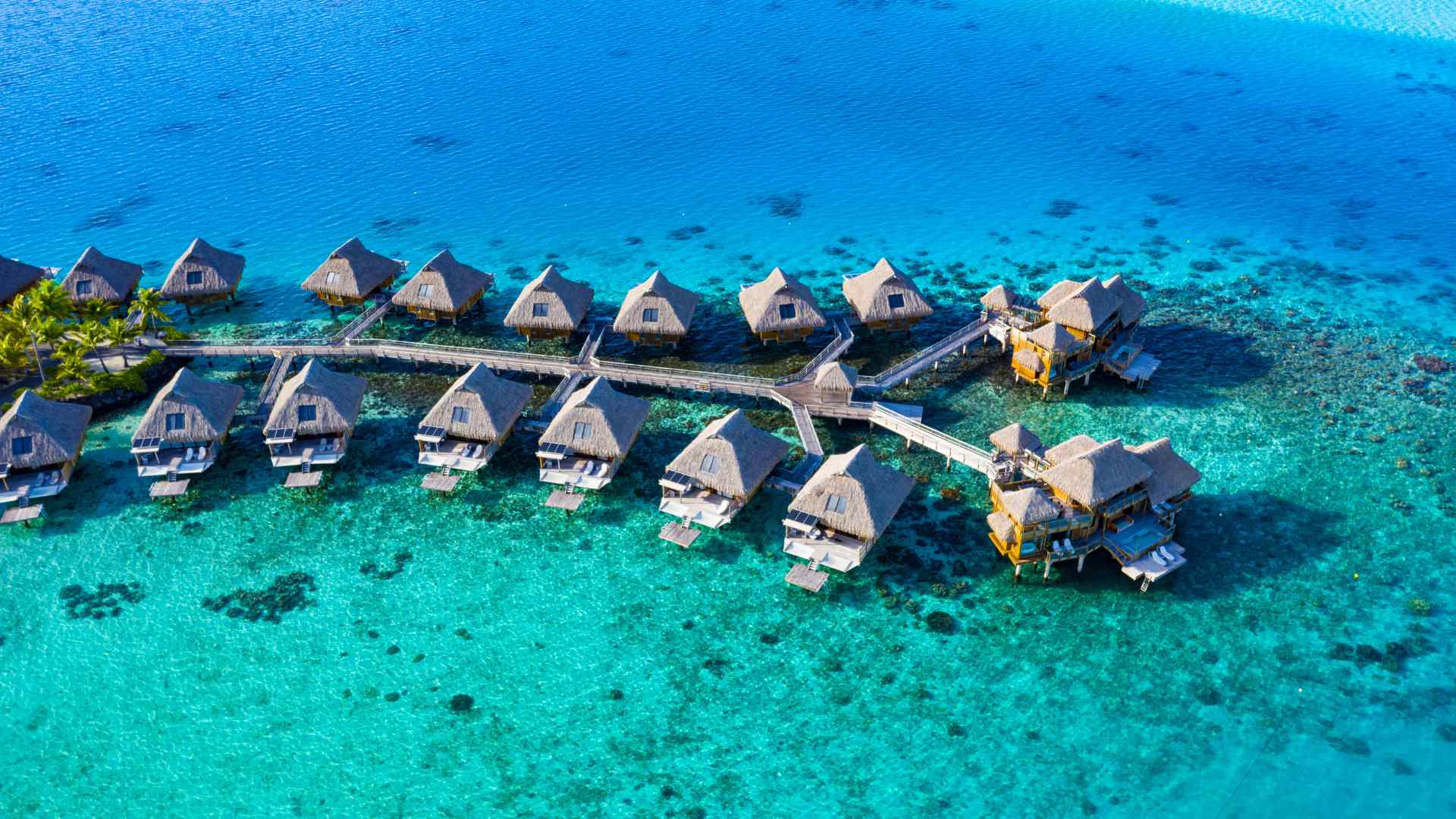
It is the oldest word in this business and the most literal. A standalone structure on stilts, one main room, a deck, and steps or a ladder down to the water.
The word comes out of the South Pacific and still gets used most there. If you are reading a rate sheet for Bora Bora, “bungalow” is the default word for the whole category.
What it implies: one bedroom, one bathroom, one deck. What it does not imply: a pool, a net, a glass floor, or any particular size.
Is a “water villa” a different thing?
Usually not. It is the same building with a different regional accent.
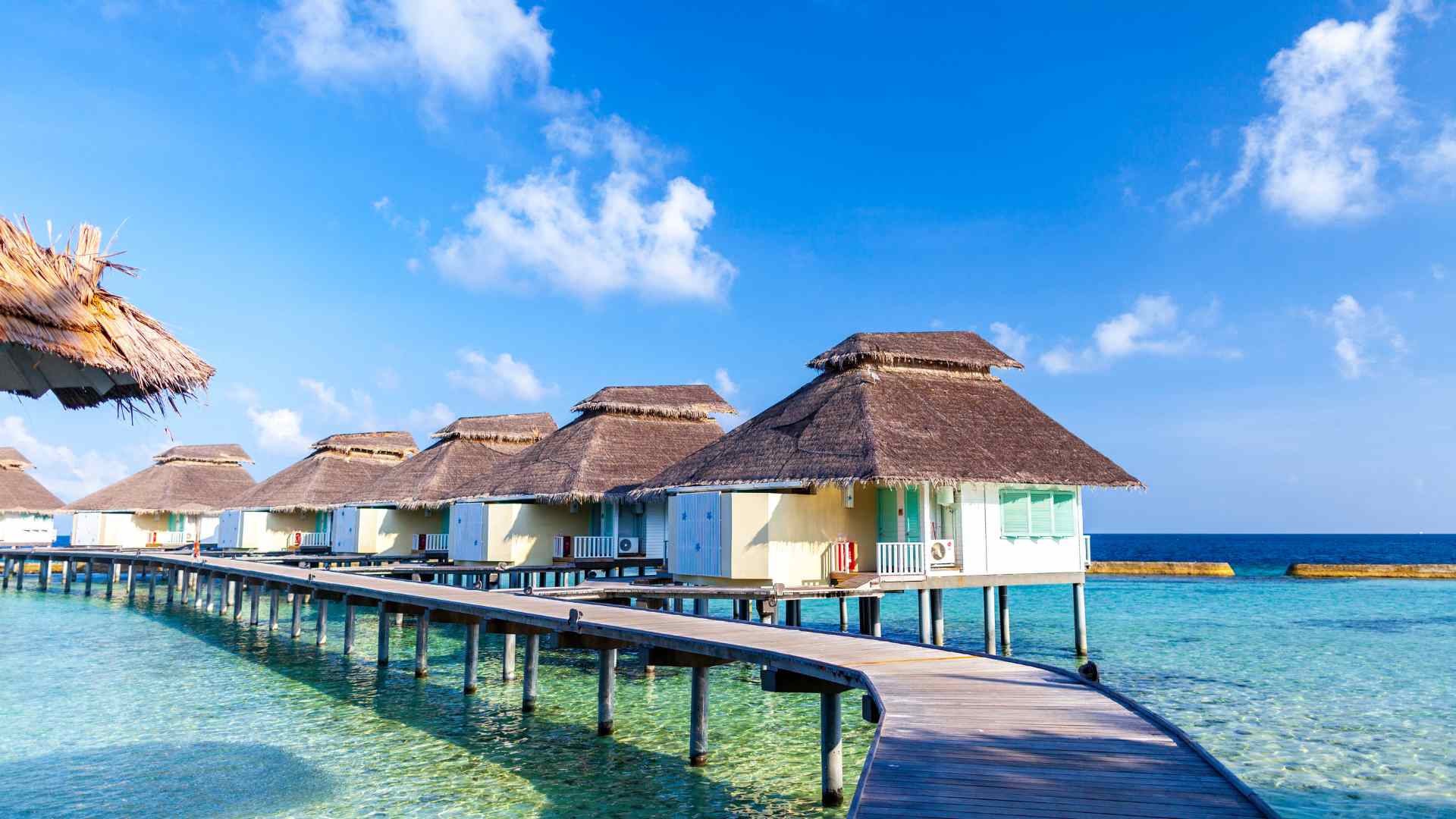
“Water villa” is the standard term across the Indian Ocean, and “bungalow” is the standard term across the Pacific. The structures are cousins.
Where the words do diverge slightly is expectation. “Villa” carries a whiff of more space and more of a bathroom, and resorts lean on that.
Do not pay a premium for the word. Pay for the plan.
What actually makes something a “suite”?
In the rest of the hotel world, a suite means a separate living space with a door or at least a wall between it and the bed. Overwater, that definition holds maybe half the time.
The other half of the time, “suite” means the resort added a sofa and raised the rate. That is the honest version.
The test is simple. Ask whether the living area is a separate room, and if the answer involves the word “designated” or “zone,” it is not.
A real separate living room matters if you have a kid napping, a partner on a different sleep schedule, or a week of afternoon rain. Otherwise it is a nice place to put your bag.
And a “residence”?
This is the top of the tree, and it is the one word that usually earns its rate. A residence generally means multiple bedrooms, its own pool, and a real kitchen or pantry.
It also usually comes with staff. Not always a butler in the formal sense, but somebody assigned to you.
The thing nobody puts in the brochure is that residences often sit at the far end of the jetty. That is privacy on paper and a long walk in practice.
An unshaded jetty can feel long in the middle of the afternoon, especially when you are carrying snorkel gear.
If you are booking one for a group, ask whether a buggy or a boat runs to it on request. On a hot afternoon that question turns out to matter more than the thread count.
What do “deluxe,” “premium,” “grand,” and “royal” add?
Nothing, by themselves. These are ranking words, not feature words.
They tell you where a category sits in that resort’s own hierarchy and absolutely nothing about how it compares to the resort next door. A “deluxe” at one property can be larger than a “grand” at another.
The words that do carry information are the concrete ones. Pool, two-bedroom, sunset, jacuzzi, glass floor, net, slide.
If a category name contains a noun you can photograph, it means something. If it contains an adjective, it means the resort would like more money.
Why does one resort have six categories that look identical?
Because the difference is often position, not product. Same building, different spot on the jetty, different price.
Sunset side costs more than sunrise side at most properties. Far end costs more than near end, and the outer row costs more than the inner row.
None of that shows up in the photos, which is exactly why the photos are identical. I wrote a whole guide on picking your position on the jetty because it is the variable people underweight the most.

Does “with pool” mean a pool you would swim in?
Sometimes it means a plunge pool the size of a large bathtub. That is still lovely, and it is not a pool.
Ask for the pool dimensions and whether it is heated or chilled. Both answers change how much you use it.
Chilled matters more than people expect. A small pool sitting in full equatorial sun all day gets warm enough to feel like a bath by late afternoon.
The pool is not the problem. The problem is paying a large premium for a pool you will use twice because the lagoon is right there.
For a closer comparison, read private pool versus direct lagoon access, before paying extra for a pool you may rarely use.
How do I compare overwater villa categories across two resorts?
Ignore the names entirely and build your own five-column list. It takes ten minutes and saves you from every marketing word in this article.
- Interior square footage: Why it decides things: The only size number that is comparable across brands.
- Deck square footage: Why it decides things: Where you will spend most of your waking hours.
- Bedrooms and doors: Why it decides things: Separates a real suite from a sofa.
- Water access and depth: Why it decides things: Decides whether you swim from home or walk to the beach.
- Facing direction: Why it decides things: Free to request, impossible to change later.
Fill that in for every category you are considering and the pricing logic appears instantly. You will also spot the category that is quietly the best value, which is rarely the one being pushed.
Get every one of those numbers from the resort itself rather than a listing site, and get them for your dates. Floor plans get revised, categories get renamed, and no third party updates its copy when that happens.
Which upgrade is worth paying for?
My ranking, and I will defend it. First, anything that changes how much water access you have.
- Worth it: a step from a shallow, unswimmable spot to a deep, swimmable one.
- Worth it: a genuine second bedroom when you actually have four people.
- Worth it: facing the direction you will actually be awake for.
- Usually not worth it: a rank adjective with no new noun attached.
- Usually not worth it: a plunge pool at a resort with a great house reef.
- Almost never worth it: extra interior square footage you will not sit in.
The pattern is that experience upgrades pay off and status upgrades do not. Nobody has ever come home talking about how their room was called “premium.”
Do smaller resorts play the same naming game?
Less, and it is one of the quiet arguments for booking one. A property with eight villas usually has one or two categories, because inventing five would be absurd.
Big resorts need many tiers to fill many price points. Small ones just sell you the villa.
If the whole rate sheet exhausts you, that simplicity is worth something, and my roundup of boutique overwater properties is where I would start looking.
Why do the categories change between the website and the booking page?
Because they are written by different departments, and sometimes by different companies. The marketing site describes the dream and the booking engine describes the inventory.
When the two disagree, the booking engine is the one you are contractually buying. Screenshot the category name and the inclusions on the page where you actually pay.
This matters most on third-party sites, where category names get truncated and reordered. A “Water Villa with Pool” on one site can be three different real categories at the resort.
If there is any ambiguity, email the resort with your confirmation number and ask them to name the exact category on file. Do that the week you book, not the week you fly.
Does a higher category buy better service?
At some resorts, yes, and they say so plainly. Butler service, a private arrival, a separate lounge, or a dedicated pool tend to be attached to named tiers.
At others, everyone gets the same service and the category only buys square footage. Neither model is wrong, but you should know which one you are in.
The question to ask is blunt. What does this category include that the one below it does not, besides the room itself?
If the answer is a longer list of adjectives, you have your answer. If it is a shorter list of specifics, that is a real upgrade.
Fast answers
Is a villa always bigger than a bungalow?
No, because the two words are regional habits rather than size classes. Indian Ocean resorts say villa and Pacific resorts say bungalow, and the same floor plan can carry either name, so compare the interior square footage and ignore the noun.
Does “overwater suite” mean two rooms?
Only if the floor plan shows an actual wall between the bed and the living area. Plenty of resorts apply the word suite to a single room with a sofa in one corner, so ask for the plan drawing rather than trusting the adjective.
What is a “pavilion” or a “retreat”?
They are house styling for a high category and carry no standard meaning at all. Read the feature list underneath the name, because one resort can use pavilion for its largest villa while the next uses it for a mid tier room.
Are residences ever cheaper per person than two villas?
Occasionally, once you are traveling as a group of six or more. Price it both ways on your exact dates before you assume, because the answer flips by season and by how the resort charges for occupancy beyond two adults.
Should I book the lowest category and hope for an upgrade?
Only if you would genuinely be happy spending the whole week in that category. Hope is not a booking strategy at a resort that regularly sells out, and the entry tier tends to be the first thing to fill in high season.
Which category name should I trust on a third-party site?
None of them, because those listings truncate and rename what the resort actually sells. Book on the property’s own engine, or email it with your reservation number and ask it to confirm in writing the exact category held on file for your dates.
The short version
Nouns are information and adjectives are marketing. Learn to read past the second word in any category name and you will stop overpaying.
Get the floor plan, get the square footage, get the direction, get a current photo. Everything else is branding.
If you are still deciding where before you decide which, start with my main overwater bungalow guide and work backward from the destination. The category question gets much simpler once the region is settled, and my breakdown of what these trips really cost will tell you which tier you should be shopping in at all.
Resorts rename and re-cut their categories more often than they announce it. Ask the property to confirm the exact category, floor plan, and inclusions on your booking before you pay anything you cannot get back.