Getting Legally Married Overseas: Overwater Wedding Paperwork by Country
You can have the deck ceremony and still not be married.
That is the part the wedding brochure skips. Here is how the paperwork actually works in the places that have overwater bungalows, and where it quietly does not work at all.
Overwater wedding legal requirements, country by country
Legal wedding timing depends on the local registry’s document rules, application process and any residence or notice period. Your resort can help coordinate the ceremony, but the civil authority determines whether you leave legally married.
- Maldives: Not applicable; A ceremony between two foreign nationals is symbolic, not legal
- French Polynesia: No residency rule for most foreign couples; Paperwork goes to the town hall roughly two months ahead
- Fiji: Visitors should ask about the special licence and apply at least three working days ahead; two witnesses must be 21 or older
- Jamaica: 24 hours in country; Officiant must be a registered marriage officer
- Bahamas: Confirm the current license requirements and the correct registry office for the island of your ceremony
- Turks and Caicos: Confirm eligibility, documents and timing with the Registrar General before choosing a ceremony date
- Belize: Apply well ahead; the Attorney General’s Ministry currently allows about two weeks for license processing and asks that foreign documents be notarized
- Antigua: Special license for non residents; Two offices to visit, in order, on a weekday
- Saint Lucia: No residency rule; Same day licenses cost more than the standard one
- Mexico: Varies by state; request the local civil registry’s current document, witness and medical-test rules
Check the U.S. State Department’s marriage-abroad guidance, then get the current requirements from the local civil registry before booking nonrefundable travel.
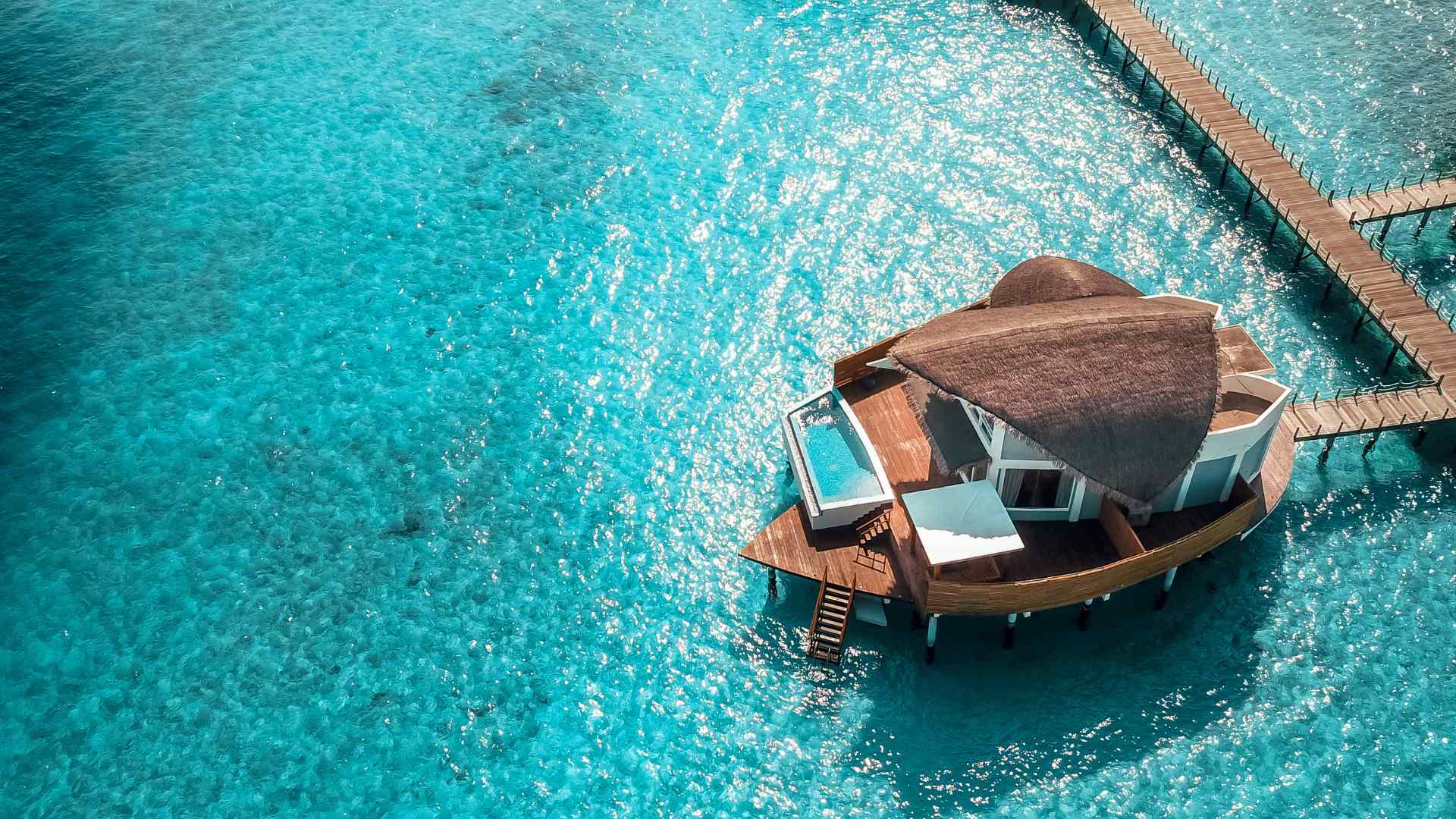
Maldives resort ceremonies are symbolic
The Maldives Foreign Ministry says visitors cannot legally register a marriage there. A resort ceremony between two foreign nationals is symbolic.
The resort will still sell you a beautiful ceremony, and it is a real ceremony in every way that matters emotionally.
It is just not a marriage. Couples who want both do the legal signing at home first, then fly out for the part with the sand and the drums.
Finding out after the ceremony that it was symbolic can be heartbreaking. Ask your resort directly, in writing, whether the ceremony produces a certificate that is legally registered.
If the answer is a soft yes with no detail, treat it as a no. That is not cynicism, it is just how the sales side of a Maldives water villa booking works.
French Polynesia marries you at the town hall, not on the deck
French Polynesia does marry foreign couples, and the marriage is genuinely legal. The catch is that the civil ceremony is performed by a mayor at a commune town hall.
Your overwater deck ceremony is the second event of the day, the one with the photographer. That is not a downgrade, it is just a different schedule than the one in your head.
The other thing to plan around is lead time. The application file has to reach the town hall well in advance, on the order of two months, and it has to be complete when it lands.
Documents in English generally need certified French translations. If neither of you speaks French, an interpreter is part of the plan and not an optional flourish.
None of this is hard, it is just early. Start it before you finalize which Bora Bora overwater villa you want, because the calendar drives the booking and not the other way around.
Compare Caribbean registry timelines
Some Caribbean destinations have short residence requirements, but licensing and document processing still take planning. Jamaica and the Bahamas each publish a 24-hour presence rule for visitors.
Turks and Caicos publishes its requirements through the Registrar General. Belize’s Attorney General’s Ministry currently says license processing takes about two weeks from application, so do not plan a Belize wedding from a three-day arrival rule alone.
Saint Lucia is the outlier, with no residency rule and a same day license available for a higher fee. Antigua issues a special license for non residents, and the process runs through the legal affairs ministry and then the registrar.
Those last two matter because they are where the Sandals overwater suites in Saint Lucia and the Antigua overwater rooms actually sit. The paperwork and the bungalow are in the same place, which is rarer than you would think.
One practical note nobody mentions. Registry offices keep weekday business hours and close for public holidays that are not on your calendar.
Build in weekday time for the license and any document checks, especially if your ceremony falls near a public holiday. Confirm the schedule with the officiant and registry before booking flights.
Fiji: apply before you fly
For a visitor wedding, Fiji’s Ministry of Foreign Affairs says to apply at least three working days before the ceremony and explains the special-licence route. The ordinary 21-day notice is not the timeline to use without checking which process applies to you.
You will also need two witnesses who are 21 or older. Resorts routinely supply staff witnesses, but confirm it rather than assuming, because a bure ceremony with nobody eligible to sign is a bad surprise.
Fiji also wants proof you are free to marry. That is the single status or no impediment certificate, and it is the document that derails the most timelines.
If you are picking between the Pacific options, ask Fiji’s registrar for the visitor application steps before reserving the ceremony and flights. Our Fiji overwater guide can help you choose a resort after the paperwork is clear.
Mexico has more requirements than anywhere else on this list
Mexico recognizes only civil marriage, performed by the civil registry. A religious or symbolic beach ceremony has no legal standing on its own.
In Mexico, medical tests and witness requirements depend on the state and local civil registry. Ask the registry handling your specific ceremony for its current checklist before ordering tests or arranging witnesses.
Foreign birth, divorce and name-change documents may need certification or translation, with requirements varying by state. Do not assume a rule from another Mexican destination applies to your ceremony.
Requirements also vary between Mexican states, so guidance written for one region may not hold in another. That is the single most important sentence in this section.
The two documents that cause almost every delay
The first is proof that you are free to marry. It goes by several names depending on the country, including certificate of no impediment, single status certificate, and certificate of search.
The United States does not issue one as a national document. Couples usually satisfy this with a sworn affidavit, sometimes notarized and sometimes authenticated, and the acceptable form differs by destination.
The second is the apostille. It is a certification attached to a public document so that another country will accept it, and it is issued at home before you travel.
You may need one on documents going out, such as a birth certificate. You may also want one on the foreign marriage certificate coming back, so your bank, insurer, and employer accept it without argument.
Apostilles are issued by a designated authority, and processing times swing wildly by season. Start six months out if you can, and confirm current turnaround with the issuing office rather than trusting a blog.
Names, and the thing nobody warns you about
Every document has to match. A birth certificate with a middle name, a passport without it, and an affidavit with a hyphen will stop the process cold.
If you have legally changed your name before, bring the deed poll or court order. Registries in several of these countries specifically ask for it.
What I would not do, and who should skip this entirely
Avoid nonrefundable bookings until the registry confirms that your documents and appointment can be completed in time. Processing depends on the country and your circumstances.
I would not let a resort wedding coordinator be my only source on the law. Ask the civil registry itself to confirm the documents and legal timeline.
A recent divorce, mismatched names or a soon-expiring passport may require additional documents. Check the registry’s exact requirements before paying for travel; a legal ceremony at home may be simpler.
Also skip it if immigration paperwork is downstream of this marriage. A foreign certificate is usually fine, but the stakes are high enough that you want a lawyer, not a guide like this one.
Honestly, the courthouse signing two weeks before you fly is the underrated move. It costs almost nothing and it removes every single deadline from your vacation.
Fast answers on marrying overseas
Is a wedding in the Maldives legally recognized?
No, a ceremony between two foreign nationals in the Maldives is not legally binding. Couples who want a Maldives ceremony handle the legal marriage in their home country first, then treat the island event as the celebration.
How long do we have to be in the country before we can get married?
There is no single rule across destinations: Fiji tells visitors to apply at least three working days ahead and offers a special-licence route, while Jamaica requires foreign residents to be on the island at least 24 hours. Belize’s current guidance also calls for roughly two weeks of license processing, so confirm your own destination’s complete timeline.
Do we have to register a foreign marriage when we get home?
In the United States there is generally no federal registration step for a marriage performed abroad. What you do need is a certified copy of the certificate, often apostilled, because that is the document institutions will ask you to produce.
Can we get legally married on the overwater deck itself?
Sometimes, and in French Polynesia specifically the civil ceremony happens at a town hall rather than at your resort. Several Caribbean countries do allow a registered officiant to perform the legal ceremony at the venue, so ask the registry directly rather than assuming.
What is a certificate of no impediment and where do Americans get one?
It is a document stating you are legally free to marry, and the United States does not issue one as a standard national certificate. Americans typically use a sworn affidavit instead, and the exact form each country accepts varies, so confirm before you notarize anything.
The short version
Compare the civil-registry requirements for the destination you want, or complete the legal marriage at home. A symbolic island ceremony can still be the celebration you want.
A practical alternative is to complete the legal paperwork at home and treat the destination ceremony as the celebration. The destination celebration can still matter deeply when the legal paperwork is completed at home first.
Whatever you choose, verify the current requirements with the civil registry or marriage authority in that country, and do it in writing. Rules on residency periods, witnesses, fees, and accepted documents get revised more often than anyone publishes.
Then go pick a villa. Once the paperwork is handled, the honeymoon side of an overwater trip is the easy part, and you should get to enjoy choosing it.
Confirm your documents, timing, fees and legal ceremony with the civil authority that will issue the license. Keep its written requirements alongside your resort booking.