
Solo in an Overwater Bungalow: Yes, Really
A solo overwater stay can be wonderfully quiet, but the price and dining rhythm deserve more thought than they would on a shared trip.
Before paying a solo supplement, compare the complete room and meal-plan quote with the property. If you will snorkel alone, read Divers Alert Network’s equipment guidance and arrange a buddy or guided outing.
The honest answer about a solo overwater bungalow trip
Yes, you can absolutely do this alone, and most resorts will not treat you strangely for it. The real cost is financial rather than social, because a villa priced for two does not get cheaper when one of you does not exist.
So the question is never whether you are allowed. It is whether you would rather have four nights alone in a water villa or nine nights somewhere else.

Myth: overwater villas are for couples only
The marketing is aimed at couples because couples are the easiest sale. The product is a private room over water, and it has no opinion about your relationship status.
What actually happens is quieter than the fear. You check in, someone hands you a cold towel, and the villa host asks whether you want the sun loungers moved.
The one moment that lands oddly is turndown. Two robes, two pairs of slippers, two chocolates, and a bed dressed like something is about to happen.
If a two-person setup feels awkward, ask housekeeping on arrival to set the villa for one.
Myth: you will be charged double for traveling alone
You are not charged double, but you also do not save half. Most water villas are priced per villa, so one guest pays close to what two would pay for the room itself.
The parts that do scale down are the per person charges, and there are more of them than people realize. Meal plans, resort transfers, excursions and spa treatments are usually billed per head.
That is why a solo trip is not as brutal as the headline rate suggests. A half board or all inclusive package for one instead of two is a real reduction, not a rounding error.
Ask two specific questions before you book. First, is the rate per villa or per person, and second, does the all inclusive plan carry a single occupancy supplement.
Some properties quietly apply a single supplement on packaged rates, which can wipe out the savings you expected. Rates and supplements change constantly, so confirm the number in writing with the resort rather than trusting any published figure, including mine.
If the arithmetic scares you, look at the cheaper end of the overwater market before you give up on the idea entirely. A modest lagoon villa you can afford for six nights beats a famous one you can afford for two.
Myth: solo dinners will be the worst part
Dinner is the thing people dread and it is almost never the problem. The problem is being seated at a two top in the middle of a honeymoon crowd at 8pm.
The fix is embarrassingly simple: eat at the bar, or eat early. Bar seating at a resort restaurant means conversation if you want it and none if you do not.
I also request a table facing the water rather than the room. It sounds precious, but staring at a lagoon is a much better solo dinner than staring at other couples.
Half board is worth more to a solo traveler than to a couple, for a reason nobody mentions. It removes the daily decision of where to eat, which is the part of solo travel that actually gets tiring.
One warning about the service charge and taxes. They are calculated on your food and drink too, so an evening of ordering as if you were two people adds up faster than you expect.
Myth: swimming off your own deck alone is fine
This is the myth I want you to take seriously, because it is the one that can hurt you. A ladder into open water with nobody watching is a genuinely different risk from a hotel pool.
Currents around a jetty are not uniform. Water moves faster between the pilings and around the end of the walkway, and it can be pushing hard in one direction while the surface looks flat.
The mechanism is simple. Water draining off a reef flat on a falling tide has to go somewhere, and it funnels through the gaps, which is exactly where your villa sits.
My rules when I am alone: I swim upcurrent first, I stay inside the line of villas, and I never get in when the water is visibly moving past the pilings. I also tell reception when I am snorkeling and roughly when I will be back.
Wear fins, always, and take a float or a small buoy if the resort has them. Read my longer piece on snorkeling safely straight off your villa deck before your first swim, because the conditions change hour to hour.
If you are not a confident swimmer, this does not disqualify you from an overwater trip. It just means you should be choosing your resort around shallow, sheltered water and easy exits rather than a dramatic reef drop off.
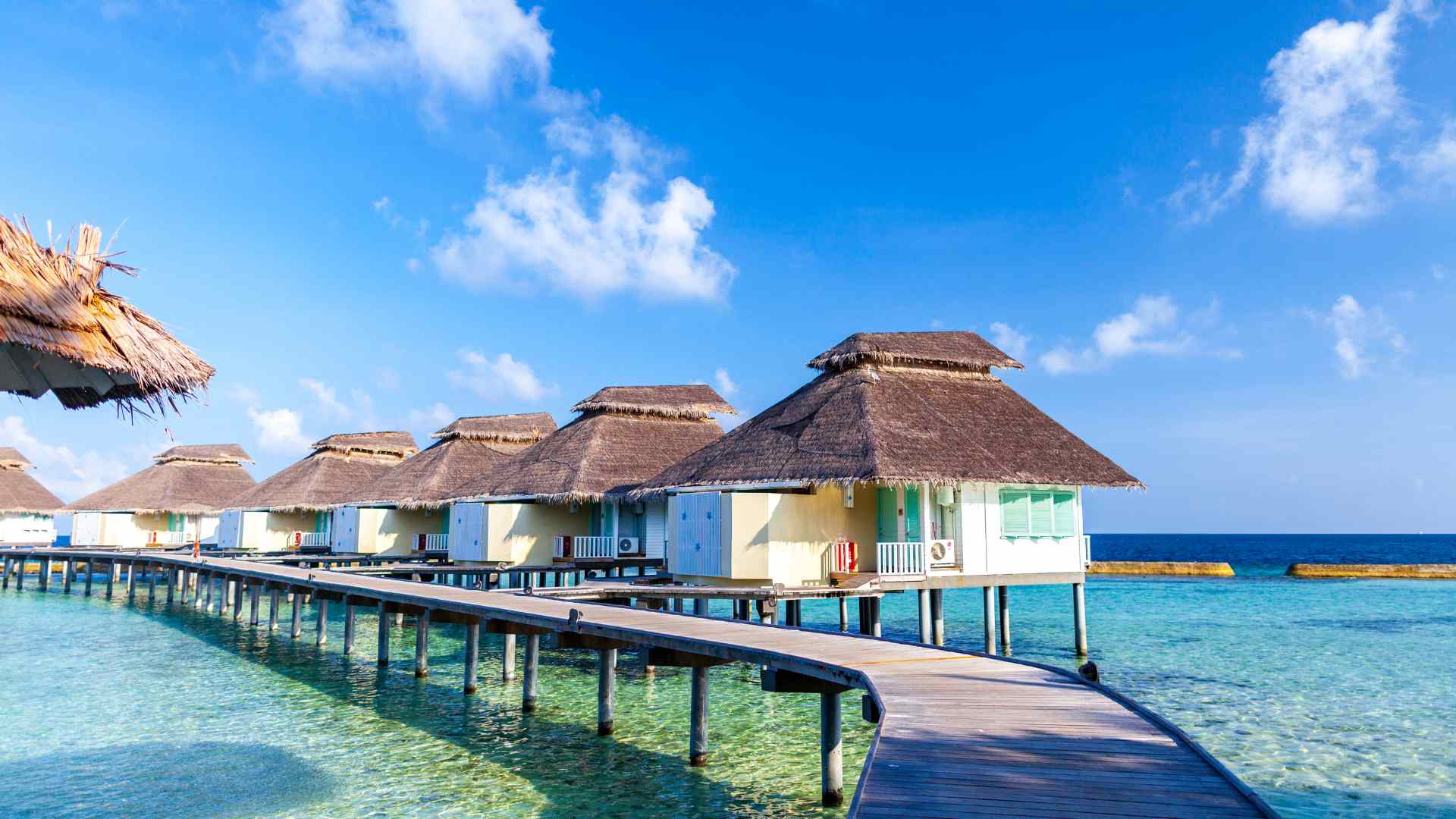
Myth: you will be bored by day three
You might be, and that is worth admitting rather than pretending otherwise. A water villa is a beautiful box, and there is only so long you can look at the water before your brain wants a job.
What fixed it for me was booking one structured thing per day, in the morning. A dive, a reef walk with the marine biologist, a boat trip to a sandbank, anything with a departure time.
Group excursions are also where you meet people if you want to. Nobody on a snorkel boat cares that you came alone, and half the couples on board are relieved to talk to someone new.
Smaller properties are better for this than sprawling ones. On a small island you recognize faces by the second evening, which is the difference between solitude and isolation.
That is a big part of why I steer solo travelers toward smaller boutique overwater properties rather than the biggest names. Fewer villas means staff who learn your name, and that changes the whole texture of a week alone.
Myth: the famous destinations are the right ones to go alone
The most photographed destinations are also the most couple dense and the most expensive per night. Neither of those is in your favor when you are the only person paying.
Southeast Asia is where I send most solo travelers first. The overwater villas cost less, the transfers are usually a boat rather than a seaplane, and you can pair the villa with a mainland leg so the whole trip is not one silent island.
Transfer structure matters more for one person than for two. Seaplane and speedboat transfers are typically charged per person and often run on fixed daylight windows, so a solo booking pays the same per seat as anyone else with nobody to split anything with.
A resort you can reach by a short boat ride keeps that cost small and your arrival day flexible. If you want the whole landscape of options, start with my overview of overwater bungalow destinations and work backward from transfer cost.
Who should skip this entirely
If you get restless without company, do not spend this kind of money proving you can. A resort island gives you very few exits, and a bad mood on night two has nowhere to go.
If you are a nervous swimmer who wants to be in the water constantly, a beach villa on a calm lagoon will serve you better. You get the same sea and a much shorter walk to help.
And if the villa premium would force you to cut your trip to three nights, cut the villa instead. A longer trip in a simpler room may feel more rewarding.
Things people ask me about solo overwater stays
Is it weird to stay in an overwater bungalow alone?
No, and resort staff see solo guests more often than the marketing suggests. The only awkward moment is turndown service arranged for two, which you can fix by asking housekeeping to set the villa for one person.
Do overwater resorts charge a single supplement?
Room rates are usually per villa, so there is no supplement on the room itself, but meal plans and packages sometimes carry one. Ask the reservations team to confirm in writing whether single occupancy changes your board rate before you pay a deposit.
Is it safe to snorkel alone from my villa?
It is safe only if the water is calm, you wear fins, and someone knows you are in the water. Currents run faster between jetty pilings on a falling tide, so check the movement of the water before you touch the ladder.
How many nights should a solo trip be?
Four or five nights in the villa is the sweet spot for most people traveling alone. Beyond that the days blur unless you have booked activities, and shorter than that you spend a disproportionate share of the trip in transit.
Will I be able to meet other travelers?
Yes, if you book group excursions and choose a smaller resort where faces repeat. Dive boats, sunset cruises and reef walks are the natural places it happens, and nobody there finds a solo guest unusual.
What I would book
A small property reachable by boat, five nights, half board, and one excursion booked for each morning. That is the version of this trip that consistently works.
I would spend the savings on the water rather than the room, which means a dive package or a private boat afternoon instead of the villa with the bigger pool. The pool is not the point when you are the only person in it.
Resort pricing structures and single occupancy policies shift from season to season. Get the single-occupancy rate and board terms in writing before you commit.
A solo snorkel is a separate safety decision from the room booking. Read DAN’s snorkeling guidance, and compare the complete rate using the FTC’s hotel-fee advice.