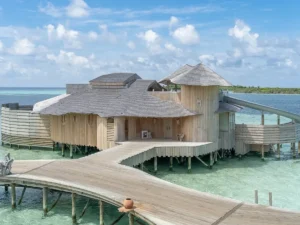
Private Pool or Lagoon Steps? Spend on the Water You’ll Use
A private pool is dependable; a lagoon is alive. The better overwater-villa feature depends on whether you want controlled floating, open-water swimming, easy child supervision, reef access, or simply the water you are most likely to use before lunch.
Private pool versus lagoon access in 30 seconds
- Standout: Pools deliver predictable privacy, while lagoon steps provide the unmistakable overwater experience.
- Best for: Pools suit cautious swimmers and families; lagoons reward confident swimmers who value the sea itself.
- Biggest catch: Pools can be hot or shaded, and lagoon access can be shallow, rough, restricted, or reef-poor.
- My pick: Direct safe lagoon access first, then a pool when water confidence or long private afternoons justify it.
The feature list should never settle this choice alone. Our overwater bungalow hub is easier to compare after labeling each property by pool, swimmable lagoon, reef route, and public pool quality.
Both features can look identical across booking pages while operating very differently. The useful questions concern depth, shade, safety, maintenance, current, privacy, and the hours you will be home.
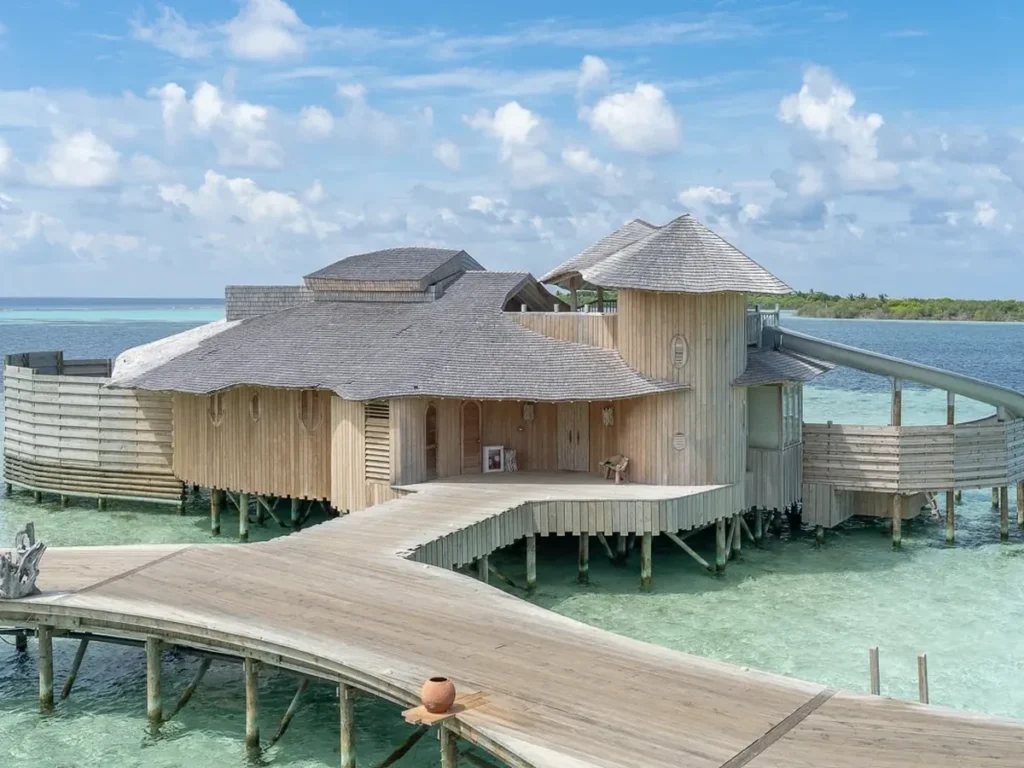
A private pool is reliable water
The pool stays close, contained, and available when the sea is choppy or the tide is low. It can be especially valuable for nervous swimmers, parents, and couples with different comfort levels.
Pool size matters because “private pool” can mean a generous infinity design or a small plunge pool. Request dimensions, depth, temperature control, steps, and a current unedited photograph.
I would also ask how much shade reaches the water. A fully exposed pool may become very warm, while a deeply shaded one may feel cool outside the hottest season.
Privacy depends on deck sightlines, not the word private. Neighboring villas, jetties, boats, and upper floors can still overlook the water.
Lagoon steps are the emotional winner
Descending from a private deck into the sea is the reason many travelers choose an overwater villa. The water changes with tide, weather, light, current, and marine life, which makes it more memorable and less predictable.
Direct access does not guarantee deep water or safe swimming all day. Some ladders meet sand at low tide, while others sit near reef, current, or boat traffic.
The marine team should identify approved entry, exit, depth, route, and conditions. I would take a guided orientation even when the water looks calm enough to be decorative.
Our villa snorkeling safety guide covers ladders, buddies, fins, flotation, and tides.
Non-swimmers should usually choose the pool
A non-swimmer can enjoy a shallow pool with steps, though depth and supervision still matter. A lagoon is not a learning environment simply because it is clear.
The CDC’s drowning-prevention guidance emphasizes barriers, supervision, and realistic swimming ability. Resort beauty does not reduce risk.
Life jackets help with buoyancy but do not replace skills, a buddy, or local advice. Lessons at home before the trip can provide more confidence than any room upgrade.
I would select a resort with a good public pool, easy beach entry, and attentive water-sports team rather than expecting one villa feature to solve everything.
Families need layers of protection
Private pools and lagoon edges both require active supervision. Parents should ask about alarms, locks, barriers, railings, depth, life jackets, and the exact sleeping arrangement.
The American Academy of Pediatrics pool-safety guidance supports layers of protection rather than reliance on one adult noticing everything.
A pool may feel easier to monitor, but a toddler can reach it in seconds from an open door. Lagoon villas add ladders, gaps, wet decks, and a moving natural environment.
Our children’s overwater safety guide helps decide when a beach villa is the kinder choice for everyone.
Reef quality can make lagoon access priceless
If a healthy, safe reef route begins near the villa, direct access may outweigh a small pool. Serious snorkelers can use it daily without waiting for a boat.
The opposite is common: sandy water beneath the room and better coral elsewhere. A ladder then provides lovely swimming but not the reef experience suggested by aerial photographs.
Ask for a current reef map and honest beginner route. NOAA’s coral habitat overview explains why reef structure and shallow lagoon are not interchangeable.
I would never pay a reef premium based on one traveler’s wildlife sighting. Animals move, coral changes, and one villa number cannot guarantee either.
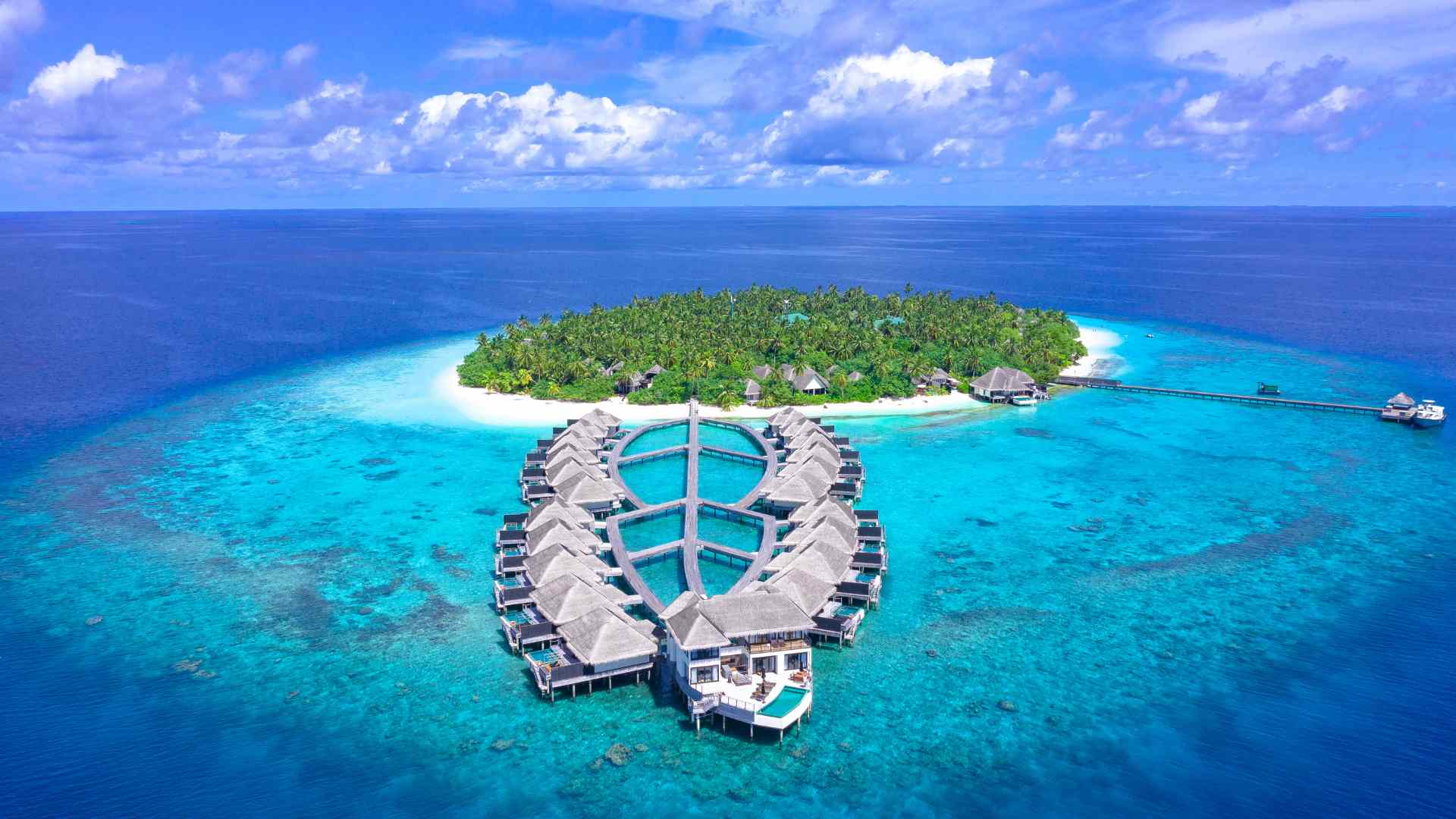
Pools have maintenance realities
Water temperature, chemical balance, pump noise, tile condition, privacy screens, and cleaning time shape the pool experience. Maintenance can briefly remove the feature you paid to use.
Ask how the resort handles a pool problem and whether an equivalent move is offered when repairs take time. Written remedies matter most on short stays.
Salt air and intense sun age outdoor surfaces quickly. A recent renovation date is less useful than a current photograph and clear maintenance policy.
I would report cloudiness, damaged tiles, or unsafe steps immediately rather than waiting until checkout. Staff need the opportunity to fix a problem.
Lagoons have natural realities
Tide changes depth, current, visibility, and the distance between water and ladder. Wind can create chop, and heavy rain can affect clarity.
Marine life is part of the appeal, including harmless creatures that may still surprise a nervous swimmer. Staff should explain what is common and how guests should behave.
The Divers Alert Network water-safety guidance offers practical context for snorkeling injuries and prevention.
Nobody should touch coral, feed wildlife, or enter a marked boat channel. Direct access is a privilege, not ownership of the water below.
Climate decides pool value
In very hot weather, a sun-exposed plunge pool may become warmer than expected. In windier or cooler periods, the pool can remain more comfortable than the lagoon if it is sheltered.
Shade, windbreaks, and pool orientation deserve the same attention as size. A beautiful pool used only after sunset may not justify a large premium.
I would divide the upgrade cost by the number of unplanned afternoons. Divers and excursion lovers often discover that the pool spent more time alone than they did.
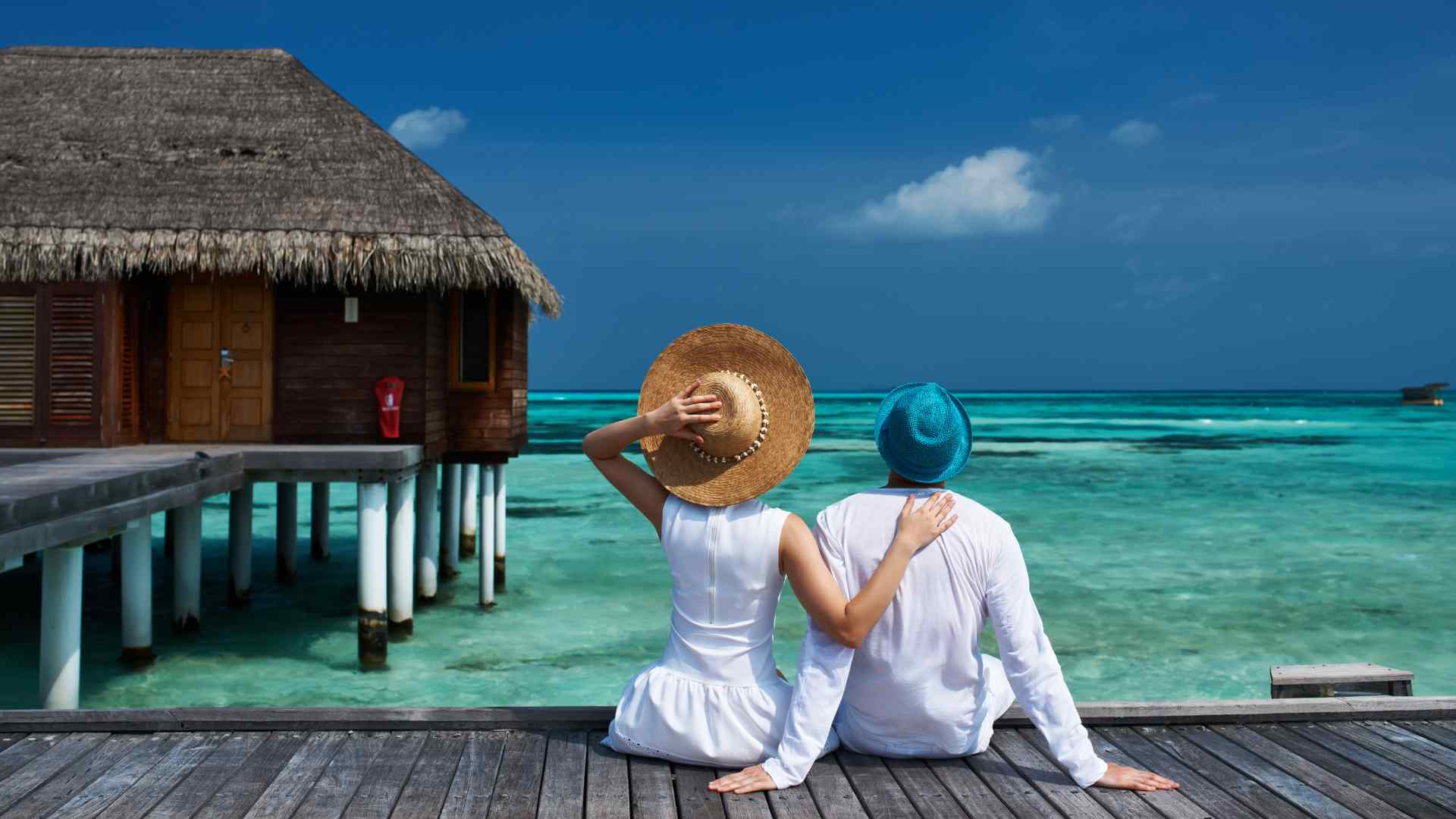
The public pool and beach change the calculation
A gorgeous adults-only public pool can make a tiny private plunge pool redundant. A crowded family pool can make the same private water feel like the most valuable square footage on the island.
The beach matters too, especially when it offers calm, gradual entry and shade close to the room. Non-swimmers may enjoy that environment more than either a deep pool or ladder suspended above open water.
I would look at distance, opening hours, loungers, shade, music, and age rules for shared facilities. The villa premium should solve a real shortcoming rather than duplicate water already used happily elsewhere.
Accessibility is more than water confidence
Pool steps, handrails, deck thresholds, ladder rungs, and the distance to the main resort affect independent use. A traveler who swims well may still find a vertical sea ladder impossible after a hip or shoulder problem.
Zero-entry pools and beach paths can be far more useful than photogenic lagoon stairs. Exact measurements, photographs, and assistance procedures should come from the resort rather than a generic accessibility icon.
Transfer boats add another layer because boarding may involve wet docks and moving steps. The best villa feature is irrelevant if reaching the room requires a maneuver the traveler cannot safely make.
Water choice by trip style
Divers and excursion-heavy travelers often need neither premium because they leave early and return tired. A good shower, shaded deck, and ordinary public pool may create more value than private water waiting alone.
Honeymooners planning room-service lunches can justify a pool through sheer hours of use. Confident snorkelers may prefer the lagoon when the resort confirms a healthy, safe route directly from the villa.
Mixed-confidence couples benefit from having both only when the price remains comfortable. Otherwise, a protected pool plus guided snorkeling allows each person to enjoy water without turning one partner’s limits into the trip’s daily negotiation.
Solo travelers should consider supervision and emergency response as well as privacy. Open-water swimming alone is a poor trade for avoiding the public pool, however peaceful the deck appears.
The cheapest useful upgrade often wins
A small pool in a well-positioned villa can outperform a huge pool beside a busy jetty. Direct lagoon access in an entry-level room can outperform a grander category whose water is shallow or restricted.
I would compare the least expensive room that meets the actual need, then put the remaining budget toward nights, food, or guided water time. The goal is not to own every water feature for a week; it is to enjoy the one that fits.
One final check is privacy after dark. Deck lighting, pool illumination, curtains, and neighboring paths can turn a secluded daytime feature into a surprisingly visible evening stage, so current sightlines matter around the clock.
Use this decision rule
- Choose the pool for mixed swimming confidence, young children, low-tide uncertainty, or private lounging.
- Choose lagoon access for confident swimmers, safe reef routes, open-water joy, and a strong desire to enter the sea from home.
- Choose both only when the premium does not shorten the trip or restrict food and activities.
- Choose neither premium when the public pool and beach already meet the real needs.
The smartest room is not the one with the longest amenity list. It is the one whose water fits the people traveling.
Quick questions about pools and lagoon access
Is a private pool safer than the lagoon?
It is more controlled, but no water is automatically safe. Depth, barriers, supervision, maintenance, and swimming ability still matter.
Can I snorkel from every overwater villa?
No. Direct water access may lead to sand, shallow water, current, or a restricted area rather than coral.
Is a plunge pool large enough to swim?
Usually it is designed for cooling and lounging, not laps. Request dimensions and depth for the exact room.
Which feature is better for a honeymoon?
Lagoon steps feel more distinctive, while a pool gives dependable privacy. The couple’s swimming comfort and deck plans should decide.
My final call
I would choose safe direct lagoon access when the sea is central to the trip. A private pool wins for non-swimmers, families, low-tide uncertainty, and couples who intend to spend several long afternoons doing magnificently little.