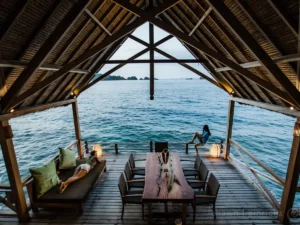
Adults-Only or Family-Friendly? Pick the Resort Mood First
Adults-only sounds like a promise of whispered sunsets, while family-friendly can sound like breakfast beside a tiny person playing percussion with two spoons. Both labels are much less useful than they appear because the real choice is whether the resort’s daily rhythm, water safety, room rules, and shared spaces fit the people actually traveling.
Adults-only vs family-friendly in 30 seconds
- Standout difference: Resort-wide mood and shared-space design matter more than the label on one room.
- Best for couples: Adults-only when quiet and grown-up dining are central, family-friendly when variety and flexibility win.
- Biggest catch: An adult-only overwater category can sit inside a lively resort full of families.
- My pick: The resort whose busiest hour still sounds enjoyable to every traveler in the party.
A comparison guide does not need a forced property-booking link. I would shortlist one resort from each camp, then compare the exact room age rule, common areas, restaurants, transfers, activities, and total rather than letting a single marketing label choose the vacation.

First, find out what is actually adults-only
Adults-only can describe an entire island, one wing, one pool, one restaurant, or only the overwater room category. These arrangements create completely different honeymoons even when the search results use the same phrase.
A resort-wide policy is the clearest route to a consistently adult atmosphere, although minimum ages vary. A separate adult zone can work nearly as well when its pool, beach, dining, and rooms are genuinely buffered from family traffic.
An adult-only bungalow inside a family resort protects who sleeps next door, not who shares breakfast, the main pool, the jetty, or the evening show. That setup can be perfect for a wedding group and surprising for a couple expecting the whole island to murmur.
I would ask one direct question: where will children be present during breakfast, afternoons, dinner, and evening entertainment? The answer maps the experience more accurately than a badge beside the room name.
Adults-only does not mean silent
Couples celebrate loudly, wedding groups travel together, music carries, and a swim-up bar can develop opinions by mid-afternoon. An age policy removes children, not normal human sound or every inflatable object.
I look at the number of rooms, event program, bar locations, pool design, jetty traffic, and review patterns around noise. A small family resort can feel calmer than a large adult property built around entertainment.
For true quiet, ask about speakers, weddings, buyouts, pool games, DJ nights, service routes, and which room zones sit farthest from evening venues. A distant villa may reduce sound but add wind, walking, and dependence on buggies.
Family-friendly can be wonderfully convenient
A thoughtful family resort designs the whole day around practical movement. Kids’ clubs, shallow pools, flexible dining, larger land rooms, medical support, and early activities can make the adults’ vacation much better too.
Couples may also appreciate more restaurants, water sports, shops, and varied entertainment. If both travelers become restless after two quiet days, a family-friendly resort with an adult pool can be the more romantic choice because nobody is pretending boredom is serenity.
The catch is timing. School holidays, breakfast rushes, kids’ club closing hours, and popular family pools can change the atmosphere, so the travel window matters almost as much as the resort name.
I would not reject a family resort from one review about a noisy child. Repeated recent patterns around crowded facilities, poor zoning, or adults using the quiet pool as overflow deserve more weight.

Overwater safety changes the family decision
An overwater villa adds open water, deck edges, doors, stairs, slippery surfaces, and often a private pool. The CDC drowning-prevention guidance emphasizes layers such as close supervision, barriers, and life jackets rather than reliance on one precaution.
The American Academy of Pediatrics pool-safety guidance also stresses attentive supervision and multiple protections. A resort saying families are welcome does not answer whether one specific villa works for one specific child.
Parents should request current photos and details for rail spacing, door latches, pool barriers, alarms, deck furniture, ladder access, nighttime lighting, and the route to breakfast. A toddler who can open the villa door at home will not suddenly respect tropical architecture.
I would choose a beach or garden room without hesitation when it offers safer movement and less parental vigilance. The overwater night is not a family achievement badge, and nobody needs to spend a costly vacation guarding a handle.
Our overwater bungalows with children guide goes deeper on room-by-room questions, supervision, transfers, sleep, and honest alternatives.
Room occupancy can overrule the resort label
A family-friendly island may restrict children from certain overwater villas because of layout, depth, or local policy. Another may allow a child but have a maximum occupancy that makes the chosen room impossible for two adults and two siblings.
Age, occupancy, bedding, crib, rollaway, and connecting-room rules should come from the exact category attached to the paid rate. A general family page cannot promise that the aspirational villa in another tab accepts the same group.
Adults-only policies also need the minimum age in writing. A resort may define adult differently from an airline, a country, or the person planning a graduation trip.
For multigenerational travel, map every room and shared facility before collecting deposits. Grandparents should not discover that the adult zone is a long, uncovered walk from the family villas only after the boat leaves.
Dining can settle the argument quickly
Adults-only resorts often emphasize longer dinners, tasting menus, bars, and couples’ settings. Family resorts are more likely to provide children’s menus, early meals, casual backups, high chairs, and staff accustomed to feeding several ages without turning dinner into a diplomatic summit.
Neither model guarantees good food or appropriate allergy handling. Current menus, operating times, meal-plan supplements, room service, dietary processes, and the distance between venues matter more than the restaurant count.
I would picture the least glamorous meal of the trip. If a tired child or jet-lagged adult needs plain food at an odd hour, which resort makes that moment easier?
Couples choosing family-friendly can protect romance by reserving one adult venue, using a private dinner selectively, or choosing a room with enough outdoor space for a quiet breakfast. Parents need the babysitting policy, staff qualifications, booking window, age minimum, and cost in writing.
Transfers can be the hidden family tax
Seaplanes, domestic flights, and long boats feel adventurous to one traveler and exhausting to another. Families should price every seat, baggage limit, child restraint, waiting period, bathroom break, seasickness plan, and connection margin.
Adults-only couples benefit from the same realism. A silent island is less seductive when reaching it consumes the first day and the return schedule requires a reluctant airport night.
I would favor simple access for a short stay, a mixed-age group, or anyone whose medical needs make disruption harder. Remote resorts earn the extra journey when their atmosphere and water are important enough to justify it.
Our true-cost guide helps add the seats, buffer nights, meals, and insurance that a room-rate comparison misses.

Activities reveal the resort’s real personality
Look beyond the existence of a kids’ club or spa. The useful questions are what happens each day, who can participate, whether booking is required, how weather changes the plan, and what remains interesting after the first afternoon.
An adults-only resort can still be energetic with diving, sailing, fitness, nightlife, and excursions. A family resort can feel wonderfully sleepy when its program is gentle and its pools are well separated.
Mixed-interest couples should count activities each person would happily do alone. Time apart for diving, spa, a kids’ club, or reading can create a better shared dinner than insisting romance requires synchronized enthusiasm.
The CDC safe swimming guidance provides useful health context for water activities, but the resort must explain local current, supervision, equipment, and closures.
Honeymoons do not automatically belong at adults-only resorts
Adults-only is the easy recommendation when the couple wants quiet pools, unhurried dining, and a grown-up evening atmosphere. It is less decisive when they care more about snorkeling, villa position, restaurant variety, points, or a specific destination.
A family-friendly resort with a strong adult zone and exceptional house reef can beat a quieter property whose water and food feel limited. The honeymoon should fit the couple, not a stock photograph of two champagne glasses.
I would list the top five experiences and see which property wins them naturally. If four priorities live at the family resort, children in a distant pool should not outweigh the whole trip.
Our honeymoon overwater guide focuses on room use, privacy, trip rhythm, and the tradeoffs couples remember after the label fades.
Multigenerational trips need zones, not compromise
The best large-group resort lets adults, teenagers, small children, and grandparents separate comfortably and reunite easily. That usually means several room types, accessible routes, flexible dining, and common spaces that do not make one age group feel tolerated.
An adult wing inside a family resort can be ideal when grandparents or child-free relatives want calmer mornings. Confirm access privileges, restaurant age limits, pool rules, and whether the family can visit the adult guest’s room.
I would also choose one organizer and put the complete party in every written request. Resorts struggle to solve needs they receive as six separate mysteries attached to one reservation.
Red flags on either side
- Adults-only but event-heavy: Weddings, pool music, and nightlife conflict with a promised quiet mood.
- Family-friendly but vague on safety: No precise answer about locks, barriers, flotation, or supervision.
- Age rules scattered everywhere: The room, pool, restaurant, and club use different limits with no clear summary.
- One-size dining: Early meals, allergies, simple food, or adult reservations are difficult to arrange.
- Beautiful but badly zoned: Every guest shares the same busy pool, beach path, or evening venue.
A resort can still be a good fit with one red flag if the issue does not touch your priorities. Several vague answers about water, ages, and room occupancy are a reason to keep the deposit in your account.
Frequently asked questions
Is an adults-only resort always quieter?
No. Events, music, group travel, room count, pool design, and nightlife can make an adults-only resort lively, while strong zoning can keep a family resort calm.
Can children stay in overwater villas at family resorts?
Sometimes, but age and occupancy rules vary by resort and room category. Confirm the exact villa, bedding, safety features, and paid rate in writing.
Are family-friendly resorts bad for honeymoons?
Not when the resort has good adult spaces, strong dining, privacy, and the experiences the couple values. A compatible atmosphere matters more than the absence of every child.
What is the best choice for a destination wedding?
A family-friendly resort with an adult zone often serves mixed-age groups well, but venue privacy, room spread, childcare, accessibility, and event schedules need comparison. An adults-only property works when every invited guest meets the age rule.
How do I compare two resorts fairly?
Compare the exact room policy, busiest shared spaces, dining hours, activity program, transfer, safety details, and total for the same party and dates. Then choose the daily rhythm everyone can live with.
My verdict
Adults-only is best when a consistently grown-up atmosphere is one of the trip’s main pleasures. Family-friendly wins when variety, mixed-age logistics, or a particular reef and room matter more, and the smartest choice is the resort whose ordinary Tuesday sounds fun rather than merely acceptable.