
The Overwater Bungalow Weather Calendar That Admits Weather Happens
The awkward truth about an overwater weather calendar is that the ocean has never once checked one. A supposedly perfect month can bring three windy days, while a value-season trip can serve calm blue mornings, so the useful goal is choosing which kind of weather risk you can happily live with.
Overwater bungalow weather in 30 seconds
- Standout rule: Wind and sea state often affect an overwater stay more than the chance of an afternoon shower.
- Best for: Travelers comparing destinations by water access, transfer reliability, humidity, storms, and price.
- Biggest catch: Regional seasons describe probability, not the conditions on your exact deck.
- My pick: A shoulder period with flexible terms, a sheltered resort layout, and enough nights for weather to move around.
This is a destination-planning guide, so a forced hotel-booking link would be more distracting than useful. I would narrow the region first, then compare flexible resort rates only after the likely wind, rain, transfer, and water tradeoffs feel acceptable.
Choose the weather feature you actually care about
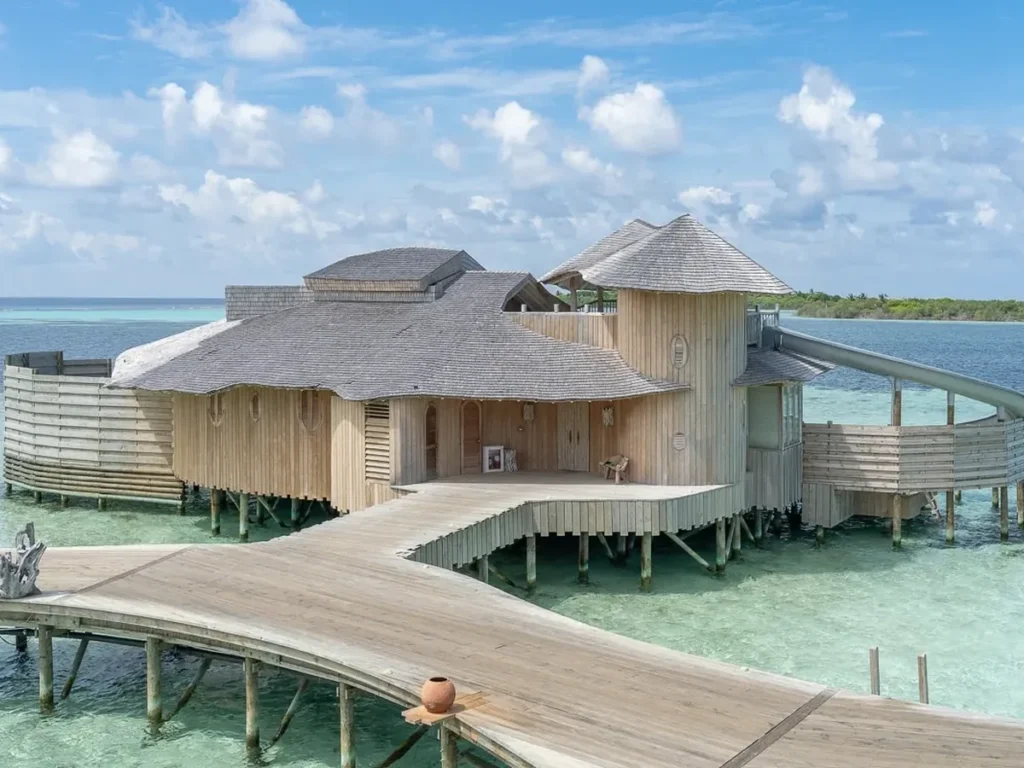
Sunshine is the easy headline, but an overwater room exposes guests to wind, waves, humidity, glare, and changing water visibility. A bright day with strong crosswind can be less enjoyable on the deck than a cloudy, still morning.
I would rank four things before choosing dates: calm ladder access, low rain risk, comfortable heat, or lower price. Very few months maximize all four, and pretending otherwise is how a bargain season becomes a personal betrayal.
Divers and snorkelers should also consider visibility, current, plankton, and the route to the best sites. Beach lovers may care more about seaweed, erosion, or surf, while photographers may gladly accept short showers for dramatic light.
Our house reef guide helps separate broad regional weather from the local reef, entry, and supervision that determine whether you actually swim.
Maldives: monsoons are not an on-off switch
The Maldives generally has a drier northeast-monsoon period and a wetter southwest-monsoon period, with transitions that vary by atoll and year. The official Maldives travel information is a sensible starting point, but current forecasts and resort-specific exposure still matter.
Drier-season demand usually brings higher rates and fuller flights, while wetter months can offer value, dramatic clouds, warm water, and bursts of excellent weather between showers. Rainfall statistics do not reveal whether rain fell overnight or occupied the exact afternoon reserved for a sandbank.
Wind direction changes which side of an island feels sheltered, and a villa jetty may span several exposures. I would ask the resort which categories typically receive more wind during the intended period and how often seaplanes or boats face disruptions.
Marine-life goals can complicate the calendar because plankton, currents, and seasonal gatherings may favor conditions that produce less postcard-perfect visibility. Choose the wildlife priority or the glassy-lagoon priority consciously rather than expecting both every day.
French Polynesia: drier comfort versus warmer drama
The Islands of Tahiti generally distinguish a cooler, drier period from a warmer, more humid and rain-prone period. Tahiti Tourisme’s visit-planning guidance provides official seasonal context for comparing the two.
The drier period is popular for good reason, but trade winds can still animate lagoons and evenings can feel cooler than a tropical packing fantasy suggests. A light layer earns its luggage space when the deck is breezy after sunset.
The wetter period can deliver lush scenery, warm water, humidity, heavier showers, and cyclone risk within parts of the region. Flexible plans and appropriate insurance matter more than insisting that a monthly rainfall average predicts one island week.
Bora Bora, Moorea, Taha’a, and distant archipelagos do not share identical microclimates or access. I would pair the season with the actual island, room orientation, and transfer chain before declaring a universal best month.
Fiji: dry-season popularity meets trade wind
Fiji generally has a cooler, drier season and a warmer, wetter season, with tropical-cyclone risk concentrated in the warmer part of the year. The Fiji Meteorological Service climate outlooks are more useful near travel than a timeless infographic.
Drier does not mean windless. Mamanuca, Yasawa, Coral Coast, and other resort areas can experience different exposure, and afternoon breeze may delight sailors while frustrating someone who booked the deck entirely for floating.
The warmer season can bring humidity, heavier rain, lush landscapes, quieter resorts, and attractive rates. It also asks travelers to accept greater disruption risk and to understand how a cyclone or prolonged rain affects boats, roads, and resort operations.
I would keep the first and last nights logistically simple when a remote-island transfer meets a tight international flight. Weather margin is part of the holiday, not an admission that the itinerary lacks confidence.
Caribbean: one label covers very different risks
The Caribbean spans a huge area, so Belize, Jamaica, Antigua, Saint Lucia, Aruba, and Mexico should not be squeezed into one weather sentence. Hurricane exposure, rainfall, trade winds, sargassum, reef conditions, and storm tracks differ by location and season.
The National Weather Service hurricane guidance explains storm readiness, while destination authorities such as Visit Jamaica’s travel alerts provide local operational updates. A historical season is not a prediction of a particular storm.
Some southern islands sit outside the most common hurricane tracks but are not immune to severe weather or rough seas. Mainland Caribbean coasts may also face sargassum that changes beach and deck access even on sunny days.
I would check recent shoreline and water photos near the cancellation deadline, then keep expectations flexible. Yesterday’s seaweed report is useful evidence and still not a contract for next week’s ocean.
Southeast Asia: monsoon direction is local
Thailand, Cambodia, Indonesia, Malaysia, and the Philippines have different monsoon timing, island exposures, and storm patterns. Even opposite coasts of one country can have distinct peak periods, which makes a generic Southeast Asia best month nearly meaningless.
Start with the national meteorological service and official destination guidance for the exact coast. Then ask the resort how wind affects its jetty, boats, beach, snorkeling entries, and any remote transfer during the proposed dates.
Rain can be brief and theatrical or sustained and disruptive, while humidity influences how much the deck gets used. A villa with a covered outdoor area and appealing indoor space becomes more valuable when showers are part of the plan.
Our sunrise versus sunset villa guide adds sun angle, heat, and wind to the room-position decision after the destination is chosen.
Middle East: heat can be the main season
Middle Eastern overwater resorts may avoid tropical cyclone patterns common elsewhere, but extreme heat, warm sea temperatures, humidity, dust, and strong sun can reduce outdoor comfort. A low summer rate is useful only if the pool, restaurants, spa, and air-conditioned plans still sound like a vacation.
Cooler months often make decks, beaches, mangroves, and outdoor dining far more usable, which can raise demand. Water color may also vary with tide, sediment, lagoon management, or mangrove setting rather than rainfall alone.
I would ask about deck shade, pool temperature control, seasonal activity schedules, and the distance to common facilities. Five minutes on an exposed jetty feels different when the air itself has become a hair dryer.

Shoulder season is a strategy, not a secret month
Shoulder travel can balance rate, crowd, and weather, but its dates are fuzzy because climate transitions do not flip on schedule. The best version combines a favorable statistical window with flexible cancellation, sensible insurance, and a resort that remains enjoyable in mixed weather.
A longer stay also spreads risk. Five nights give a passing front room to leave, while a two-night splurge can lose half its water time to one windy day.
Indoor quality matters for the same reason. A comfortable sitting area, covered deck, spa, good restaurants, and activities that operate in light rain keep mixed weather from turning the villa into an expensive waiting room.
I also prefer a room category with a view and deck I can enjoy without entering the sea. If safe swimming disappears for a day, the accommodation should still feel like the point of the trip rather than a locked gate to it.
I would avoid stacking nonrefundable flights, a delicate transfer, and an exposed villa merely to capture the lowest nightly rate. Savings are real only when the trip still works under ordinary seasonal variation.
How I check weather before paying
- Start broad: Use official climate information for the exact coast or island group.
- Go local: Ask how the resort’s two sides, jetties, and entries behave in that period.
- Check the journey: Identify daylight cutoffs, weather limits, and missed-transfer consequences.
- Protect the booking: Compare cancellation and insurance with the actual prepaid total.
- Look again: Review current alerts, forecasts, and resort operations near departure.
Our true-cost guide helps add buffer nights, transfer changes, and insurance to a seasonally discounted room.
Frequently asked questions
What is the best month for an overwater bungalow?
There is no universal best month because destinations have different seasons and travelers value different conditions. Choose the region first, then balance wind, rain, heat, water goals, price, and risk.
Is rainy season a bad time to go?
Not automatically. It can offer lower prices and many usable hours, but it brings a higher chance of rain, wind, humidity, and disruption that should fit the trip’s flexibility.
Does dry season guarantee calm water?
No. Trade winds, local exposure, current, storms, and daily weather can create rough water during a statistically drier period.
How far ahead can weather be trusted?
Climate information helps months ahead, while detailed forecasts become more useful close to travel and still change. Resort operational updates are essential for transfers and water access.
How many nights reduce weather risk?
Five or more nights generally provide more room for a passing system than a two-night stay. The right length also depends on transfer difficulty and whether the resort is enjoyable away from the water.
My verdict
The best overwater weather window is the one whose ordinary imperfections you can tolerate. I would trade a tiny increase in rain probability for better value and a sheltered resort, but I would not trade away transfer safety, flexible terms, or enough nights for the sky to change its mind.