Overwater Elopements: The Tiny Wedding That Fits on a Deck
A ceremony on a villa deck can be a memorable choice. Ask these questions about legal paperwork, weather, and room rules before paying a deposit.
What an overwater elopement actually is
An overwater elopement is a tiny ceremony held on or beside a water villa, usually just the two of you plus a celebrant and a photographer. In the Maldives a resort ceremony is symbolic; in Fiji a licensed celebrant may conduct a legal ceremony outside the registry if the marriage requirements are met.
Check the destination’s rules before choosing a deck.
Settle the legal status of the ceremony before comparing packages or paying a deposit.
Questions about the legal side
Will this ceremony legally marry us?
In the Maldives, foreign couples cannot legally marry, so every resort wedding there is symbolic. It is a beautiful ceremony with no legal effect, and any resort that blurs that line is doing you a disservice.
French Polynesia is different. Foreign couples can marry legally there, but only a civil ceremony conducted by a civil registrar counts, and everything held on a deck or a beach is symbolic on top of that.
Fiji also allows foreign couples to marry legally, with a license obtained locally before the ceremony. The paperwork requirements differ by destination and by your own nationality, and they change.
Ask the resort’s wedding coordinator to state in writing which authority performs the legal part, and confirm the current document list with your own government before you book flights.
If it is symbolic, does that ruin anything?
A symbolic island ceremony can still be meaningful. If the destination ceremony is not legally recognized for you, arrange the civil paperwork at home and enjoy the resort celebration.
The order is up to you. Doing the legal part first means you land as a married couple and the island day carries no administrative weight at all.
Questions about the deck itself
How many people can physically stand out there?
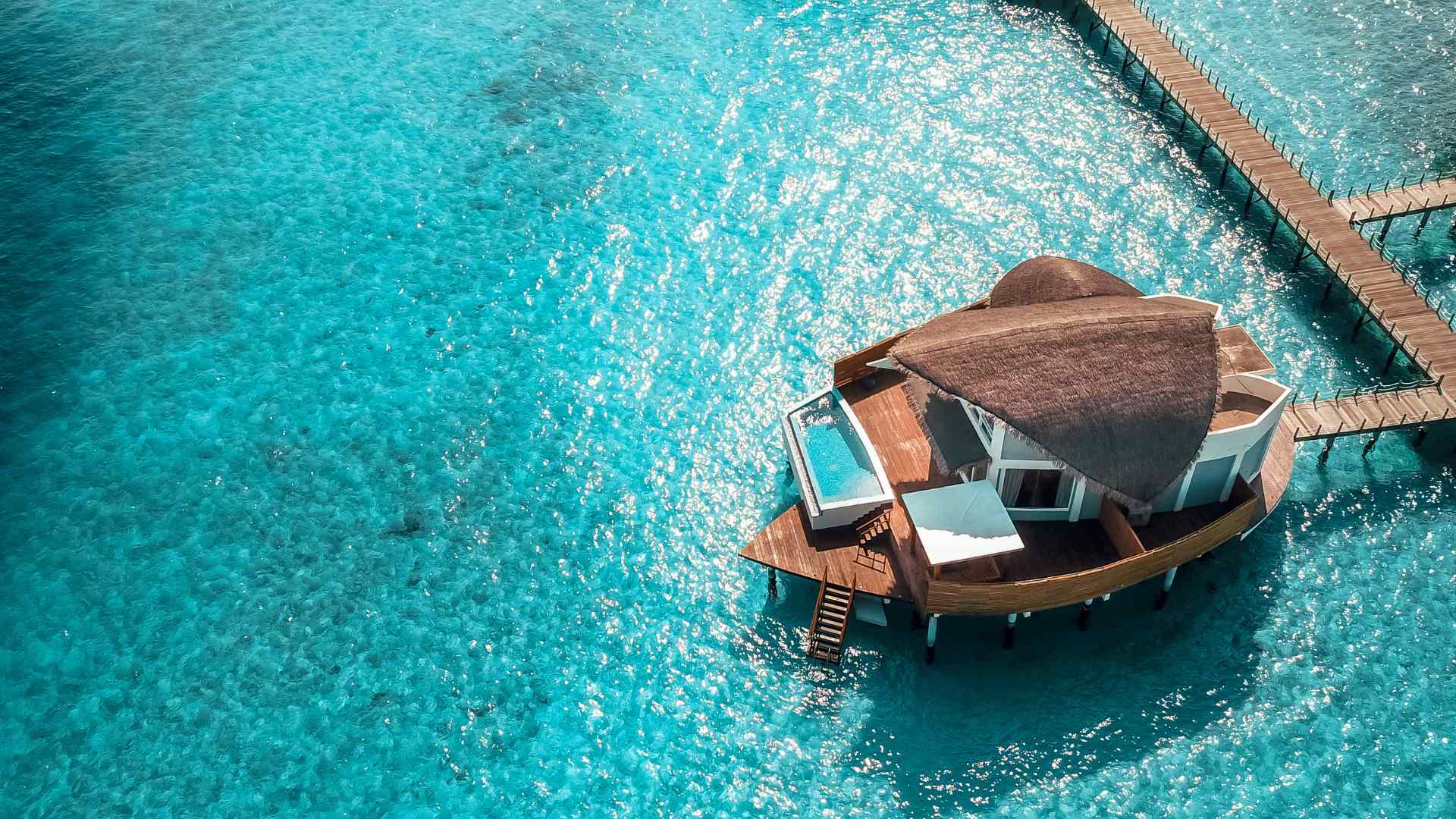
Fewer than you think. A villa deck is furnished with loungers and a table, and once you remove those you still have a narrow platform with an open edge.
Ask for the deck dimensions and ask what the resort’s maximum headcount is for a ceremony held there. Some properties cap it at the couple, the celebrant, and one photographer, which is genuinely all it fits.
Which way does it face, and at what time?
This is the question that separates a good photo set from a squinting one. A deck facing west gets you sunset light and silhouettes, and a deck facing east gets you soft morning light and no crowds.
Midday on an overwater deck is brutal. There is no shade, the boards get hot enough to matter barefoot, and the light comes straight down and flattens everything.
I would book the hour before sunset and nothing else. My post on sunrise versus sunset overwater villas explains how to work out which side of the island you are on before you arrive.
What does the wind do out there?
Overwater decks sit in unbroken breeze, which is glorious for temperature and terrible for a long veil. Loose hair and lightweight fabric behave completely differently over open water than on a sheltered lawn.
Plan for it rather than fighting it. A shorter veil, a secured hairstyle, and a dress with some weight to the hem will save you a lot of frustration.
Questions about money
What is in the package and what is not?
Wedding packages are quoted like room rates, which means the number you see is rarely the number you pay. Ask specifically whether tax and service charge are included, because in several destinations they add a meaningful amount on top.
Then ask what is genuinely included. Celebrant, flowers, cake, music, and photography are often separate line items rather than one bundle.
What does the photographer situation cost?
Most resorts have an in house photographer and charge per session or per delivered image. Bringing your own is possible at many properties but often triggers a vendor fee, plus that person’s flights and their own villa.
Ask how many images you receive, whether you get the full resolution files, and how long delivery takes. Ask for a gallery from a wedding shot at that resort within the last year rather than the polished portfolio.
Is the whole trip actually cheaper than a wedding at home?
Often yes, and that is a large part of why people do it. Two people flying somewhere beautiful for a week costs a fraction of feeding a hundred guests, even at resort prices.
Run the numbers with transfers included, because island transfers are a real line item and not a taxi fare. My honest cost breakdown for an overwater trip shows where the money goes.
Questions about timing the trip
What happens if it rains?
Ask for the backup plan by name, not as a concept. A good coordinator will tell you which indoor or covered space they move to and how much notice they need to make the call.
Tropical rain often passes in under an hour, so flexibility beats a fixed start time. Build a buffer day into the trip and treat the ceremony date as a preference rather than a fixed appointment.
How early should we arrive?
Give yourself at least two full days on the island before the ceremony. Long haul travel plus time zones plus a same day seaplane leaves people puffy and exhausted, and it shows.
Two days also protects you from delayed luggage, which is the single most common way a destination wedding goes sideways. Carry the dress, the rings, and anything irreplaceable in your hand luggage.
What about the tide?
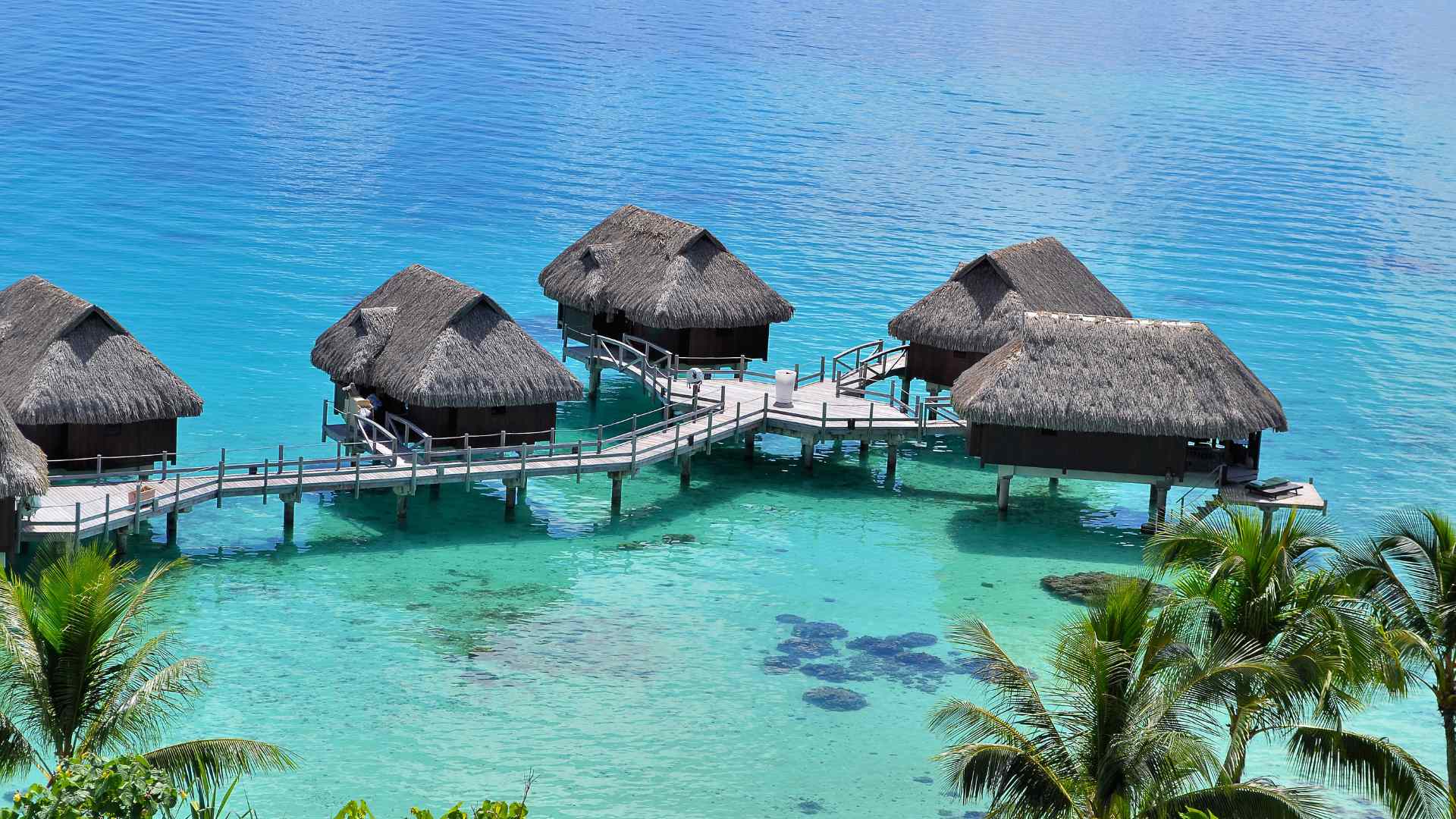
A lagoon at high tide is deep and uniformly blue, and the same lagoon at low tide can show sand bars, exposed reef, and a lot of visible piling. Neither is wrong, but they photograph very differently.
Ask the coordinator what the water under that villa looks like at low tide in your travel month. They will know, and the honest ones will tell you.
For the wider seasonal picture, I use my overwater bungalow weather calendar to pick a month before I pick a resort.
Questions about the people you are not inviting
Can we add two guests later?
Sometimes, and it changes more than you expect. Adding parents usually means moving the ceremony off the deck to a beach or sandbank, and it can trigger a different package tier.
Decide the headcount before you book and hold the line. The deck ceremony only works because it is small.
Can we live stream it?
Ask about the bandwidth at that specific villa before you promise anyone at home a broadcast. Wifi at the far end of a jetty is often noticeably weaker than it is near the lobby.
My honest advice is to record it properly and send the file later. A dropped stream during your vows is worse than no stream at all.
Who should not do this
If you would grieve the absence of your family on the day, do not do it. That regret does not fade, and no lagoon compensates for it.
Skip it too if either of you is uneasy near deep water, because the whole setting is a platform over deep water with an open edge. That is not a small detail on a day you want to feel calm.
The real downside, stated plainly. You are spending a significant amount on a ceremony that in many destinations has no legal force, and you will still have to do the paperwork somewhere else.
If you want a legally recognized island ceremony, choose a destination that permits one and allow time for its license and document checks.
The questions that come up every time
Can you get legally married in the Maldives?
No, foreign couples cannot legally marry in the Maldives, so resort ceremonies there are symbolic celebrations. Couples typically register their marriage at home before or after the trip and treat the island ceremony as the day that matters emotionally.
Where can we legally marry over the water?
French Polynesia and Fiji both have legal marriage routes for eligible foreign couples. Fiji permits licensed ceremonies outside the registry, including at resorts, while French Polynesia has its own civil formalities; confirm the rules and documents for your nationality before reserving a villa deck.
How long should we stay after the ceremony?
If your schedule and budget allow, leave several nights after the ceremony to enjoy the island. Build that time into the trip before locking flights and legal appointments.
Do we need to bring a dress that packs small?
Yes, and lightweight fabric matters more than shape because heat and humidity are relentless. Carry it on the plane rather than checking it, and ask the resort in advance whether they can steam it before the day.
Is a sandbank ceremony better than a deck?
A sandbank gives you more room and a horizon in every direction, while a deck gives you privacy and a shorter walk. Sandbanks depend on tide and boat timing, so they carry more schedule risk than a ceremony held ten steps from your villa.
Which destination is easiest to organize?
The Maldives is the simplest logistically because resorts run symbolic ceremonies constantly and nothing legal is involved. Compare options across my Maldives water villa guide and my overwater honeymoon planner.
If you only remember one thing
Separate the legal from the ceremonial in your head, and the whole plan gets simpler. Sign the paperwork wherever it is easy, then spend your money on the hour of light you actually want to remember.
Book the deck, book the golden hour, and keep the guest list at zero. That is the version I would choose.
For a legal ceremony, use Tahiti’s civil-marriage requirements or Fiji’s marriage documents rather than a resort package headline. Visit Maldives describes resort ceremonies there as symbolic, so arrange any legal marriage separately.
Wedding packages, legal requirements, and resort policies are revised frequently and vary by nationality, so verify every legal and pricing detail with the property and the relevant authorities before you commit to dates.